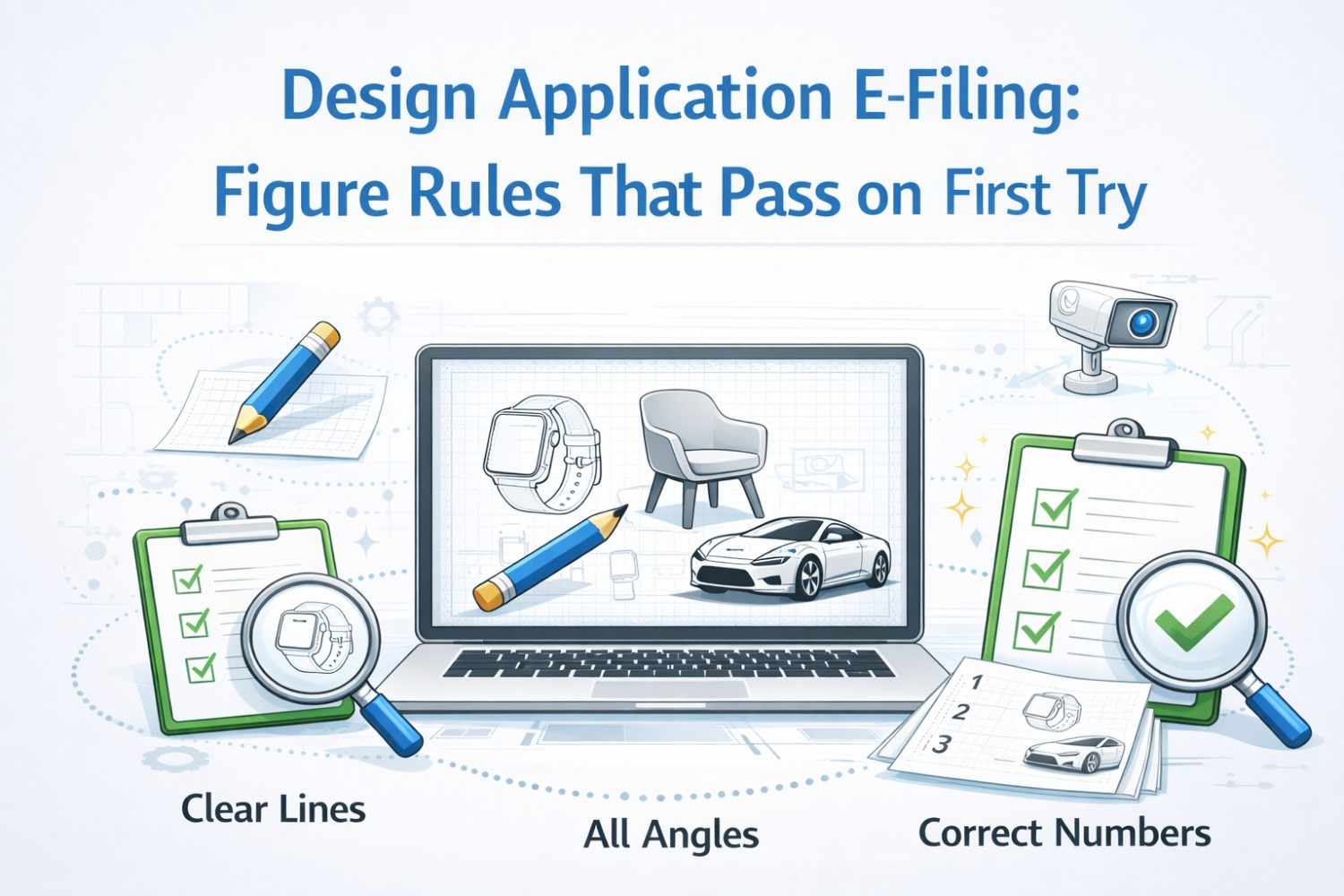
Design patents look simple on the surface. You draw a few figures, upload them, and file. But this is where many founders lose months, burn money, or quietly kill their own protection without knowing it. This article is about design application e-filing and, more importantly, the figure rules that actually pass on the first try. Not theory. Not law school talk. Real rules that decide whether your design gets approved or stuck. If you are building a product, shipping hardware, designing a screen, or creating anything visual, this matters more than you think. And if you want to do it fast, clean, and without painful back-and-forth, this is exactly what PowerPatent was built for. You can see how it works anytime at https://powerpatent.com/how-it-works.
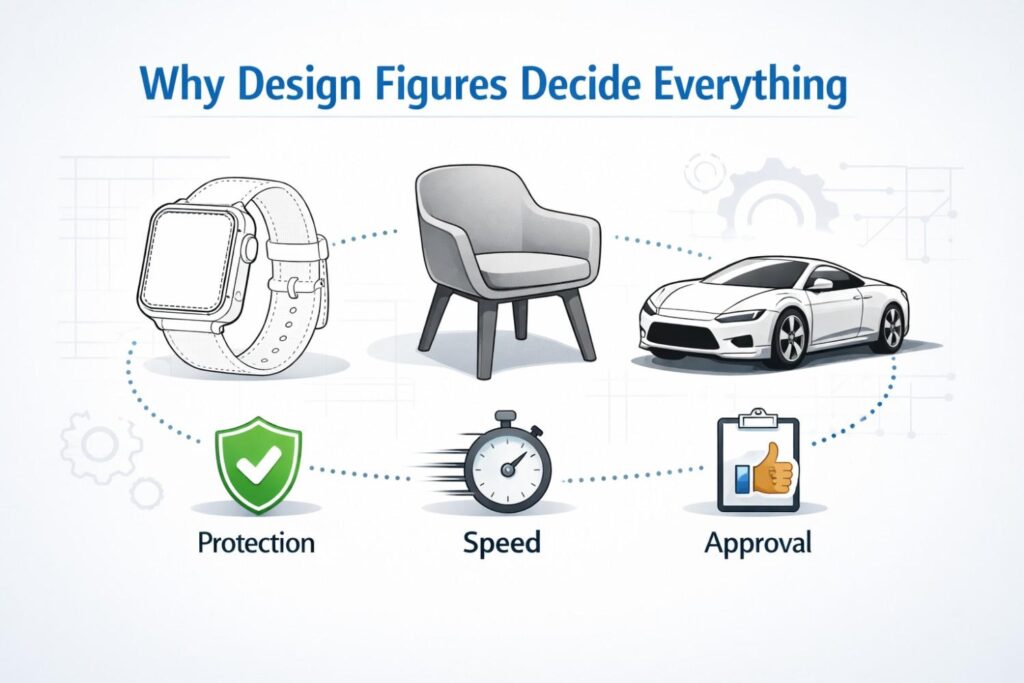
Why Design Figures Decide Everything
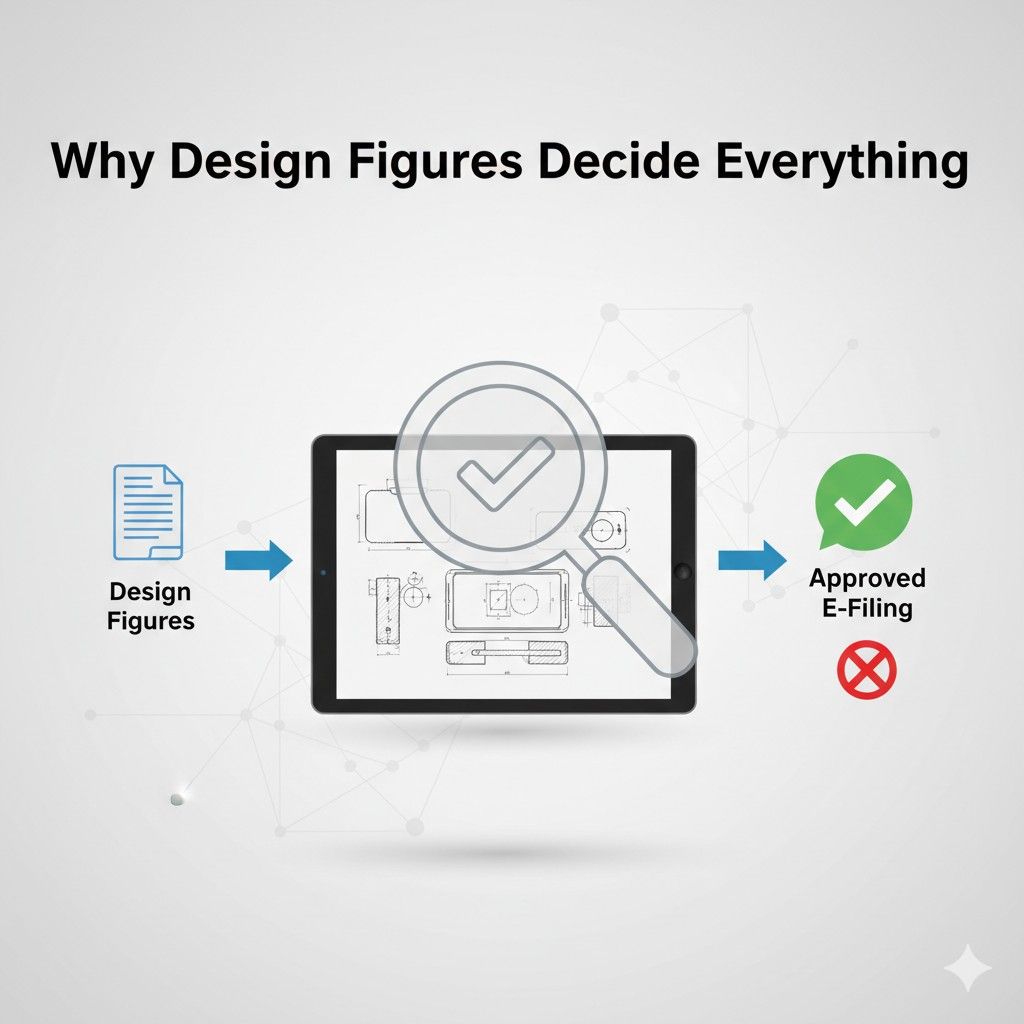
Design patents live and die by what the examiner can see. There is no room for explanation, interpretation, or fixing things later with words.
This section explains why figures are not just part of the filing, but the entire filing, and how businesses should think about them from day one.
The Design Patent Is the Drawing, Not the Description
Most founders assume the written parts of a patent carry weight. That is true for utility patents, but design patents work in a very different way. In a design application, the drawings are the invention.
Nothing outside those figures matters.
This means every curve, edge, gap, and surface you show is what you own. It also means anything you fail to show is something you likely do not protect.
For businesses, this changes how you should approach design work long before filing. You are not just designing a product. You are designing future legal boundaries around that product.
A smart move is to treat your design figures like a product spec for ownership.
If it does not appear clearly and consistently in the figures, it should be assumed to be unprotected. This mindset alone prevents many expensive mistakes.
Examiners Only Judge What Is Visually Clear
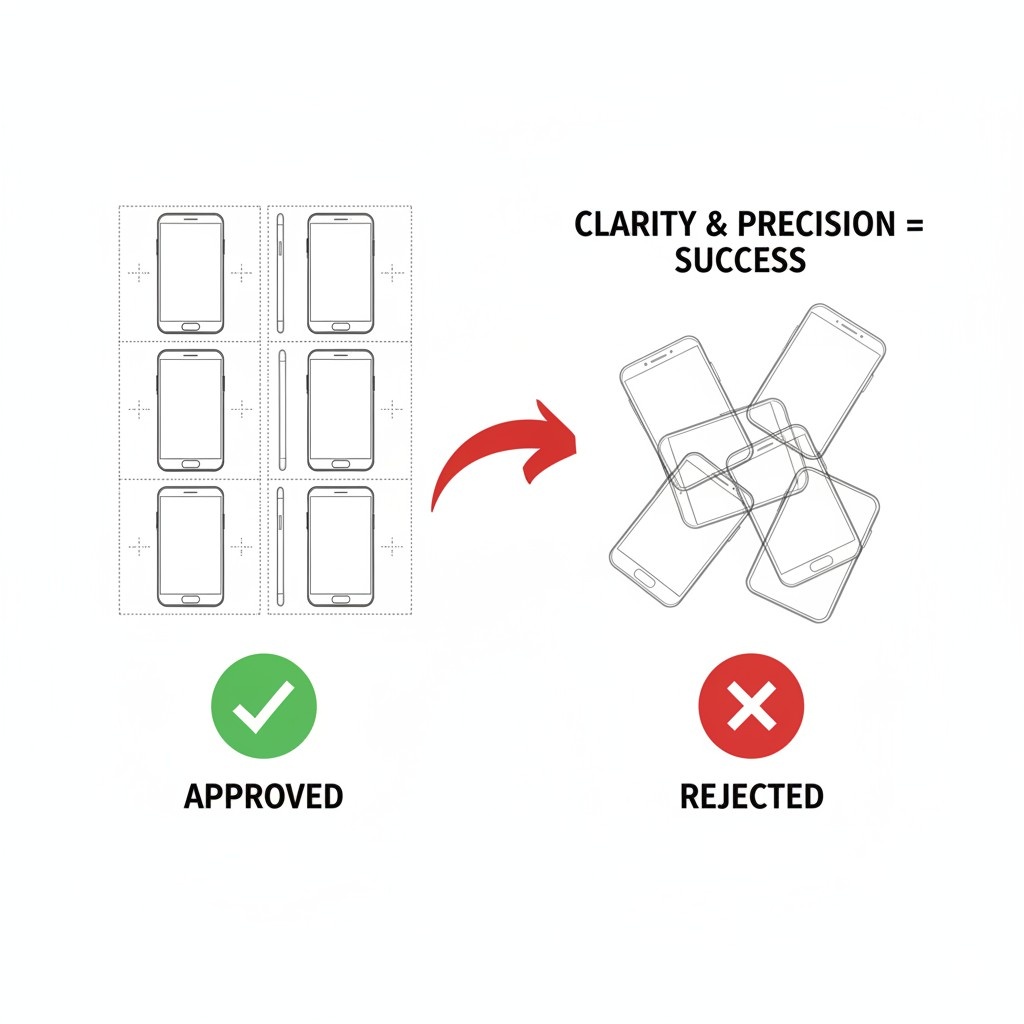
The patent examiner does not guess. They do not infer intent. They do not assume symmetry or hidden structure. They only judge what is clearly visible and consistent across figures.
If one view shows a surface as flat and another view suggests a curve, that creates confusion. Confusion leads to rejection. For a business, this means you must prioritize visual clarity over artistic beauty.
Clean lines, consistent shapes, and obvious relationships between views matter more than stylish shading or dramatic angles.
An actionable habit is to review figures as if you have never seen the product before. If any view raises a question in your mind, it will raise a question for the examiner. Questions slow everything down.
Inconsistency Is the Fastest Way to Get Rejected
Many first-time design filings fail because the figures disagree with each other. One corner looks sharp in one view and rounded in another. A seam appears in one figure but vanishes in the next.
These small errors seem harmless but are fatal at the filing stage.
For businesses moving fast, this usually happens when drawings are rushed or spread across multiple vendors.
The fix is not more time, but better control. All figures should come from a single, locked reference model or drawing set. Any change, even a tiny one, must ripple through every view.
Companies that pass on the first try often treat figure creation like version-controlled code. Nothing changes without checking the full system.
The Patent Office Assumes Your Figures Are Intentional
Every line you show is assumed to be deliberate. If you include a feature, the examiner believes you want to claim it.
If you include surface texture, it becomes part of the design. If you show internal detail, you may limit yourself without realizing it.
This is critical for businesses planning product evolution. Early versions change. Edges soften. Buttons move. If your figures lock you into early design choices, future versions may fall outside your protection.
A practical approach is to decide early what truly defines your product’s visual identity and what is likely to change. Figures should emphasize the stable parts and de-emphasize or exclude the parts that may evolve.
Figures Control How Broad or Narrow Your Protection Is
Design patents are not just about approval. They are about how much room you have later. Narrow figures give narrow protection. Overly specific designs are easy for competitors to work around.
On the other hand, vague or sloppy figures do not get approved at all. The balance is precision without over-commitment.
Businesses should aim for figures that clearly show the overall shape and character of the design, while avoiding unnecessary detail. This gives you coverage that is enforceable but flexible.
A useful test is to imagine a competitor making small cosmetic changes. If those changes still look like your design, your figures are likely in the right zone.
What You Hide Can Be as Important as What You Show
Design figures allow certain elements to be shown as broken lines or omitted entirely. This is not a technical trick. It is a strategic decision.
By not claiming certain parts, you allow freedom for internal components, mounting systems, or secondary features to change over time.
This is especially important for hardware startups and consumer products that go through fast iteration.
Businesses that think ahead use figures to protect the visible identity of the product, not its internal mechanics. This keeps the design patent relevant across multiple product generations.
Digital Products and Screens Are Judged Even More Strictly
For UI and screen-based designs, figures carry even more weight. Screen layouts, spacing, and proportions are examined closely. Any mismatch between views can cause immediate rejection.
For software-driven products, this creates a special challenge. Screens change with data. States change with interaction. The solution is to lock down a representative state that captures the core visual identity.
Actionable advice here is to choose the screen that best represents your product’s brand and user experience, not every possible state. One strong, consistent visual story beats many confusing ones.
Filing Speed Depends on Figure Quality
Many businesses think delays come from the patent office. In reality, most delays come from fixable figure problems. Each rejection adds months. Each revision risks narrowing your protection.
High-quality figures upfront often mean approval without argument. This saves time, money, and focus. For startups, that speed can be the difference between protecting an advantage and losing it.
This is exactly why PowerPatent focuses so heavily on figure quality from the start. The goal is not just filing, but passing cleanly and quickly. You can see how that process works at https://powerpatent.com/how-it-works.
Investors Care More Than You Think
Design patents with clean figures signal maturity. They show that the company understands how to protect what it builds. Sloppy filings, on the other hand, raise quiet red flags.
Investors may not say it out loud, but strong IP creates confidence. It suggests the team thinks long-term and knows how to defend its position. Figures are often the first thing IP counsel looks at during diligence.
For businesses raising capital, getting figures right is not just legal hygiene. It is a credibility move.
Getting It Right Once Is Always Cheaper Than Fixing It Later
Design figures cannot be easily fixed after filing. Many mistakes are permanent. This makes the first submission the most important one.
The smartest businesses slow down just enough at this stage to get it right. They treat figures as a strategic asset, not a formality. They use tools and guidance designed for founders, not legacy systems built for law firms.
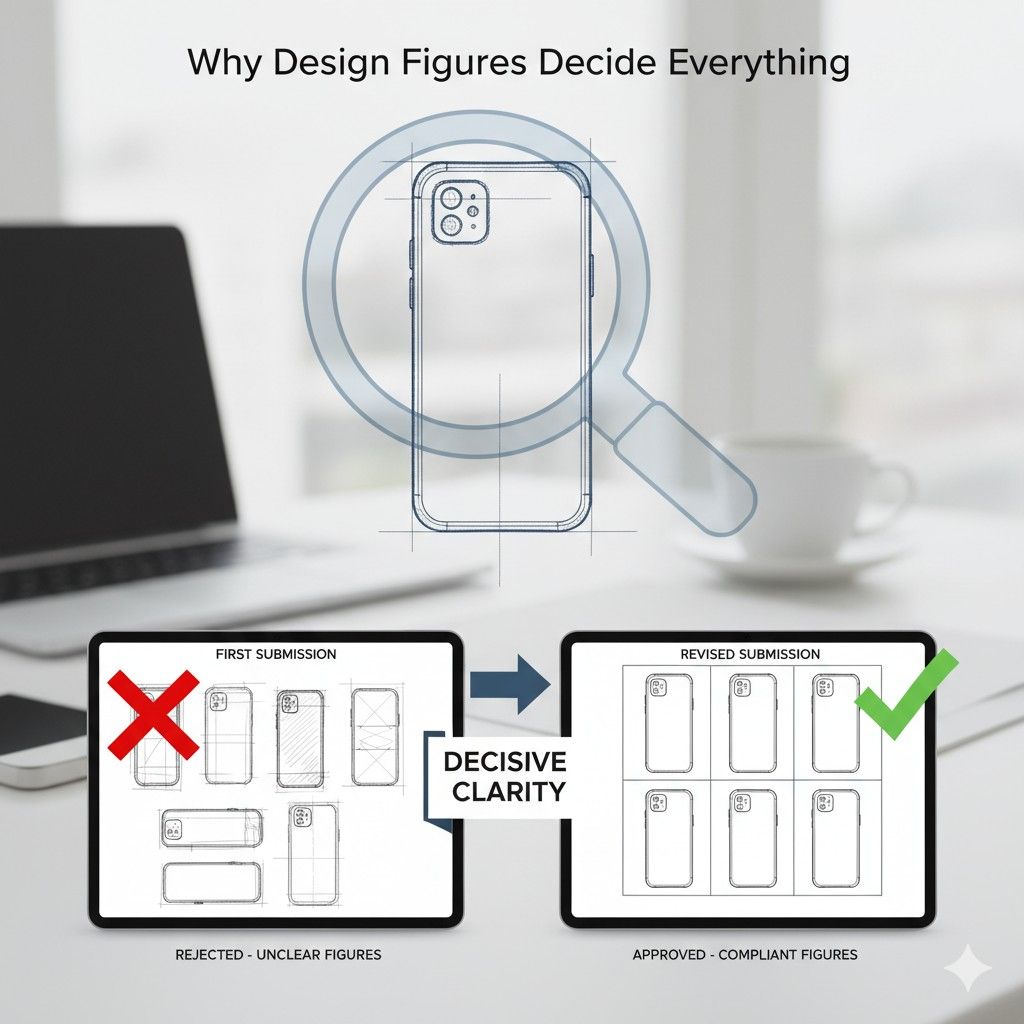
If your product’s look matters, then your figures matter even more. And if you want them to pass on the first try, they must be intentional, consistent, and built with the future in mind.
What the Patent Office Actually Checks When You E-File
Most founders imagine a complex review process filled with secret rules and hidden standards. In reality, the first pass at your design application is very mechanical.
The Patent Office checks a small set of things, but it checks them very strictly. If you understand what those checks are, you can design your figures to sail through instead of getting stuck in months of delay.
The First Review Is Not About Creativity
When your design application is first opened, no one is judging how clever or innovative your product is. There is no discussion about market value or user experience. The examiner is focused on whether your figures follow basic rules.
This matters because many businesses spend time perfecting the product but rush the drawings. The Patent Office does not reward that. It rewards compliance. Clean compliance is what unlocks speed.

A strong strategy is to separate creative design work from patent figure work in your mind. The first is about building something great. The second is about presenting that thing in a way the system accepts without friction.
File Format and Technical Readiness Are Checked Immediately
Before an examiner even looks at the design itself, the system checks whether your submission meets technical standards. File size, resolution, margins, and line clarity all matter.
If your figures are blurry, too dark, or improperly scaled, the application can be kicked back before substantive review even begins. This creates instant delay and signals lack of care.
Businesses that move fast often miss this because they export drawings directly from design tools without adjusting them for patent standards.
A better approach is to treat patent figures as their own deliverable, not a byproduct of design work.
The Patent Office Looks for Complete Visual Coverage
One of the first substantive checks is whether the design is fully shown. This does not mean showing everything inside the product. It means showing the entire external appearance clearly.
If a side view is missing, or a perspective leaves ambiguity about depth or shape, the examiner will flag it. They are trained to look for gaps in visual understanding.
For companies, this means you should assume the examiner has never seen anything like your product. Every angle that helps explain the shape should be present and consistent.
Views Must Agree With Each Other Perfectly
The examiner compares views side by side. They look for alignment, proportion, and consistency. Any mismatch, even if small, suggests either error or uncertainty.
This is where many otherwise strong applications fail. A front view may look slightly taller than the same feature in a side view. A curve may appear smoother in one angle than another.
From a business standpoint, the fix is process, not talent. Use a single source model. Lock it. Generate all views from that same base. Do not redraw views by hand unless you are extremely careful.
Line Quality Signals Seriousness
Patent examiners are human. While they follow rules, they also form impressions. Clean, confident lines suggest intent and care. Shaky or uneven lines suggest uncertainty.
This matters more than many founders expect. Even if a figure technically meets requirements, poor line quality can invite closer scrutiny and more questions.

Companies that get fast approvals often invest just enough effort to make figures look calm and deliberate. Nothing flashy. Nothing messy. Just clear and steady.
Shading Is Scrutinized Closely
Shading can help show depth, but it can also create problems. If shading is inconsistent, it may suggest texture or surface detail you did not intend to claim.
The Patent Office checks whether shading is uniform across views and whether it changes the perceived shape. If shading causes confusion, the examiner may require removal or clarification.
A smart business move is to use shading only when it truly adds clarity. If the shape is understandable without it, simplicity usually wins.
Broken Lines Are Interpreted Very Literally
When you use broken lines, the examiner assumes you are excluding those features from the claim. This is powerful, but also risky if done wrong.
If broken lines are used inconsistently, or if it is unclear what is claimed and what is not, the examiner will object. This can force revisions that narrow your protection.
For businesses, the key is intentionality. Use broken lines only when you have decided that flexibility matters more than claiming that specific feature. Never use them just to make a figure look cleaner.
The Title and Figures Must Match
The Patent Office checks whether the title of the design matches what is shown. If the title suggests one thing and the figures show another, that creates a formal issue.
This often happens with digital products or multi-use hardware. A vague title paired with specific figures raises questions.
A practical approach is to choose a title that describes the general object, not a specific use case. This keeps alignment tight and avoids unnecessary objections.
The Examiner Checks for Visual Novelty Early
Even though full novelty analysis comes later, examiners often do a quick mental check. If your figures look confusing or overly detailed, it becomes harder to assess novelty.
Clear figures make it easier for the examiner to understand what makes your design different. Confusing figures invite more comparison and more questions.

For businesses, clarity here directly impacts speed. The easier you make the examiner’s job, the faster your application moves.
Small Errors Create Big Delays
A missing reference number, a mislabeled view, or an incorrect orientation can trigger an office action. Each office action adds months.
This is why many startups feel patents are slow. The truth is that small, avoidable mistakes stack up.
Companies that want speed build in a review step focused only on formal requirements. This is not about design quality. It is about rule compliance.
E-Filing Does Not Mean Lower Standards
Some founders assume that because filing is digital, standards are looser. The opposite is true. E-filing systems catch errors faster and flag them automatically.
The Patent Office expects clean, ready-to-examine submissions. Anything less is immediately visible.
This is where modern tools matter. PowerPatent was built to guide founders through these checks automatically, before filing, so mistakes are caught early. You can see that process at https://powerpatent.com/how-it-works.
The Goal Is to Avoid the First Office Action
The fastest design applications are the ones that get allowed without a fight. That only happens when figures pass every initial check cleanly.
From a business view, this saves more than time. It saves attention. Founders do not have to revisit old designs or argue over technicalities months later.
The Patent Office is not trying to block you. It is trying to enforce consistency. When you meet it where it is, the system works surprisingly well.
Passing the First Review Is a Competitive Advantage
Many companies file design patents. Far fewer get them approved quickly and cleanly. That gap creates opportunity.
If your design protection issues fast, you can mark products, deter copycats, and signal strength early. This matters in crowded markets.
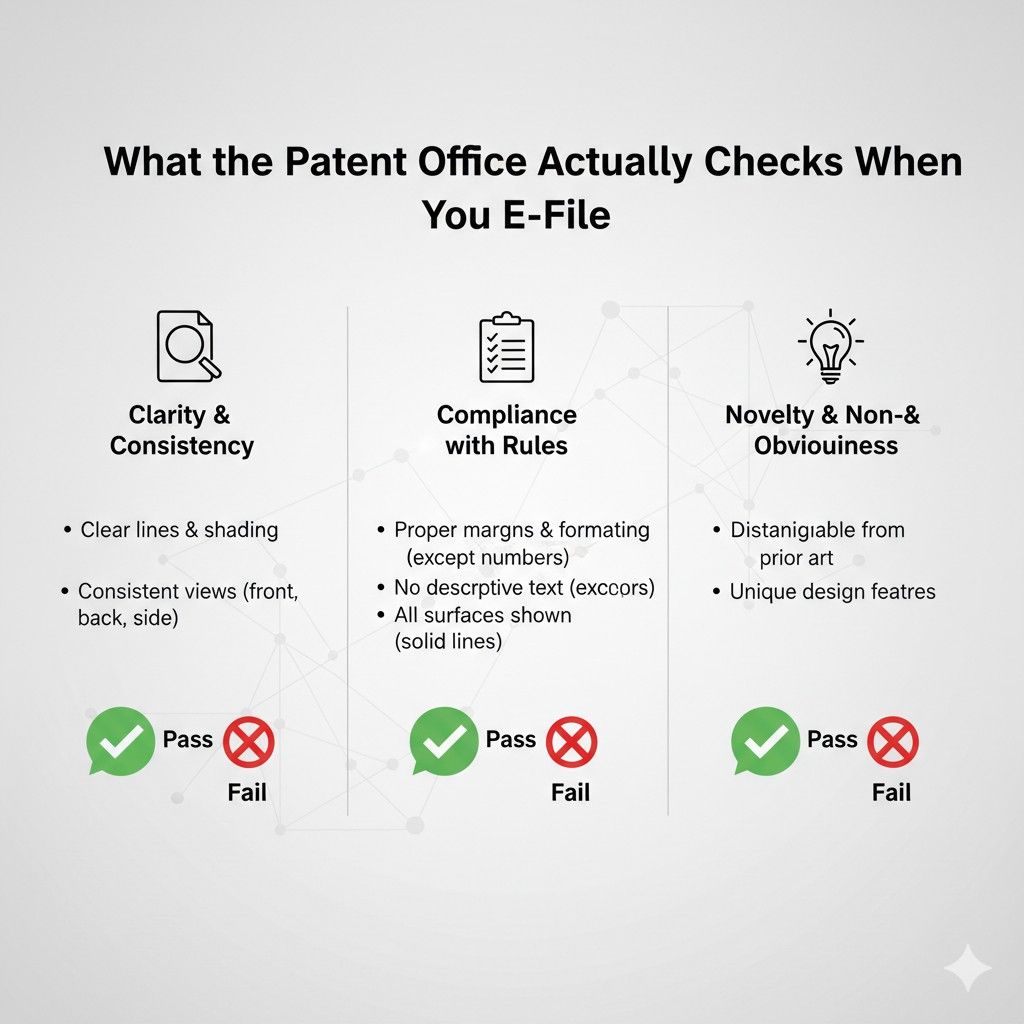
Understanding what the Patent Office actually checks turns design filing from a gamble into a repeatable process.
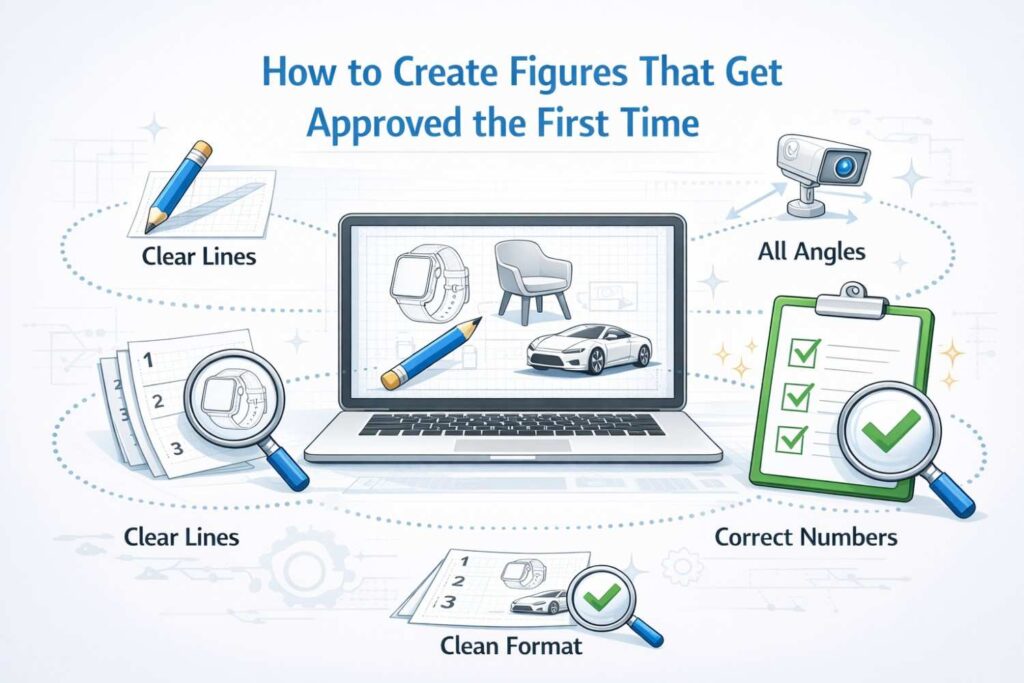
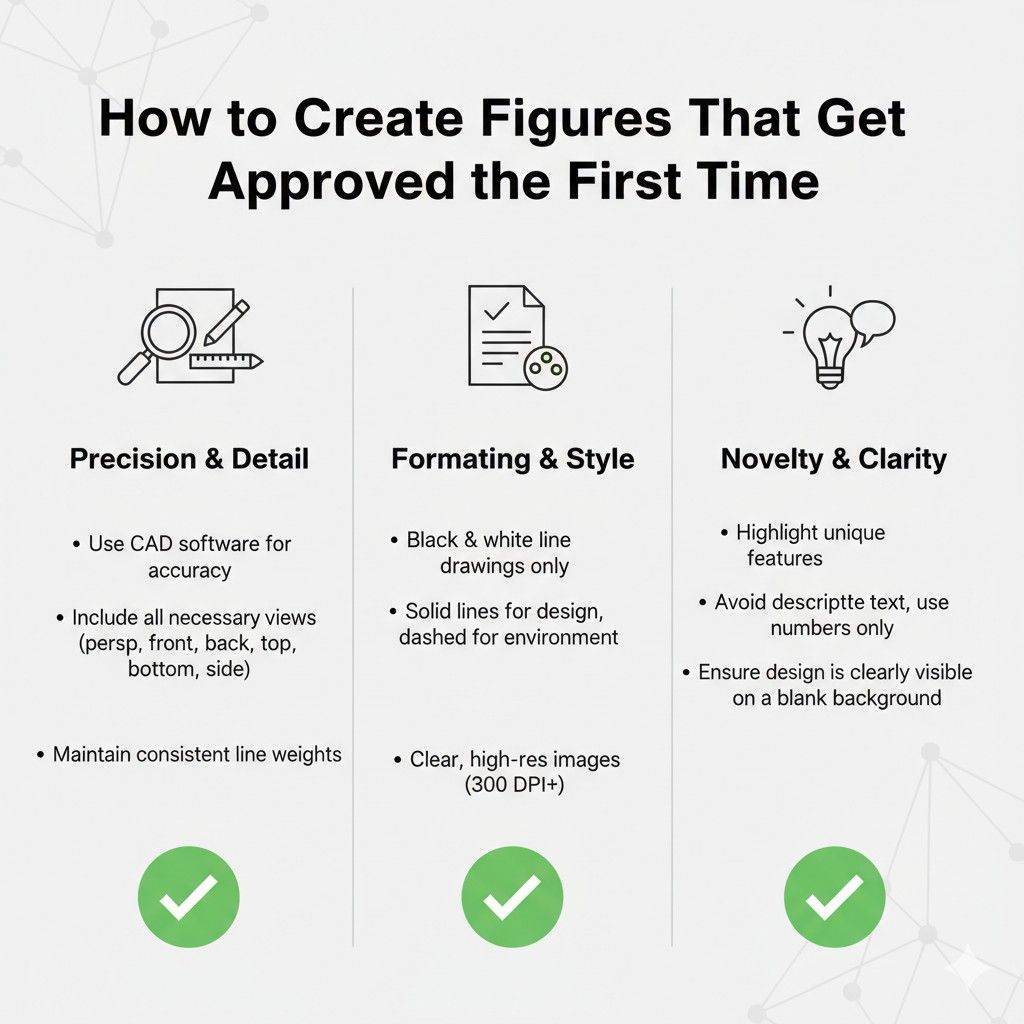
How to Create Figures That Get Approved the First Time
Most design applications fail for reasons that have nothing to do with the product itself. They fail because the figures were treated as an afterthought.
This section focuses on how businesses can deliberately create figures that meet the Patent Office where it is, reduce risk, and move straight to approval without costly rewrites or delays.
Start With the Claim in Mind, Not the Drawing
Before a single line is drawn, you should already know what you want to protect. Many founders jump straight into creating visuals without deciding what the core visual identity really is.
This creates figures that are technically correct but strategically weak. They either claim too much detail or miss the features that actually matter in the market.
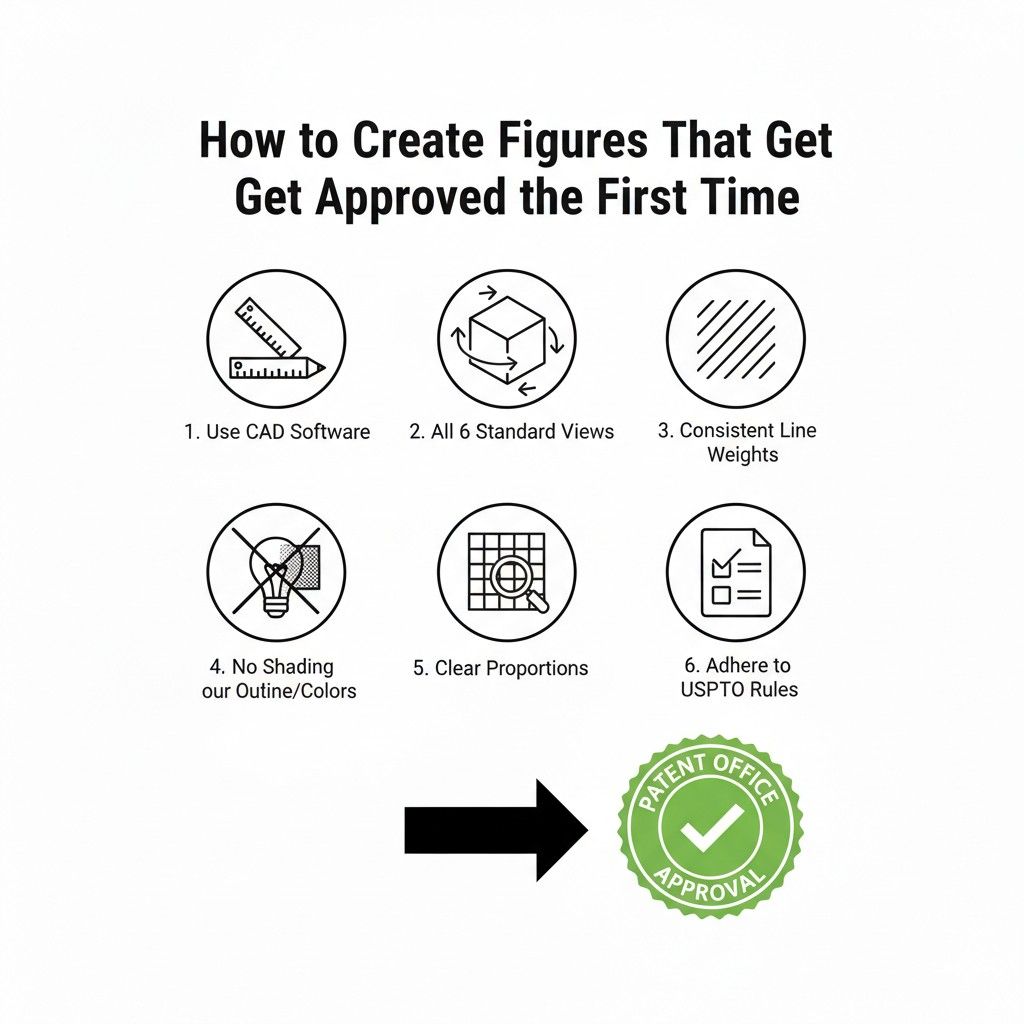
A smarter approach is to step back and ask what someone would copy if your product became successful. That answer should guide every figure decision. The drawings are not art. They are a boundary around value.
Lock the Design Before You Draw Anything
One of the biggest hidden causes of rejection is design drift. A small tweak here, a tiny adjustment there, and suddenly the figures no longer describe a single, unified design.
The Patent Office expects one design, not a family of similar ones. If your team is still changing the product, filing too early can lock in confusion.
For businesses, this means choosing a moment when the external appearance is stable, even if internals are still evolving. Once that moment is chosen, freeze the design for figure creation. No exceptions.
Use One Source of Truth for All Views
Figures should never be drawn independently. Every view must come from the same underlying geometry. When views are created separately, tiny differences creep in.
Those differences are easy to miss internally but easy to spot during examination. And once flagged, they are hard to explain away.
The most reliable method is to generate all views from a single master model or drawing. This keeps proportions consistent and eliminates accidental contradictions.
Choose Views That Explain the Shape, Not Impress the Eye
Perspective views look impressive, but they are not always helpful. The examiner is not impressed by drama. They are looking for understanding.
Each view should exist for a reason. It should clarify something that another view cannot. If a view does not add clarity, it adds risk.
Businesses should favor straightforward angles that reveal structure over creative angles that look nice in a pitch deck. Patent figures serve a very different audience.
Keep Lines Calm, Even, and Intentional
Line quality is not cosmetic. It affects how the examiner interprets certainty. Uneven or hesitant lines suggest ambiguity in shape.
This does not mean figures must be fancy. In fact, simple lines often work best. What matters is that every line looks like it belongs exactly where it is.
A good internal check is to zoom in and follow each line with your eyes. If anything feels uncertain or sloppy, it will feel that way to the examiner too.
Decide Early What You Will Not Claim
One of the most strategic choices in figure creation is deciding what to leave out. Not every visible feature needs protection.
If certain elements are likely to change, or are dictated by standards or suppliers, claiming them can limit future versions.
Businesses that think long-term deliberately exclude these elements using broken lines or omission. This creates flexibility while still protecting the core look.
Be Careful With Symmetry Assumptions
Many products are symmetrical, but the Patent Office does not assume symmetry unless it is clearly shown. If one side is shown in detail and the other is implied, that can raise questions.
The safest path is to show enough views that symmetry is obvious without explanation. If symmetry matters to your design, it should be visually undeniable.
This avoids follow-up questions and prevents accidental narrowing of scope.
Avoid Decorative Detail That Does Not Add Meaning
Textures, patterns, and surface details can be tempting to include. But every detail you show becomes part of the claim.
If a texture is core to your product’s identity, include it clearly and consistently. If it is decorative or optional, including it may do more harm than good.
Businesses should be ruthless here. Only include details that truly define the design. Everything else creates unnecessary constraints.
Keep Scale and Proportion Consistent Across All Figures
Examiners compare figures closely. If one view makes a feature look large and another makes it look small, that inconsistency creates doubt.
This often happens when figures are resized independently or cropped differently. The fix is to standardize scaling and framing across all views.
A simple internal rule is that corresponding features should feel the same size everywhere. If they do not, something is wrong.
Review Figures as a Stranger Would
After working on a product for months or years, it is hard to see it fresh. But the examiner is seeing it for the first time.
Businesses that succeed build in a cold review step. Someone unfamiliar with the product looks at the figures and explains what they see.
If that explanation differs from your intent, the figures need work. This step alone can catch many issues before filing.
Design for the Examiner’s Workflow
Examiners review many applications under time pressure. Figures that are easy to understand reduce friction.
Clear margins, clean labeling, and logical ordering of views all help. These are small things, but they signal professionalism and care.
From a business perspective, anything that makes approval easier is worth doing. Speed compounds.
Think About Enforcement While You Draw
Approval is only the beginning. Figures also define what you can enforce later.
If your figures are overly narrow, competitors can design around them. If they are clear but flexible, enforcement becomes easier.
This is why figure strategy should involve both design and business thinking. You are not just filing. You are setting future leverage.
Test Your Figures Against Real-World Copies
A powerful exercise is to imagine a knockoff version of your product. Would it still fall within the visual boundary your figures create?
If the answer is no, your figures may be too specific. If the answer is unclear, they may be too vague.
Refining figures with this test in mind helps balance clarity and coverage.
Do Not Treat Filing as the Finish Line
Many founders rush to file and move on. But the goal is not filing. The goal is allowance.
Figures that pass on the first try are almost always the result of deliberate preparation, not speed alone.
This is where modern systems help. PowerPatent guides founders through figure creation with attorney oversight and built-in checks, so mistakes are caught before submission. You can see exactly how that works at https://powerpatent.com/how-it-works.
First-Try Approval Is a System, Not Luck
Businesses that consistently get design patents approved quickly do not rely on chance. They follow a repeatable approach.
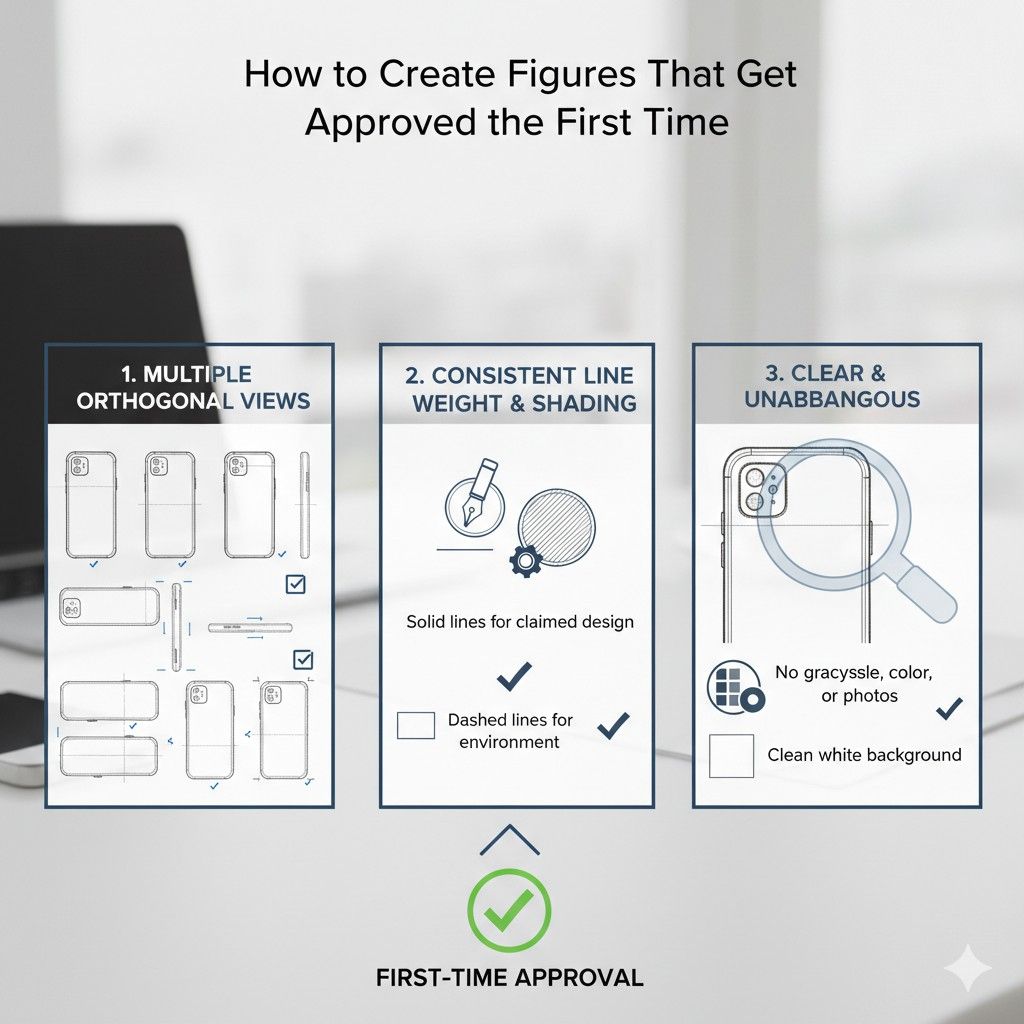
They decide what matters, lock the design, create consistent figures, and review them strategically. The result is fewer office actions, faster grants, and stronger protection.
Wrapping It Up
By now, one thing should be very clear. In a design application, the figures are not supporting material. They are the entire case. Everything the Patent Office decides is based on what those figures show, how clearly they show it, and how consistently they work together. For businesses, this changes how design patents should be approached. Filing is not a paperwork task to check off a list. It is a strategic move that can protect market position, block copycats, and increase company value. When figures are rushed or treated casually, that opportunity shrinks fast.