Patents often fail for one simple reason: the words are not clear enough. After the Supreme Court’s Nautilus decision, that problem became fatal. The rule is now strict and unforgiving—if a patent claim does not clearly tell a skilled reader exactly where the invention starts and stops, it does not survive. There is no room for guesswork, soft language, or fuzzy edges. This matters deeply for founders and engineers because even a powerful invention can be wiped out by one unclear phrase.
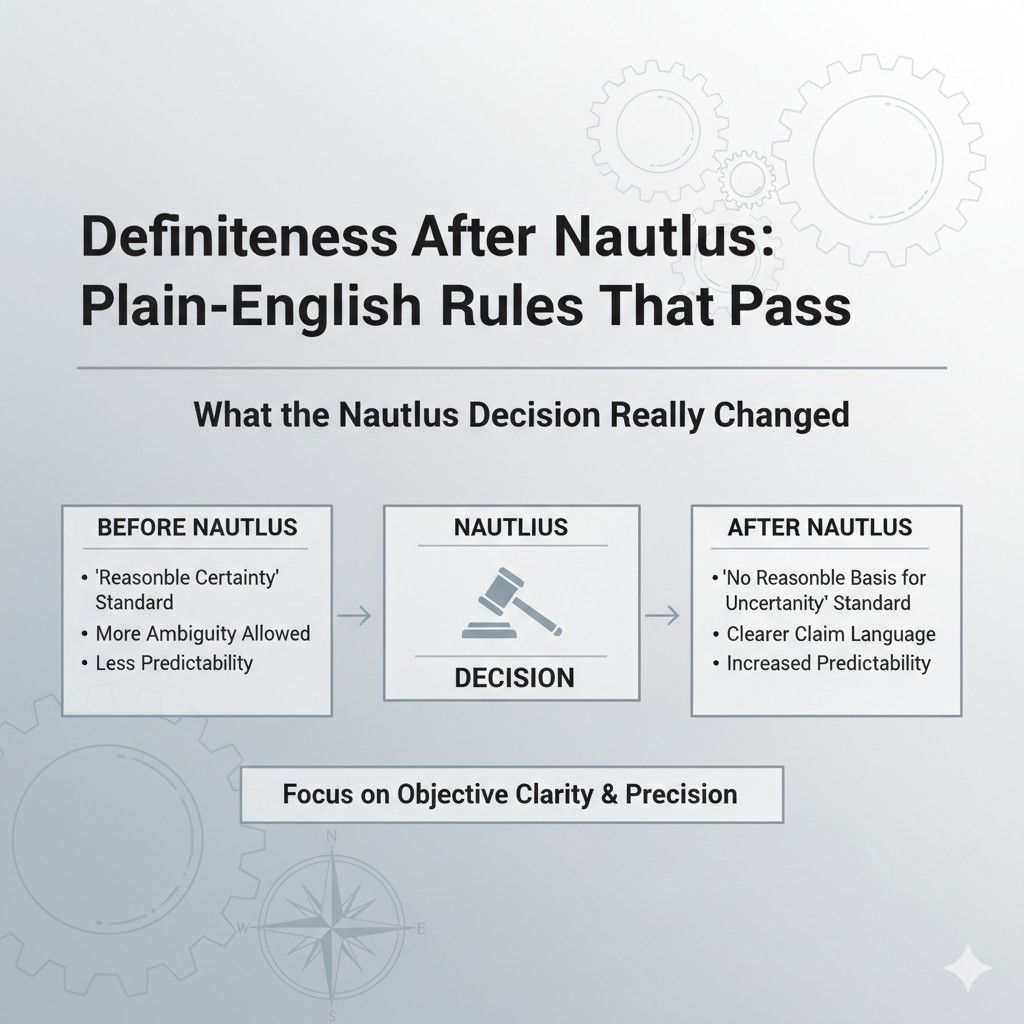
What the Nautilus Decision Really Changed
The Nautilus decision quietly reset the rules of the patent game. It did not change how inventions work or what can be patented. It changed how clearly inventors must explain their ideas.
For businesses, this shift is not academic. It affects whether your patent scares competitors, survives due diligence, or collapses the first time it is challenged.
Understanding this change is less about knowing the case and more about knowing how your words will be judged years later.
Before Nautilus, “Good Enough” Was Often Enough
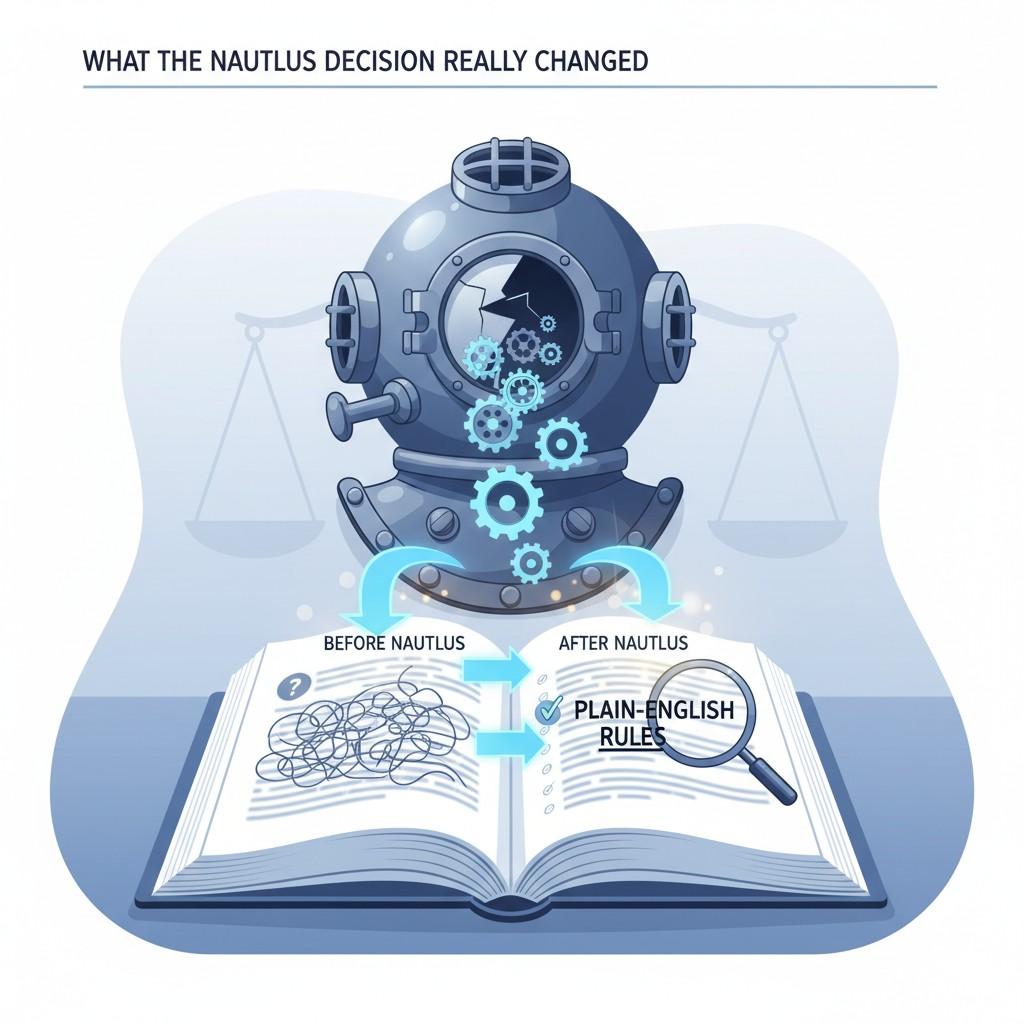
Before Nautilus, many patents survived even if their claims were hard to pin down. Courts asked whether a claim was hopelessly unclear, not whether it was truly precise.
That left room for soft phrases, flexible boundaries, and language that tried to cover everything at once.
For businesses, this created a false sense of safety. Founders believed broad and fuzzy claims were powerful, when in reality they were fragile.
The old standard rewarded clever drafting over clear thinking. Patents looked strong on paper but cracked under pressure. Nautilus shut that door.
After Nautilus, Precision Became the Price of Admission
Nautilus replaced the old test with a much stricter one. Now the question is whether a skilled reader can understand the scope of the claim with reasonable certainty.
That phrase sounds harmless, but it is ruthless in practice. It means the claim must draw a clean line. If someone reading it cannot tell what is inside the invention and what is outside, the claim fails.
For companies, this means patents are no longer about hiding behind complexity. They are about clarity. A claim that sounds impressive but leaves room for debate is now a liability, not an asset.
Why This Shift Hit Technology Companies the Hardest
Software, AI, and systems patents felt the impact of Nautilus more than any other area. These inventions rely on behavior, data flow, and results, not physical parts you can point to.
That makes vague language tempting. Words like efficient, optimized, intelligent, or adaptive feel natural when describing modern tech.
After Nautilus, those words are dangerous unless they are tied to something concrete.
Businesses that rely on fast-moving tech must now slow down just enough to define what those terms really mean in the context of their product.
The Hidden Business Risk of Unclear Claims
An unclear claim does not just risk invalidation in court. It weakens your position long before that. Investors notice it during diligence. Acquirers discount it during valuation.
Competitors read it and design around it with confidence.
The real cost of indefiniteness is not the lawsuit. It is the lost leverage. A patent only creates power if others know exactly what they cannot do. Nautilus made that expectation explicit.
How Courts Now Read Your Claims in Practice
Courts no longer bend over backward to save a claim. They read it like an engineer would, not like a poet.
If the claim relies on a term that could mean different things depending on who reads it, the court will not guess which meaning you intended. Silence is no longer forgiven.
This means businesses must assume a hostile reader. Someone looking for gaps. Someone motivated to misunderstand. Claims must be written so that even that reader cannot escape the boundary.
The End of Strategic Ambiguity
Many older patent strategies relied on leaving things open. The idea was to keep options flexible and catch future versions of the product. Nautilus made that strategy risky. Ambiguity is no longer strategic if it costs you the claim.
The better approach is controlled breadth. You can still write broad claims, but every inch of that breadth must be anchored to clear language. Businesses that master this gain both flexibility and durability.
What Reasonable Certainty Really Means for Founders
Reasonable certainty does not mean perfection. It means that someone skilled in the field can read the claim and understand its limits without guessing.
For founders, this is an invitation to think like a user of the patent, not just the owner.
Ask whether another engineer could build around your claim without seeing your product. If the answer is yes because the words are unclear, the claim is already in trouble.
Turning Product Knowledge Into Claim Clarity
Founders often hold the key to definiteness without realizing it. You know how your system behaves, when it works, and when it does not.
That knowledge must be translated into claim language. The mistake is assuming the patent can stay high-level.
After Nautilus, high-level descriptions must still connect to real structure or real steps.
Businesses that involve product builders early in the patent process produce far stronger claims than those who outsource clarity to legal language alone.
Why Documentation Now Matters More Than Ever
Clear claims are easier to write when the invention is well documented. Internal specs, diagrams, and decision logs help define boundaries.
Nautilus rewards teams that can point to concrete implementations, even if the claims themselves are broader.
For businesses, this means patent readiness is not a one-time event. It is an extension of good engineering hygiene.
Using Nautilus as a Competitive Advantage
Many companies still draft patents as if Nautilus never happened. That creates an opportunity. When your claims are written with clarity from the start, they stand out. They survive challenges. They command respect.
Businesses that embrace definiteness early spend less time fixing patents later and more time using them. This is where modern tools matter.
Platforms like PowerPatent help translate real product behavior into clean, precise claims with attorney oversight built in.
That combination is exactly what Nautilus demands. If you want to see how that process works in practice, you can explore it here: https://powerpatent.com/how-it-works
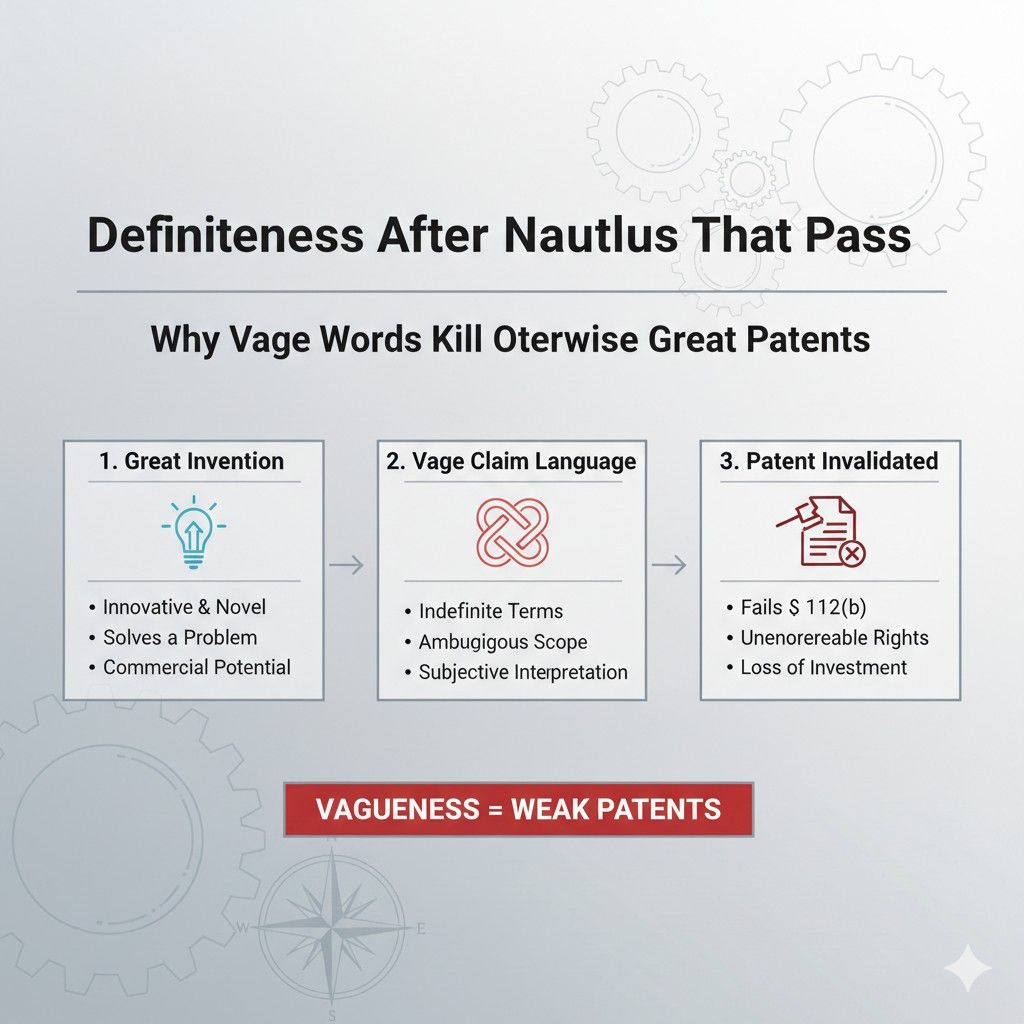
Why Vague Words Kill Otherwise Great Patents
Vague language feels safe when you are drafting a patent. It sounds broad. It sounds flexible. It feels like it protects more ground. After Nautilus, that instinct is wrong.
Today, vague words are one of the fastest ways to destroy an otherwise strong patent. For businesses, this is not about writing style. It is about survival, leverage, and long-term value.
Vague Language Looks Broad but Acts Weak
Many founders believe that general words create stronger protection. In reality, those words often do the opposite.
When a claim uses terms that can stretch in many directions, courts do not see flexibility. They see uncertainty. And uncertainty is fatal under modern definiteness rules.
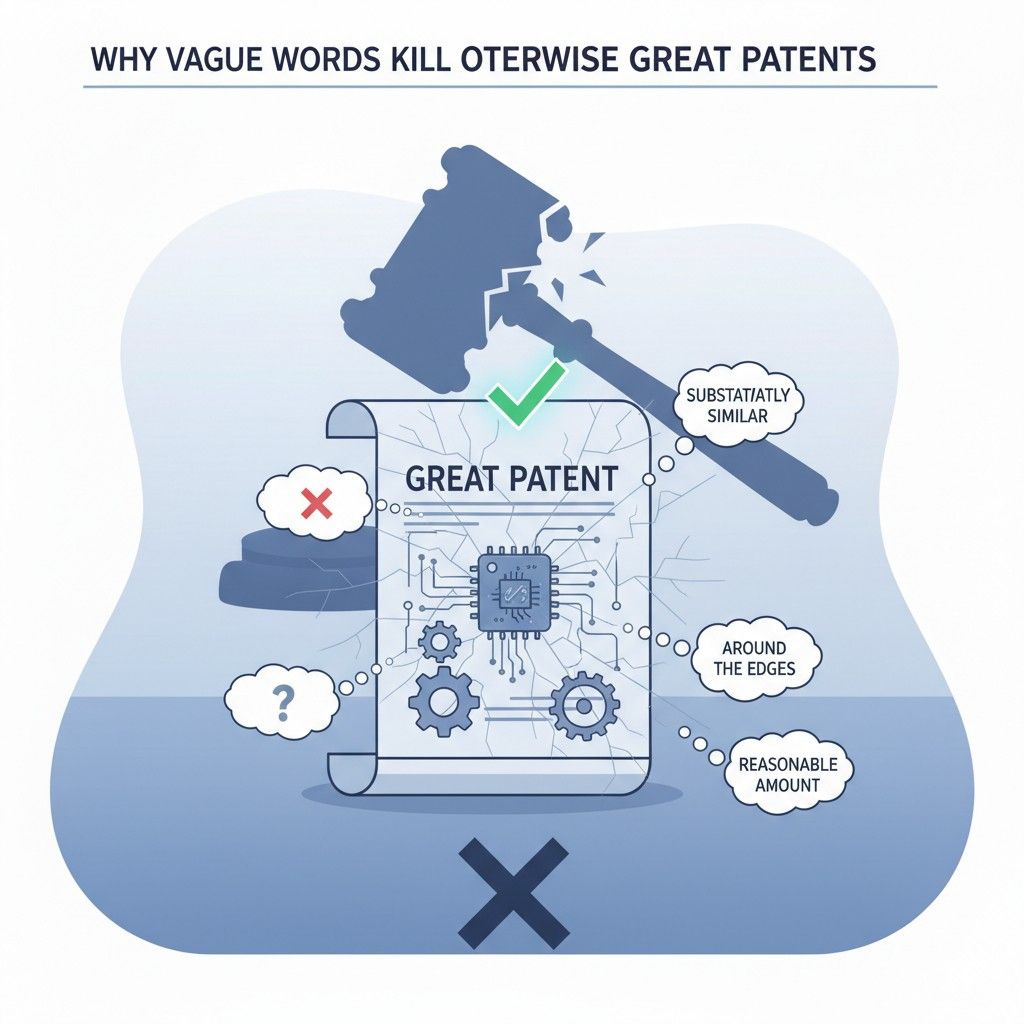
A claim that tries to cover everything often ends up covering nothing. Competitors exploit the gaps. Judges refuse to guess. What looked broad on filing day becomes narrow or invalid years later.
Words That Feel Obvious Are Often the Most Dangerous
Certain words feel harmless because everyone uses them. Terms like optimized, efficient, dynamically, substantially, or intelligently sound normal in product conversations.
In patents, they are landmines unless handled carefully.
The problem is not the word itself. The problem is that the word invites questions.
Optimized compared to what. Efficient in what way. Intelligent based on which logic. If the claim does not answer those questions, it leaves the reader guessing. Nautilus does not allow guessing.
Why Engineers Understand This Better Than Lawyers Alone
Engineers rarely accept vague specs. If a requirement says the system should run fast, the first question is fast compared to what. Patent claims deserve the same treatment.
Vague language fails because it skips the engineering discipline founders already live by.
Businesses that involve technical founders deeply in claim drafting catch vagueness early. They replace fuzzy words with real behavior, real constraints, and real outcomes. That is how claims become defensible.
The False Promise of “We Can Explain It Later”
One of the most dangerous assumptions in patent drafting is that details can be explained later. Maybe in the description. Maybe during enforcement. Maybe through expert testimony. Nautilus cut that safety net.
If the claim itself does not define the boundary clearly, later explanations often do not save it. Courts look first and hardest at the claim language. Businesses that rely on future interpretation are betting their IP on hope.
How Vague Claims Fail During Due Diligence
Even before court, vague claims cause damage. Investors and acquirers read patents with skepticism. When they see unclear terms, they discount the asset. They assume higher risk. They lower valuations.
For a business, this means vague language can quietly cost millions without ever triggering a lawsuit. Clear claims are easier to explain, easier to trust, and easier to price.
Competitors Love Unclear Boundaries
A vague claim is an invitation. It tells competitors that the line is blurry and that design-arounds are possible. Clear claims scare competitors because the risk is obvious.
After Nautilus, competitors know the rules. They know courts demand certainty. If your claim leaves room, they will step into it confidently.
How Vagueness Creeps In Without Notice
Vagueness rarely comes from carelessness. It usually comes from speed. Founders move fast. Products evolve. Patent drafts try to keep up. In that rush, language becomes abstract.
The fix is not slowing down innovation. It is slowing down wording just enough to lock meaning in place. Businesses that treat claim language as a strategic asset, not an afterthought, avoid this trap.
Replacing Vague Words With Anchors
The goal is not to make claims narrow. The goal is to make them anchored. Anchors tie a term to structure, steps, or measurable behavior. They give the reader something solid to hold onto.
For example, instead of describing what a system achieves, describe how it achieves it. Instead of naming a result, connect it to an action. This shift alone strengthens definiteness without shrinking scope.
Why Plain English Wins Under Modern Scrutiny
Complex language does not equal clarity. In fact, it often hides uncertainty. Courts favor simple, direct wording because it reduces interpretation gaps.
Businesses benefit when claims read like clear instructions rather than abstract promises. Plain English forces precision. It exposes weak thinking early, when it can still be fixed.
Turning Vagueness Into a Strategic Advantage
Once you understand how dangerous vague language is, you can use that knowledge offensively.
When your patents are clear and your competitors’ patents are not, you gain leverage. You can challenge weak claims. You can negotiate from strength.
Platforms like PowerPatent are built around this reality. They push founders to replace vague phrases with concrete meaning, while still working fast and staying founder-friendly.
That combination is what modern patents require. If you want to see how that process works, you can explore it here: https://powerpatent.com/how-it-works
How Courts Decide If a Claim Is “Clear Enough”
Courts do not read patent claims the way founders read pitch decks. They read them with suspicion. After Nautilus, the job of a court is not to admire the invention.
It is to decide whether the words draw a clean boundary that others can understand without guessing. For businesses, knowing how this decision is made changes how you should think about every sentence in a claim.
Courts Start With the Claim, Not the Story
When a patent is challenged, courts begin with the claim language itself. They do not start with the product. They do not start with the inventor’s intent. They start with the words on the page.
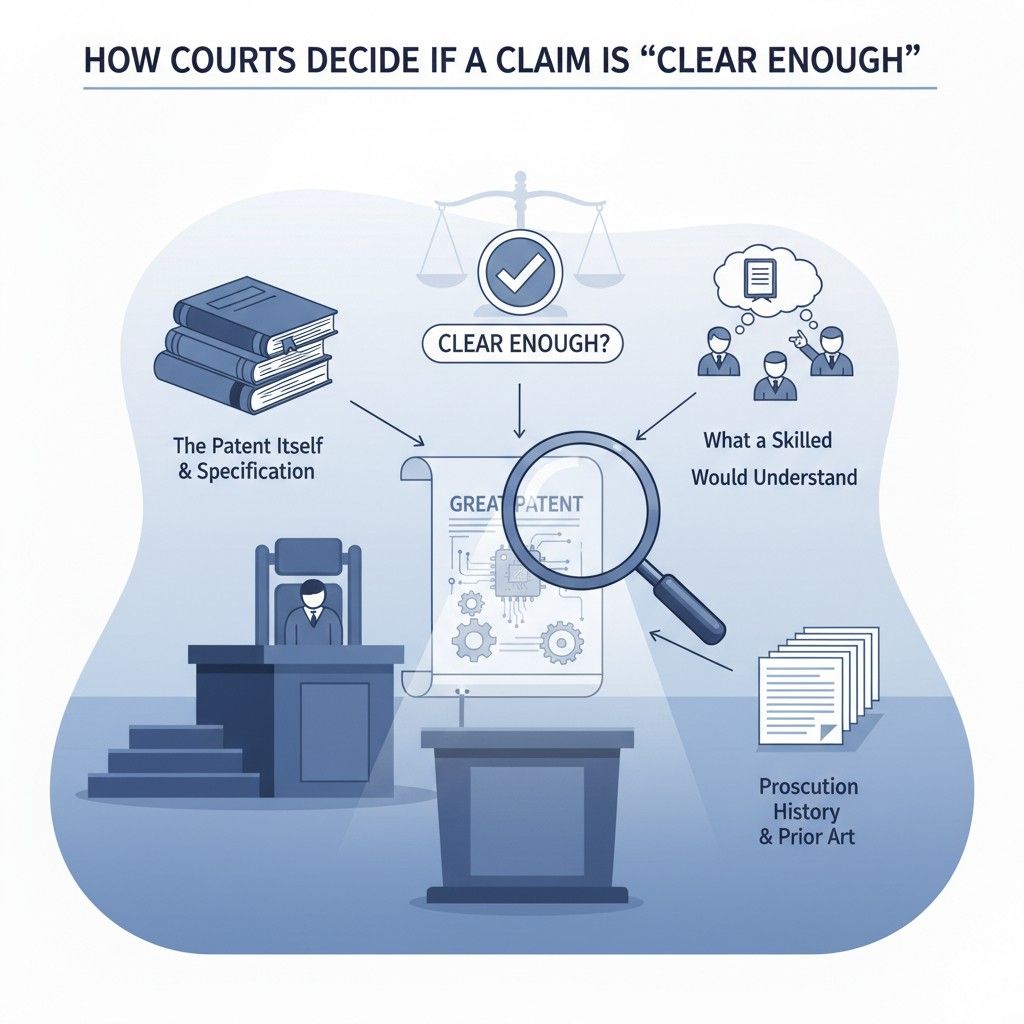
This matters because many founders assume the description will carry the meaning. In reality, the claim must stand on its own. If the claim is unclear, no amount of backstory fixes it.
The Skilled Reader Is Not Your Friend
Courts imagine a skilled person in the field reading the claim. That reader is knowledgeable, but neutral. They are not trying to help you. They are not trying to make the claim work.
If that reader could reasonably walk away with two different interpretations, the claim is in danger. Businesses must draft claims assuming a skeptical but informed audience.
Context Helps, But It Does Not Save
Courts do look at the rest of the patent for context. Definitions in the description matter. Examples help. But context cannot rescue a fundamentally unclear claim.
This is why burying meaning deep in the specification is risky. The clearer path is to reflect that meaning directly in the claim, using language that aligns with the rest of the patent.
Relative Terms Trigger Extra Scrutiny
Words that describe things in relation to something else are closely examined. Terms like high, low, fast, slow, or minimal invite comparison. Courts ask what reference point applies.
If the claim does not answer that question, the term becomes suspect. Businesses should assume that every relative term will be challenged and draft accordingly.
Functional Language Must Point Somewhere Real
Many modern inventions are described by what they do rather than what they are. Courts allow this, but only when the function is tied to real structure or real steps.
If a claim says a system is configured to perform a task, the court looks for support that explains how. Without that link, the claim may be seen as an empty promise.
Mathematical and Algorithmic Claims Get Special Attention
For software and AI patents, courts often look for clear logic flow. Vague references to models, rules, or decision-making processes raise red flags.
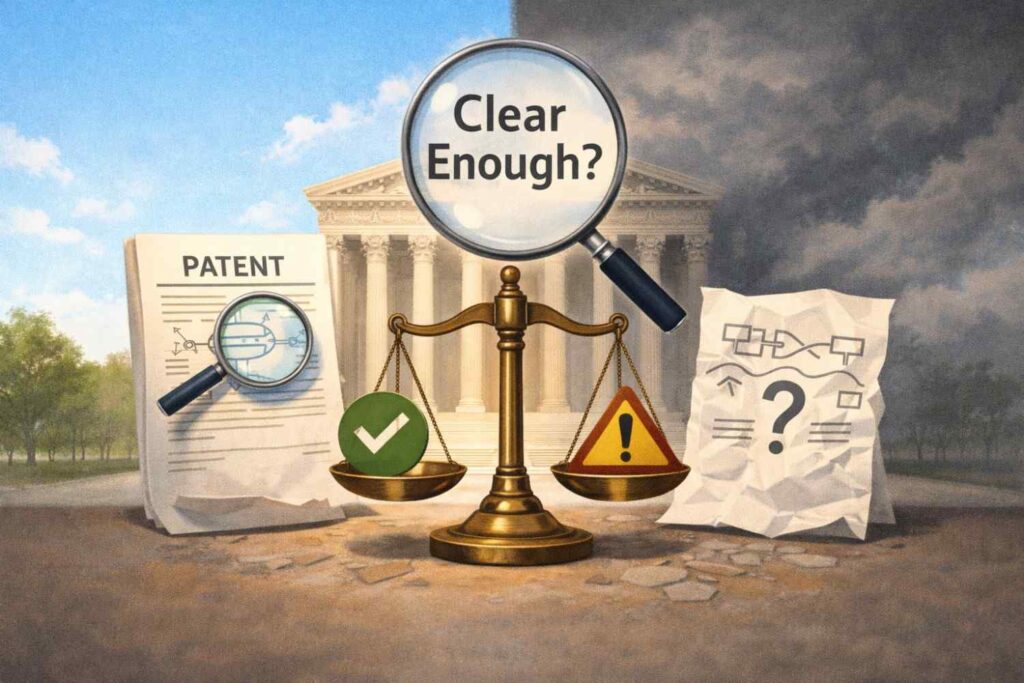
This does not mean you must reveal trade secrets. It means the claim must still define boundaries in a way that a skilled reader can follow. Businesses that describe algorithms in clear, step-based language tend to fare better.
Consistency Is a Silent Requirement
Courts notice when the same term is used differently across claims or descriptions. Inconsistency creates confusion, and confusion undermines definiteness.
This is why claim language should be treated like product terminology. One concept, one name, one meaning. Businesses that enforce this discipline produce stronger patents.
Amendments Can Make Things Worse
During prosecution, changes to claim language are often made quickly to overcome rejections. These edits can introduce ambiguity if not handled carefully.
Courts examine this history. If amendments suggest uncertainty or shifting boundaries, definiteness challenges become easier. Strategic consistency over time is critical.
How Judges Think About Fair Notice
At its core, definiteness is about fairness. Courts ask whether the claim gives fair notice to the public about what is protected.
If competitors cannot tell what they must avoid, the claim fails that test. Businesses that focus on fair notice create patents that courts respect.
Designing Claims for the Worst-Case Reader
The best way to pass the court’s test is to draft claims as if they will be attacked by a motivated opponent. Every term should have a reason. Every boundary should be intentional.
This mindset transforms patent drafting from a filing task into a strategic exercise. It also reduces risk later, when stakes are higher.
Why Modern Tools Matter in This Process
Meeting this standard consistently is hard to do manually, especially for fast-moving teams. Tools that surface vague language early and tie claims back to real product behavior make a real difference.
PowerPatent was built to help founders think like courts think, without turning them into lawyers.
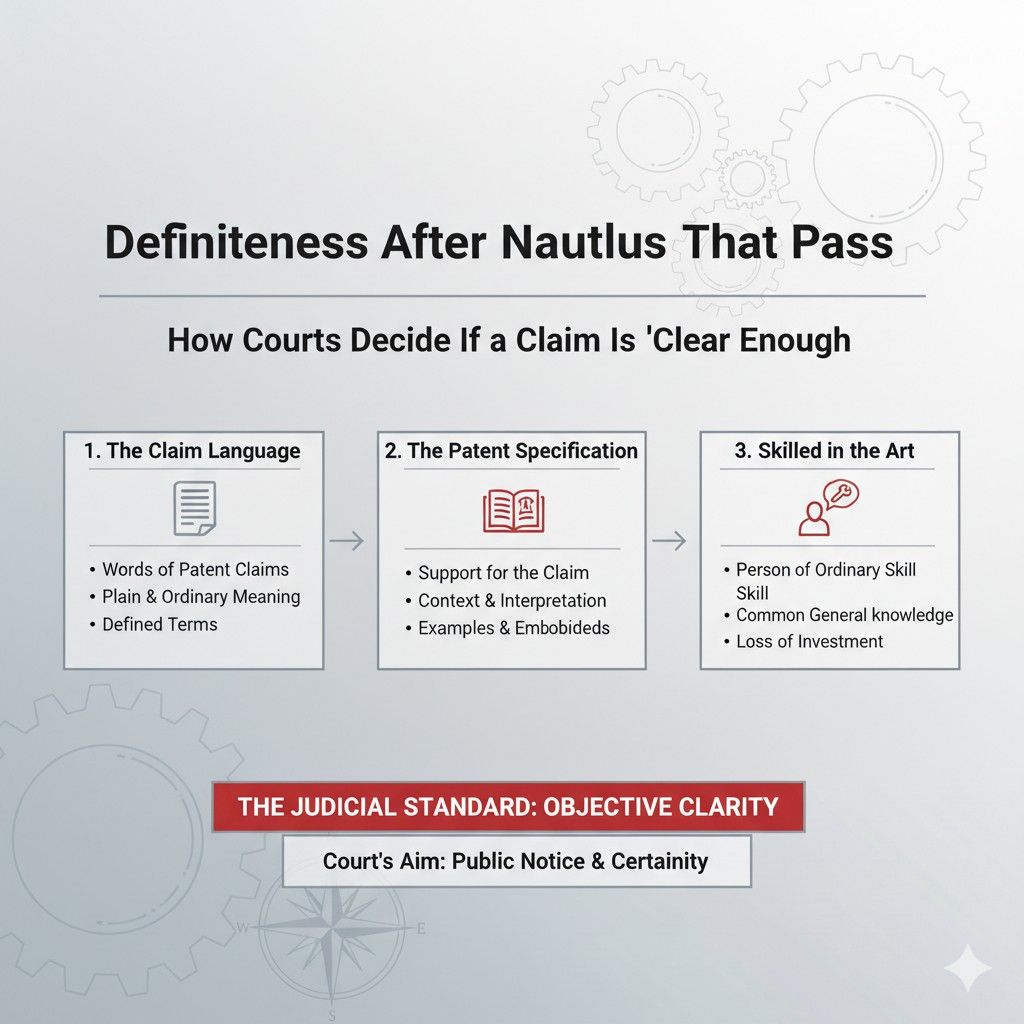
By combining software guidance with real attorney review, it helps ensure claims are clear before they are ever tested. You can see how that works here: https://powerpatent.com/how-it-works
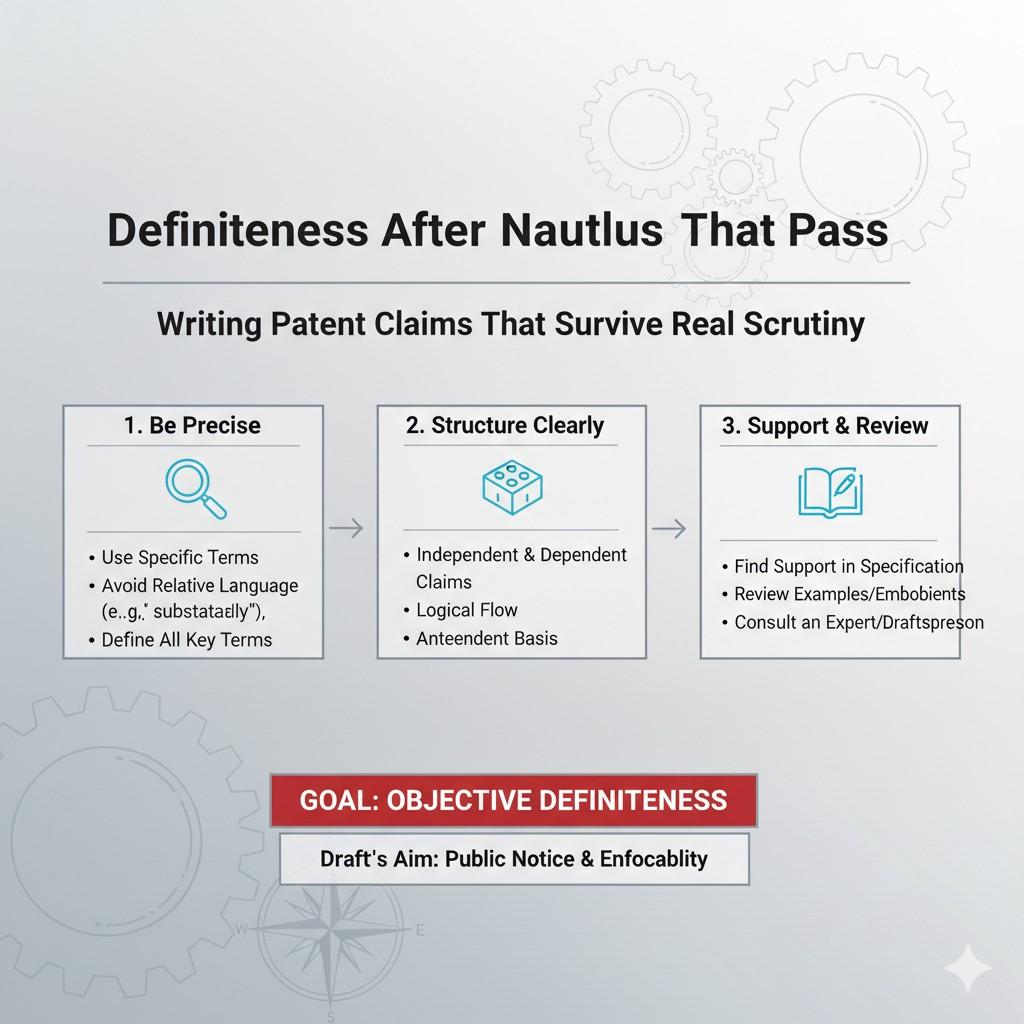
Writing Patent Claims That Survive Real Scrutiny
Strong patent claims are not written for filing day. They are written for the day someone tries to break them.
After Nautilus, that day matters more than ever. Businesses that treat claim drafting as a defensive and offensive strategy end up with patents that hold value long after the product has changed.
Start With the Business Goal, Not the Template
Many patent drafts begin with a familiar structure and then try to fit the invention into it.
That approach often produces generic language that misses what actually matters. The stronger approach is to start with the business goal of the patent.
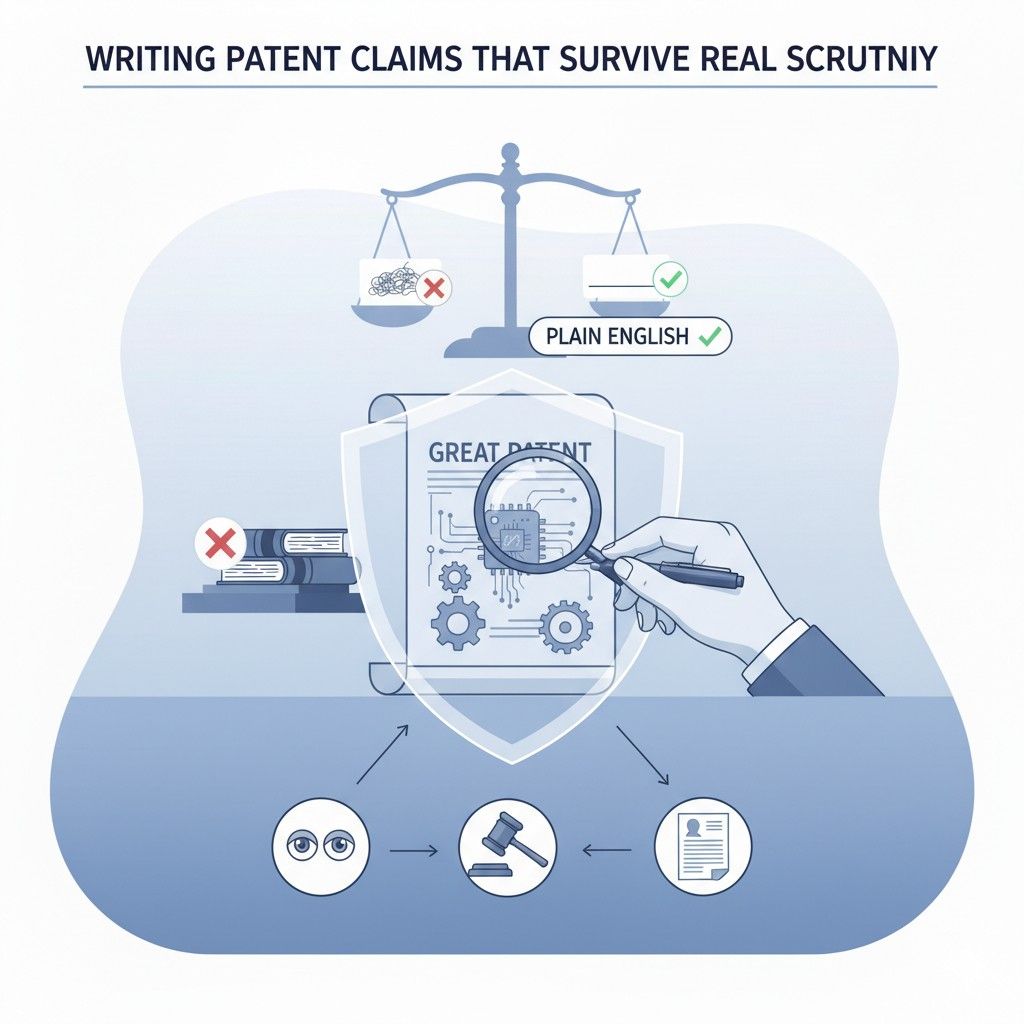
Ask what behavior you want to stop. Ask what a competitor should not be allowed to do. When claims are built around those answers, the language becomes naturally clearer and more focused.
Translate Product Behavior Into Claim Language
Every real product behaves in specific ways. It processes data in a certain order. It reacts to inputs with defined outputs. Those behaviors are the raw material of clear claims.
Founders often underestimate how much detail is already in their heads. Writing claims that mirror actual system behavior reduces vagueness and increases defensibility. The closer the claim tracks reality, the safer it is under Nautilus.
Avoid Naming Results Without Explaining the Path
One common failure is naming a desired outcome without anchoring how it is reached. Courts do not reward ambition. They reward explanation.
If a claim refers to a result, it should also reflect the steps or structure that lead there. This does not mean limiting the invention. It means showing the reader where the line is drawn.
Control Breadth Through Definitions, Not Mystery
Broad claims survive when their terms are well defined, not when they are left open. Defining a term does not shrink its scope if the definition is thoughtful.
Businesses that invest time in clear definitions gain both clarity and control. The claim becomes flexible but still bounded, which is exactly what courts want to see.
Keep Claim Language Aligned With How Engineers Talk
Claims that sound nothing like the product tend to fail. When claim terms drift away from engineering language, confusion follows.
Using the same words your team uses internally creates consistency and clarity. It also makes the patent easier to defend because the meaning is grounded in real-world use.
Design Claims With Future Versions in Mind
Products evolve. Claims should anticipate that evolution without becoming vague. The key is to focus on core mechanisms rather than surface features.
When claims are anchored to how the invention works rather than how it looks, they age better. This approach protects future versions while staying definite.
Use Examples to Stress-Test Clarity
A simple test for definiteness is to imagine edge cases. Would the claim cover this scenario. Would it exclude that one. If the answer is unclear, the language needs work.
Businesses that run this mental exercise early catch problems before filing. It is far cheaper to fix ambiguity during drafting than during litigation.
Build a Review Loop That Prioritizes Clarity
Claim drafting should not be a one-pass activity. Review by both technical and legal minds exposes weak spots.
Founders, engineers, and patent professionals each see different risks. When all three perspectives are involved, claims become sharper and more resilient.
Treat Claims as Living Strategic Assets
A patent is not just a document. It is a tool. Claims should be revisited as the business grows, competitors emerge, and the market shifts.
While issued claims cannot be rewritten, the lessons learned should inform future filings. Over time, this creates a portfolio that is consistently clear and strong.
Why Speed and Clarity Must Coexist
Some teams believe clarity slows them down. In reality, unclear patents slow you down later, when changes are expensive and stakes are high.
Modern platforms make it possible to move fast without sacrificing precision. PowerPatent was built to help founders capture clear claims early, using smart software and real attorney oversight.
This approach aligns perfectly with the demands of Nautilus. If you want to see how teams do this in practice, you can explore it here: https://powerpatent.com/how-it-works
Wrapping It Up
The Nautilus decision did not make patents harder to get. It made them harder to fake. It drew a clear line between patents that sound strong and patents that actually are strong. For businesses, that line matters because clarity is what turns a patent from a piece of paper into real leverage. Definiteness is no longer a box to check at the end of drafting. It is the core test that determines whether your patent survives scrutiny, supports valuation, and scares competitors. Clear claims signal confidence. They tell the market that you know exactly what you built and exactly what you are protecting.