Most founders think the hardest part of patents is filing. But the real challenge shows up later—quietly, slowly, and usually at the worst possible time. It’s the long-term costs. The maintenance fees. The renewals. The annuities. The stuff nobody warns you about until you’re already deep in the process and trying to stretch every dollar.
Why Long-Term Patent Costs Matter More Than You Think
This part of the article sets the stage for why looking far ahead is not just smart but necessary. Many founders focus on filing fees because those are the costs they see today.
But the real financial weight of a patent usually shows up years after it is filed.
When you understand this long tail early, you can protect your business from surprise expenses and make choices that match your growth plan instead of reacting under pressure.
The Hidden Costs That Sneak Up on Fast-Growing Startups
Most founders build their IP strategy around what they can see today, but patents don’t work on a short timeline.
They run on a decade-long clock. While the filing moment feels like the finish line, it is really the first step in a much longer path that brings recurring costs.
These costs show up in quiet waves. At first they are small, easy to ignore, and feel harmless.
But then the fees grow larger as the patent ages, and if a business has not planned for them, the fees can hit at the exact moment cash is tight and priorities are shifting.
This is why long-term thinking matters.

When you understand the full cost arc of your patent before you even file, you can decide which inventions deserve long-term protection, which markets you want coverage in, and which filings are not worth the ten-year commitment.
This alone can save thousands while giving your business a clear, calm plan.
How Poor Forecasting Can Put Pressure on Product Decisions
One of the most overlooked risks is how unplanned patent costs ripple into the rest of the company.
When maintenance fees catch a team off guard, the money often comes from budgets that were meant for product, hiring, or customer growth. Engineers feel it. Marketing feels it. Even roadmap choices bend around the cost surprises.
A startup might drop a patent family not because the technology lost value, but because the fees were not planned and the team panicked.
Another startup might keep paying for patents they don’t actually need simply because nobody took the time to map out what still aligns with their business today. Both lead to wasted money and wasted opportunity.
When founders build a clean, predictable cost plan for the next five or ten years, they protect their product roadmap from these shocks. The team stays focused.
Decisions become strategic instead of reactive. And leadership gets the clarity it needs to grow without stepping into financial holes that could have been avoided.
Why Predictability Gives You More Power at Every Stage
Patents often get treated as static documents, but their value shifts over time as your company shifts. Some inventions become core to your business. Others fade.
Some markets open up. Others close. A predictable cost plan helps you respond to these changes with precision instead of guessing.
Predictability means you can plan what to keep, what to let go, and when to double down. It means you know exactly how much to reserve each year, so none of it catches you by surprise.
It also means you know which patents to keep alive during fundraising, which is a moment when well-maintained IP boosts valuation and investor confidence.
Nothing slows down a deal like an unexpected lapse or an unpaid fee that shows up in diligence.

Predictability gives founders power. It lets you protect your best ideas without fear of running out of runway. It makes investors feel safer. It makes you look more professional.
And it builds trust across the team because nobody feels blindsided.
Why Maintenance Fees Rise Over Time and How That Impacts Strategy
Maintenance fees are not flat. They rise in stages, often every few years. The early payments are light.
The later ones are heavy. This design pushes founders to ask real questions: is this invention still central to the company, or did the business evolve in a new direction?
This rise in cost is not meant to punish you. It is meant to encourage smart choices about what has long-term value. If you plan for these rising costs early, you can make calm decisions later.
You can choose to protect only what still matters. You can let go of patents that no longer serve you and redirect that money into something that does. You avoid fear-based decisions because you already saw these costs coming.
This is also where a clear cost map helps you measure the return on your IP.
If an invention becomes a core part of your product or gives you leverage in your market, paying the larger fees later feels like a smart investment, not a painful hit to your cash flow.
How Planning Ahead Helps You Build a More Selective and Stronger Portfolio
A strong patent portfolio is not about having more patents. It is about having the right patents.
Long-term cost forecasting forces clarity. It helps you see which inventions deserve ten years of protection and which ones were early experiments that no longer match your company’s direction.
This leads to a portfolio that is sharper, leaner, and more valuable. Every patent you keep is there for a reason. Every renewal feels like a deliberate move, not a default one.
This clarity also helps during acquisitions or partnerships because the other side sees intent, structure, and discipline instead of scattered filings.
When you plan for costs early, you build a portfolio that is not just legally strong but strategically aligned with your company’s goals. You avoid the clutter that drains money.
You protect the inventions that matter most. And you free your team to focus on real innovation instead of scrambling to keep up with fees.
How PowerPatent Helps You Stay Ahead Without Extra Work
This is the part many founders don’t know: you don’t have to track any of this manually. Smart tools like PowerPatent make the long-term planning simple.
The platform maps your expected fees for the next ten years, shows you the cost curves, and gives you reminders long before fees are due. You see what you will owe, when it hits, and how each fee changes as your patents age.
You get clarity without spreadsheets. You get control without learning legal terms. And because real patent attorneys check everything behind the scenes, you get accuracy you can trust without paying for hours of lawyer time.
This mix of smart software and real legal oversight is what gives founders peace of mind.

It removes the guesswork. It reduces cost surprises. And it helps you protect your most valuable ideas without slowing down your product roadmap.
If you want to see how the process works step by step, you can explore it here: https://powerpatent.com/how-it-works
How to Forecast Maintenance and Annuity Fees Without Guessing
This part of the article helps founders understand how to turn confusing patent fees into a clear, predictable plan they can trust. Forecasting is not about spreadsheets or heavy math.
It is about setting up a simple way to look ahead so your team never gets caught off guard.
When forecasting is done right, every renewal decision becomes easier, every cost feels expected, and the entire patent strategy stays in sync with the company’s long-term goals.
Understanding How Patent Fees Behave Over Time
Maintenance and annuity fees do not follow a smooth, simple pattern. They rise in stages, and each stage carries a different level of financial pressure. The early years are usually gentle. These fees are low because the value of a patent is still forming.
But as the patent matures, the fees climb. By the time you reach the later years, the payments become noticeably heavier.
This curve is designed to force thoughtful decisions, not to drain your budget. It encourages you to check whether the inventions you are protecting still matter to your business.
When you understand this curve from the beginning, forecasting becomes much easier. You can map the fee increases and see exactly how they line up with your company’s growth stages.
You can prepare for the heavier years before they arrive.
And most importantly, you can have clear conversations across the company about which patents deserve long-term investment.

This forward view makes the costs feel like part of your strategy rather than a surprise that disrupts your cash flow.
Linking Fee Forecasts to Business Milestones
One of the strongest ways to make patent costs predictable is to tie them to the moments that matter in your company’s timeline.
Product launches, fundraising rounds, market expansions, major customer deals, hiring plans, or even pauses in development can all shape how you think about long-term costs.
When you link maintenance fees to these milestones, you gain more control. You can see whether an upcoming renewal lines up with a launch that depends on the invention.
You can see whether an older patent no longer fits the direction the product is taking.
You can even plan which patents will strengthen your case during investment conversations. Investors like clarity. They like to see that the IP you protect supports the story you tell.
And they like knowing your team already has a plan for future costs.
This kind of alignment also saves money. You stop renewing patents that no longer serve your roadmap. You invest more confidently in the ones that anchor your growth.
And because the forecast connects to actual business milestones, the decisions feel simple instead of stressful.
Creating a Rolling Ten-Year Look Ahead
A powerful forecasting method is to keep a rolling view of the next ten years. It does not have to be complex. You only need a clear picture of what each patent will cost and when those costs will hit.
The key is to revisit this view often, especially when your company shifts direction or when a new invention becomes central to your product.
A rolling forecast helps you catch issues early. If your fees for year eight look too heavy, you can start planning today. If an invention becomes more valuable two years after filing, you can prepare for those higher fees with confidence.
This long horizon gives you the flexibility to adjust your strategy without rushing. It also helps you budget more steadily year by year, rather than facing unexpected spikes.
This approach works especially well for startups that plan to scale fast. Growth brings new inventions, new markets, and new filings.
A rolling ten-year view keeps the whole portfolio organized so the costs never outgrow the strategy.
Making Renewal Decisions Based on Real Value
Forecasting is only useful when it leads to better decisions. The most important question you ask during forecasting is simple: does this patent still support the company we are becoming?
Some inventions turn into foundational pieces of your product. These deserve long-term protection.
Others were early experiments that no longer match what you are building. These do not always require the heavy fees later in the life of the patent.
When you build your forecast, value becomes easier to see. You can compare the annual cost of a patent with the role it plays in your technology. You can decide whether the protection gives you a competitive edge or whether it covers something you no longer plan to commercialize.
This level of clarity strengthens your portfolio because every renewal becomes intentional. You spend money where it matters and avoid paying for protection you will never use.
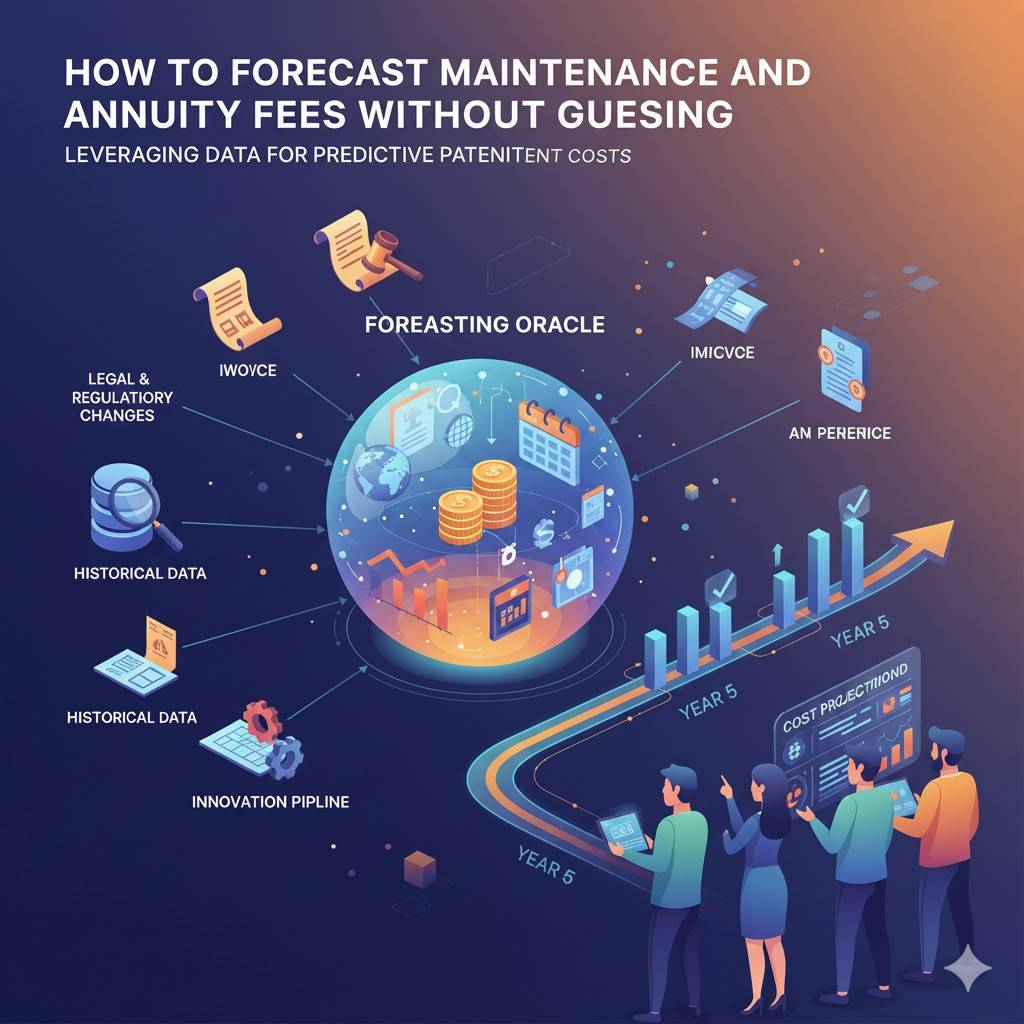
This kind of decision making is one of the biggest advantages of forecasting. Instead of reacting to invoices, you are shaping a portfolio that supports your vision.
Why Annuity Forecasting Matters for Global Filings
When you file in multiple countries, the forecasting challenge becomes even more important. Every region has its own timeline, its own fee structure, and its own renewal rules.
These fees do not rise at the same pace or at the same intervals. Some are annual. Some are spaced out. Some stay low for many years, while others climb quickly.
Without a clear forecast, this becomes chaotic fast. A founder might end up paying for patents in countries that no longer align with the expansion plan. Or they might suddenly face a cluster of fees across multiple regions at once.
With a clean global forecast, you can compare which markets deliver the strongest value. You can choose where to stay active and where to retire a filing. You can decide how each region fits into your broader business strategy.
This gives you control over your global footprint. Instead of spreading thin across too many countries, you focus on the regions that support your growth.
And because you always know what the next decade looks like, the global portfolio stays manageable even as your company scales.
How PowerPatent Simplifies Ten-Year Forecasting
Forecasting becomes effortless when the work is automated. PowerPatent makes this possible without asking founders to dig through fee charts or complex rules.
The platform builds a complete cost timeline for every patent you file.
It shows your maintenance and annuity fees far into the future, so you always know what to expect.
You can compare scenarios, update your plan as your business evolves, and keep your decision making aligned with your long-term goals.
The advantage is simple. You focus on your product. The platform handles the cost mapping. And because real attorneys check everything behind the scenes, your forecast stays accurate, reliable, and safe.
This removes the friction that usually makes patent planning difficult. It also protects you from expensive surprises that often hit startups at the worst moments.
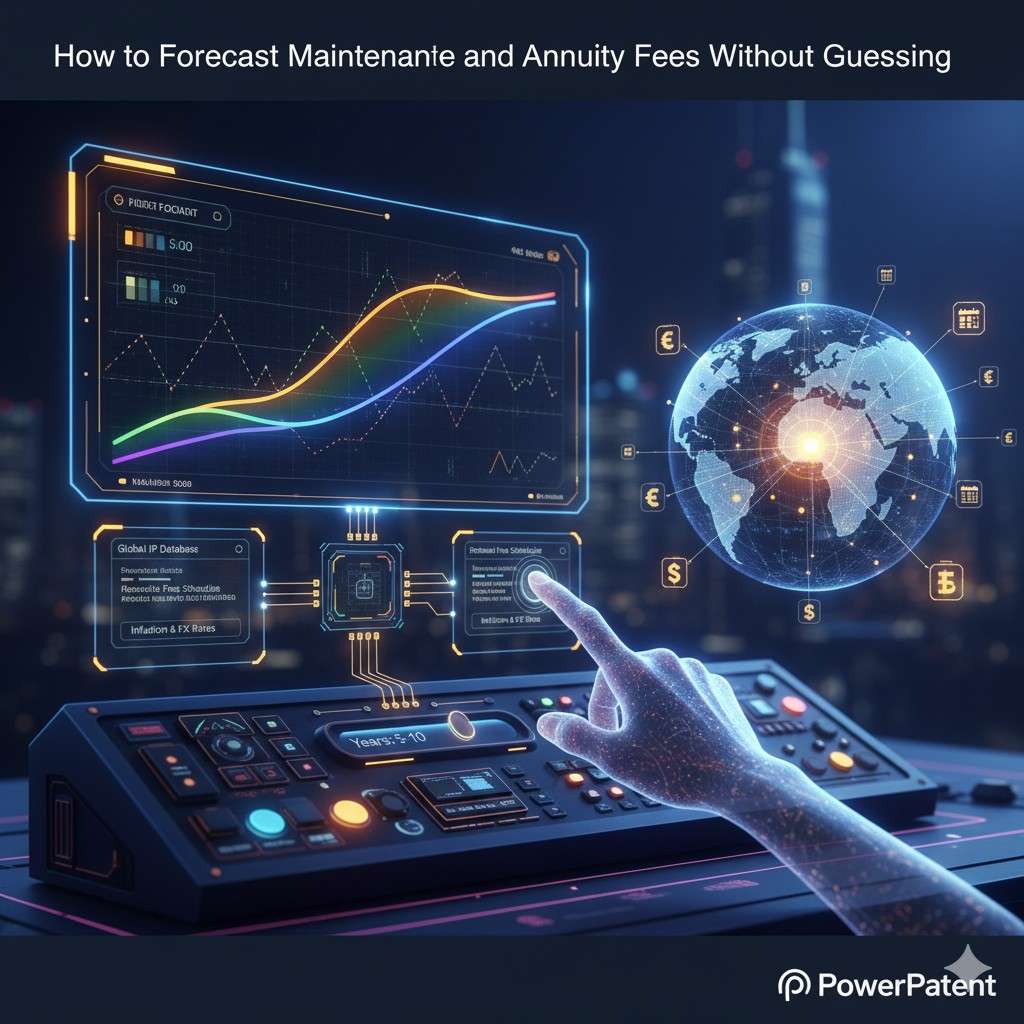
If you want to see how PowerPatent automates forecasting and portfolio planning, you can explore the workflow here: https://powerpatent.com/how-it-works
Smart Ways to Control Your 5–10 Year Patent Budget
This section focuses on helping founders take real control over their long-term patent spending. Many startups treat maintenance and annuity costs as unavoidable expenses that simply appear over time.
But there are practical ways to shape, adjust, and optimize these costs so they support the company instead of draining it.
When you understand how to control your patent budget, you gain freedom. You can build a stronger portfolio without breaking your runway. You can focus your money on the ideas that drive your business forward.
And you can grow with confidence, knowing that every dollar spent on IP is working for you, not against you.
Building Budget Awareness Before the Costs Grow
Most startups get surprised by maintenance fees because nobody explains how the cost curve works until the bill arrives. But the early years of a patent are the perfect time to set up a long-term budget plan.
Costs are low at the start, which means you have room to map out the heavier fees that will show up later. This early awareness helps you avoid panic moments.
You can set aside predictable amounts each year. You can adjust your filings without pressure. You can also prepare the team for future decisions so nothing feels rushed.

Budget awareness also protects your product roadmap. When you already know what your patent costs will look like in year seven or year ten, you no longer have to choose between paying a fee and shipping a feature.
Planning early gives you balance. You stay in control of both your cash and your strategy.
Using Portfolio Reviews to Prevent Unnecessary Spending
As your startup grows, your technology evolves. Some inventions become more important. Others fall behind. Portfolio reviews help you see this clearly. A review is simply a regular check on what you have, what you are building, and what still deserves protection.
When you do this consistently, you naturally avoid paying maintenance fees for patents that no longer match your direction.
The best reviews happen once or twice a year. During each review, the goal is not to evaluate the legal strength of your patents. The goal is to ask a simpler question: is this invention still part of our future?
If it is, keep it and plan confidently for its fees. If it is not, you can retire it before the larger costs arrive. This saves money while keeping your portfolio lean and focused.
These reviews also help engineers and product leaders stay aligned with the patent strategy. They understand which inventions matter most and why you are investing in them.
This creates a culture where patents feel like tools that support the product, not paperwork that slows it down.
Choosing Where to File Based on Real Market Timing
An easy way to control long-term patent costs is to avoid filing in countries that do not support your near-term or mid-term business. Many founders feel pressure to protect everything everywhere, especially in the early days.
But international filings come with their own maintenance and annuity fees. If a region is not tied to your market, your roadmap, or your customers, the costs might outweigh the benefit.
Instead of filing everywhere, tie your filings to your expansion plan. If a market is three or four years away, wait. If a region is not central to your customer base, skip it.
If a country’s cost structure is too heavy for your current stage, save it for later when cash flow is stronger.
This approach does not weaken your IP. It strengthens it because every filing supports your real growth. It also protects your budget because you avoid paying for protection in places you might never enter.
As your startup matures, you can file more strategically when you have clearer market signals.
Letting Go of Patents That No Longer Serve Your Strategy
One of the biggest breakthroughs in controlling patent budgets is learning that it is completely normal to let patents expire.
Many founders think dropping a patent signals weakness or failure, but the opposite is true. Choosing to retire a patent shows discipline and clarity. It shows you understand where your company is headed and which inventions still matter.
Letting go also frees up real money. The heavier maintenance fees tend to appear in the later years of a patent. If an invention is no longer connected to your product or revenue strategy, renewing it out of habit is wasteful.

When you let go of filings that no longer serve your mission, you make room to invest more into the ones that strengthen your competitive edge.
The only thing that matters is alignment. A smaller portfolio with purpose is far more valuable than a large portfolio with no direction. Retiring patents that no longer fit your story helps keep your budget smooth, predictable, and focused on the future.
Using Cost Simulations to Avoid Surprises
Cost simulations can help you make smarter decisions before fees arrive. A simulation shows you what your costs will look like under different conditions. You can see how your budget changes if you keep all patents active.
You can see the difference if you retire a few. You can test how new filings will affect your long-term spending. This gives you a clean picture before anything becomes final.
When you simulate different scenarios, the right choice becomes obvious. You can tell which decisions put pressure on your runway and which ones support your growth.
You no longer have to guess. Your decisions are grounded in real numbers and real timelines. This kind of clarity helps founders avoid emotional or rushed calls, especially during heavy growth periods.
Staying Ahead of Fees With Automated Reminders
Many startups lose patents without meaning to. It happens when teams forget due dates or when responsibilities bounce between people. Automated reminders solve this completely.
When every renewal date is tracked and surfaced automatically, nothing falls through the cracks. You never miss a payment. You never lose protection by accident. You never scramble at the last minute.
This is one of the simplest ways to maintain a healthy patent budget. Automated reminders give you breathing room.
They also make it easier to run internal reviews because you always know what is coming next. Instead of reacting in a hurry, you can make calm decisions long before any payment is due.
How PowerPatent Helps You Take Control of Long-Term Costs
PowerPatent makes it incredibly easy to keep your patent budget under control. The platform tracks all your fees, maps the next ten years of spending, and alerts you before any deadline arrives.
It shows you exactly what each patent will cost, how fees rise over time, and what your portfolio looks like under different future scenarios.
This level of clarity would normally take hours of manual work or expensive lawyer time, but PowerPatent automates the entire process.
Founders get all the benefits of smart cost planning without doing the heavy lifting.

And because real attorneys are involved in every critical step, you can trust that the forecasts are correct, the guidance is reliable, and the risks are handled.
If you want to see how founders use PowerPatent to control their portfolio costs with confidence, visit: https://powerpatent.com/how-it-works
How PowerPatent Helps You Stay Ahead of Every Future Cost
This part of the article brings everything together by showing how a modern, software-driven workflow can remove the stress, confusion, and uncertainty that usually follow long-term patent costs.
Instead of relying on scattered documents, manual spreadsheets, or slow lawyer emails, PowerPatent gives founders a clear system that turns the entire maintenance and annuity timeline into something simple, predictable, and easy to manage.
This section explains what that experience feels like, why it matters, and how it changes the way you protect your innovations over the next five to ten years.
Creating a Single Source of Truth for All Your Patent Costs
Most founders struggle with long-term patent fees because the information lives in too many places. Part of it sits with lawyers. Part of it is buried in emails. Part of it is tracked internally in a spreadsheet someone created years ago.
PowerPatent eliminates that fragmentation by bringing everything into one place. You get a clear dashboard that shows your entire portfolio, every upcoming fee, every due date, and every future cost curve.
This creates a calm sense of control. You do not have to dig around for answers or chase anyone for updates.

When you want to know what your next renewal looks like or how much your portfolio will cost in seven years, the answer is already there.
This single source of truth keeps your team aligned and removes the confusion that often leads to rushed decisions or missed payments.
Giving You Predictable Ten-Year Cost Maps
One of the biggest frustrations founders face is not knowing how much their patents will cost over time. These fees change as the patent ages, and without a clear view of the full timeline, planning becomes guesswork.
PowerPatent solves this by generating a detailed ten-year projection for every filing in your portfolio.
You can see the rising stages of maintenance fees, the shifts in annuity schedules across countries, and exactly when each payment will occur.
This long-range view helps you make decisions with confidence. You can adjust your roadmap, your budget, and your filing strategy based on real numbers instead of assumptions.
When you know what the next decade looks like, nothing catches you by surprise.
You stay ready for each renewal, and you have the space to decide which patents deserve continued investment and which ones no longer support your vision.
Making Renewal Decisions Easy With Clear Value Insights
The hardest part of managing patent costs is deciding which patents to keep and which to let go. Without clear data, these decisions often feel heavy or emotional.
PowerPatent makes them simpler by giving you value insights that connect each patent to your product, your technology stack, and your long-term goals.
You see which filings protect core features, which support future launches, and which no longer match your direction.
This level of clarity allows you to renew with intention. You invest only in the patents that strengthen your advantage. You let go of the ones that no longer belong in your story.
And you do it all with confidence because the decision is grounded in clear, clean information. The result is a stronger, more focused portfolio that aligns with your real business strategy, not with old assumptions.
Reducing Risk With Attorney Oversight Built Into the Workflow
Many founders want to manage their patent portfolio on their own, but they worry about missing something important. PowerPatent bridges that gap by pairing smart software with real attorney oversight.
The platform handles the forecasting, tracking, and automation, while licensed patent attorneys check the filings, monitor the accuracy, and ensure your renewals stay legally sound.
This hybrid structure gives you the best of both worlds. You get the speed and clarity of modern software without losing the safety and reliability of expert review.

You move faster, but you stay protected. It also keeps you from spending thousands of dollars on attorney time that could have been avoided with automation. Every step becomes efficient, validated, and predictable.
Helping You Avoid Missed Deadlines Through Automated Tracking
Missed maintenance deadlines are one of the most common reasons patents lapse unexpectedly. These lapses are expensive to fix and sometimes cannot be reversed. PowerPatent prevents this by tracking every deadline automatically.
The platform sends reminders long before a fee is due, and the dashboard shows all upcoming dates clearly. Nothing disappears into email threads. Nothing slips through the cracks.
This automatic tracking protects you from accidental loss while saving you hours of manual monitoring.
It also gives your team peace of mind because everyone knows the important dates are surface-level and impossible to forget.
Even during busy product cycles or fundraising moments, your IP stays secure because the system handles the details for you.
Making It Easy to Adjust Your Portfolio in Real Time
Startups evolve fast. Your product shifts. Your market changes. Your team discovers new problems to solve. PowerPatent makes your patent strategy flexible enough to keep up.
When your direction changes, you can update your portfolio plan in seconds. You can see how adding a new application affects your forecast.
You can check how retiring an old patent changes your budget. You can compare future scenarios before making a single decision.
This flexibility is especially valuable during moments of acceleration, when your team is filing more inventions or expanding into new markets.
Instead of losing sight of your long-term costs, PowerPatent keeps everything clear and structured so you can move quickly without losing financial control. Your patent strategy stays in sync with your growth, not stuck in the past.
Supporting Fundraising With Cleaner IP Planning
Investors pay close attention to patents. They want to know what you own, how you protect it, and whether you can maintain it over time. PowerPatent strengthens your fundraising story by giving you a portfolio that looks organized, intentional, and well-managed.
With clear cost forecasts and clean renewal histories, diligence becomes smooth instead of stressful. You can answer questions on the spot because the information is already prepared.
This clarity builds trust. It signals discipline. It shows your team treats IP as a strategic asset rather than a pile of paperwork. Many founders underestimate how much confidence this creates during negotiations.
A well-managed patent portfolio is a sign of maturity, and PowerPatent makes that maturity easy to demonstrate.
Giving Founders More Time to Build Instead of Managing Costs
The final advantage is the simplest one. PowerPatent gives founders time back. Instead of tracking deadlines, digging through documents, or chasing lawyers for answers, you get a system that handles everything from forecasting to monitoring.
You stay informed without being buried in tasks. You protect your patents without slowing down product development. You get the safety of attorney review without the heavy cost.

The platform removes the mental load that long-term patent maintenance usually creates. This frees you to focus on the work that grows your business while staying confident that your IP is safe, supported, and fully aligned with your goals.
To see exactly how PowerPatent simplifies the full patent lifecycle, explore the walkthrough here: https://powerpatent.com/how-it-works
Wrapping It Up
Long-term patent costs do not have to be confusing or stressful. When you look ahead at your maintenance and annuity fees, you stay in control of your budget, protect the inventions that matter most, and avoid surprise expenses that can disrupt your roadmap. Good forecasting helps you make smarter choices about what to keep, what to retire, and where to focus your resources. And with tools like PowerPatent, you can automate the entire process, get clear ten-year cost maps, avoid missed deadlines, and keep your portfolio aligned with your company’s real direction.