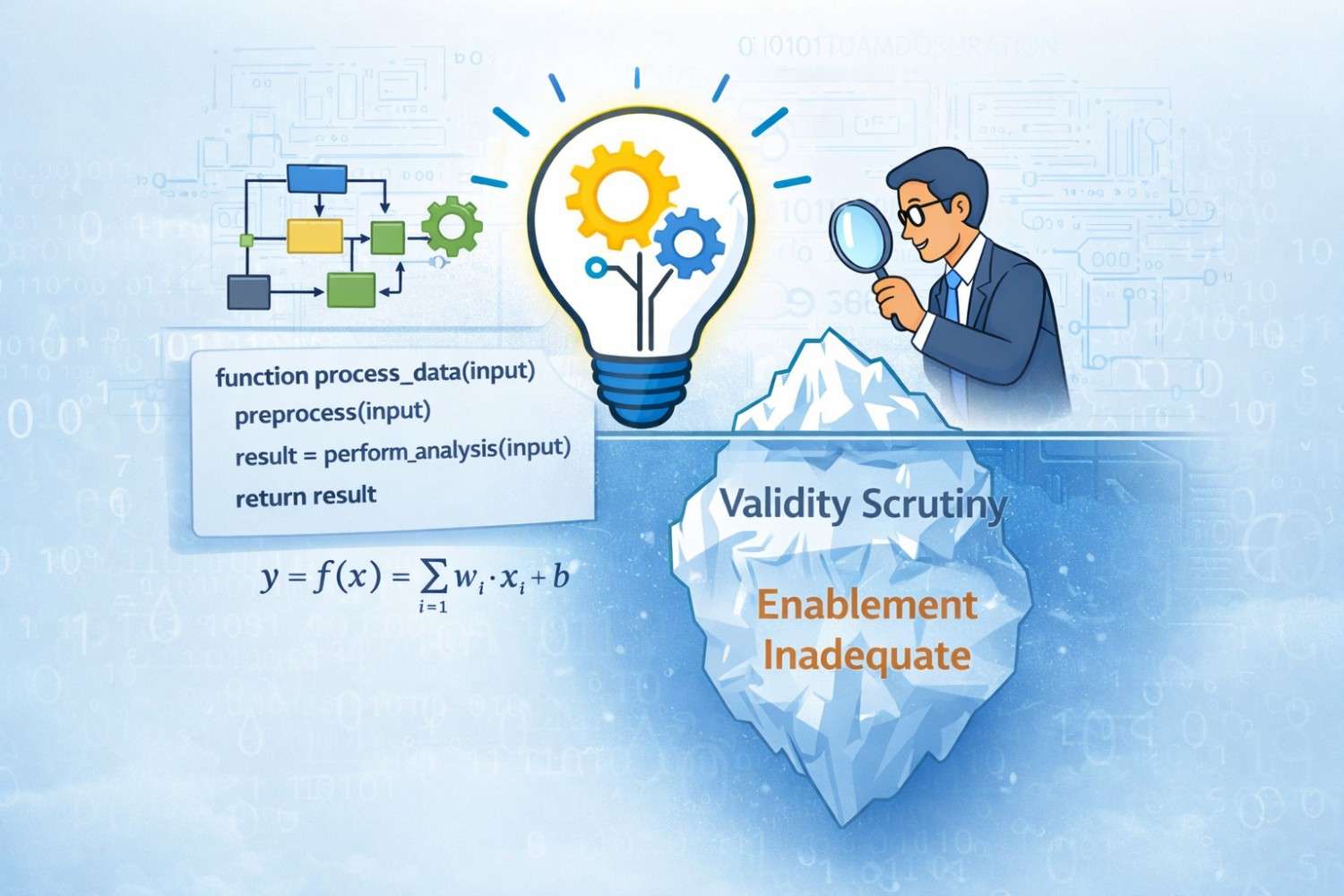
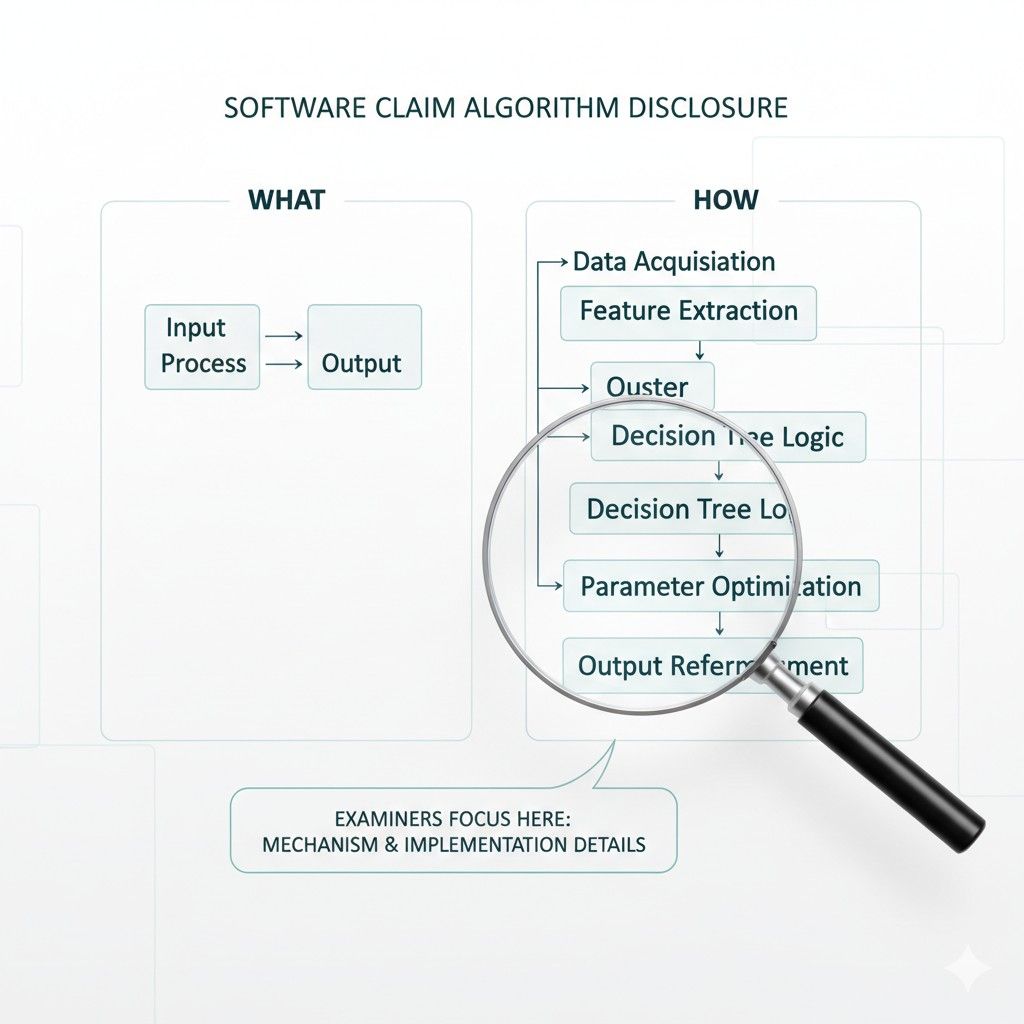
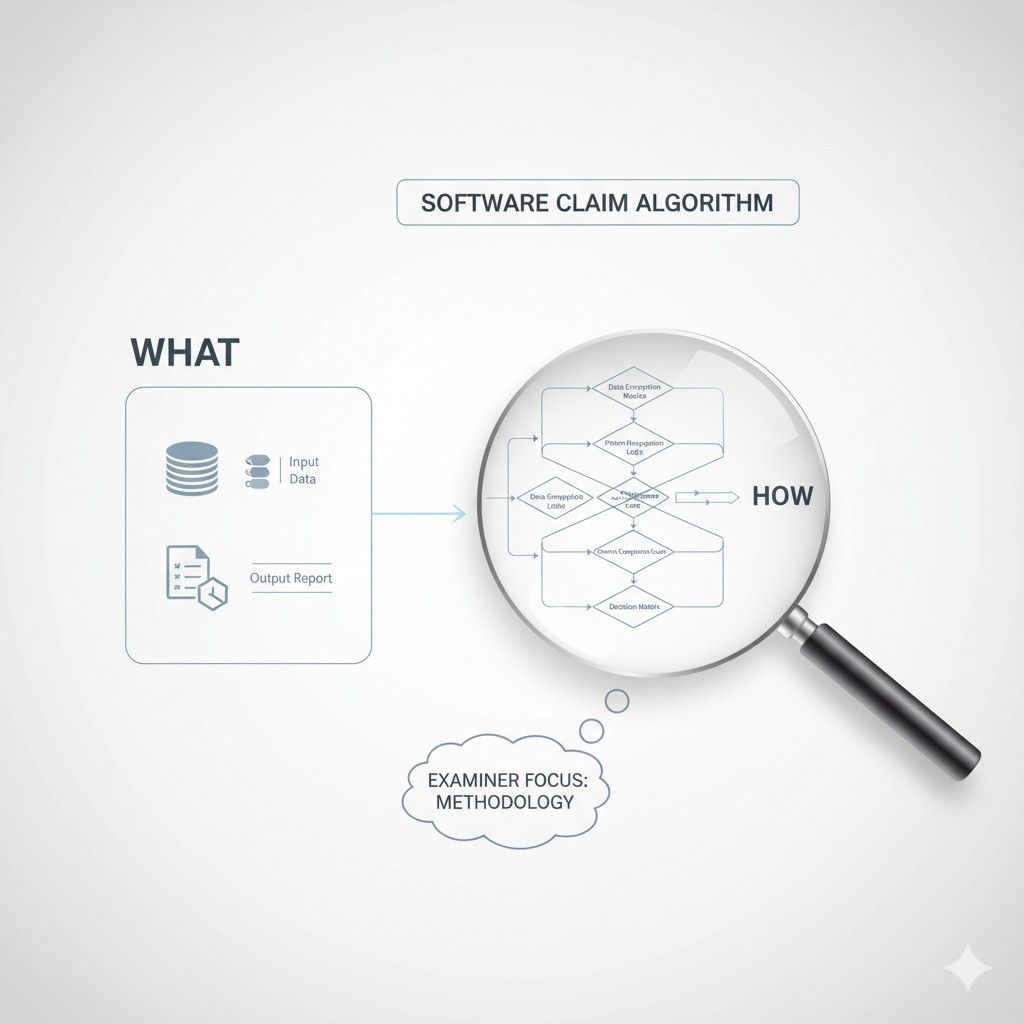
Software patents fail for one simple reason more than any other. The idea sounds smart, the product works, the code is real—but the patent does not clearly explain how the software does the work. That missing “how” is what examiners care about most. And that “how” is the algorithm. If you build software, you already have algorithms. They live in your code, your models, your logic flows, and your system design. The problem is not that founders lack algorithms. The problem is that most patents never explain them in a way examiners can accept.
Why Examiners Care More About “How” Than “What”
Patent examiners are trained to ignore hype and focus on mechanics. They are not trying to understand your business vision or market impact.
Their job is to decide whether your software invention is explained clearly enough that it deserves legal protection.
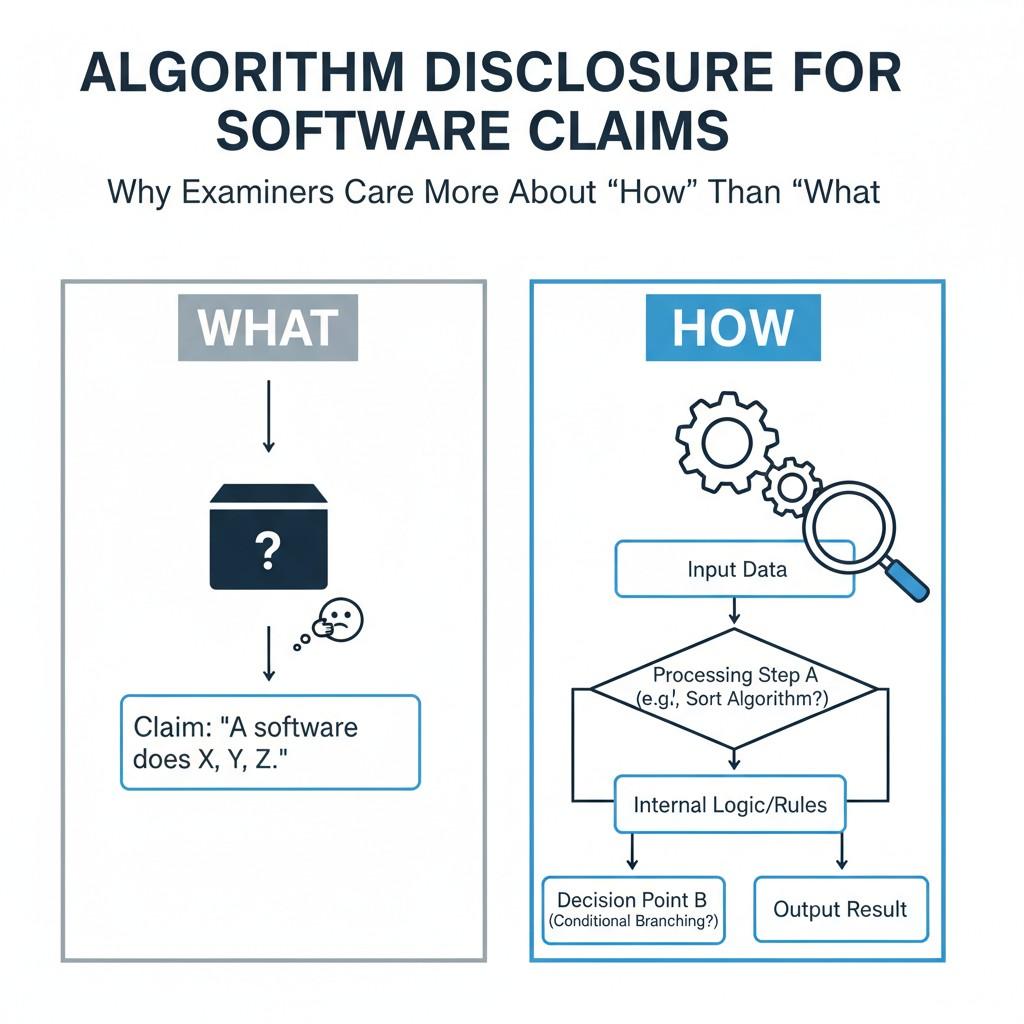
This is why the difference between “what” your software does and “how” it does it becomes so important. One describes a goal. The other proves an invention exists.
Examiners Are Looking for Proof, Not Promises
When examiners read a software patent, they assume nothing. They do not assume the system works.
They do not assume the logic is obvious. They do not assume common sense fills in missing gaps. Everything must be written down.
From their perspective, a description that focuses only on what the software achieves sounds like a promise without proof.
The examiner’s role is to confirm that the inventor actually knows how to reach that outcome. The only acceptable proof is a clear explanation of the internal steps that make it happen.
For businesses, this means the patent must reflect real understanding, not surface-level descriptions. If your team cannot explain the logic in simple steps, the examiner will assume the invention is not fully formed.
Why Functional Language Raises Red Flags
Functional language sounds helpful but often causes problems. Words like generate, analyze, determine, optimize, or classify describe actions without explaining the logic behind them.
Examiners see this kind of language every day, and they are trained to be cautious.
When a claim relies too heavily on functional language, the examiner asks whether the claim is trying to cover any possible way of achieving the result. If the answer seems yes, the claim is seen as too broad and unsupported.
A smart strategy for businesses is to slow down at these moments. Each time a functional word appears, it should trigger a deeper explanation somewhere in the description.
That explanation does not need to show source code, but it must show decision-making steps.
How “How” Separates Real Inventions from Abstract Ideas
Software patents face a constant risk of being labeled abstract. Examiners use this label when they believe the patent is claiming an idea rather than a concrete process.
The fastest way to avoid this is to focus on how the system operates internally.
When the description explains data inputs, transformations, rules, and outputs in a connected flow, the invention becomes tangible. It stops looking like an idea and starts looking like a machine made of logic.
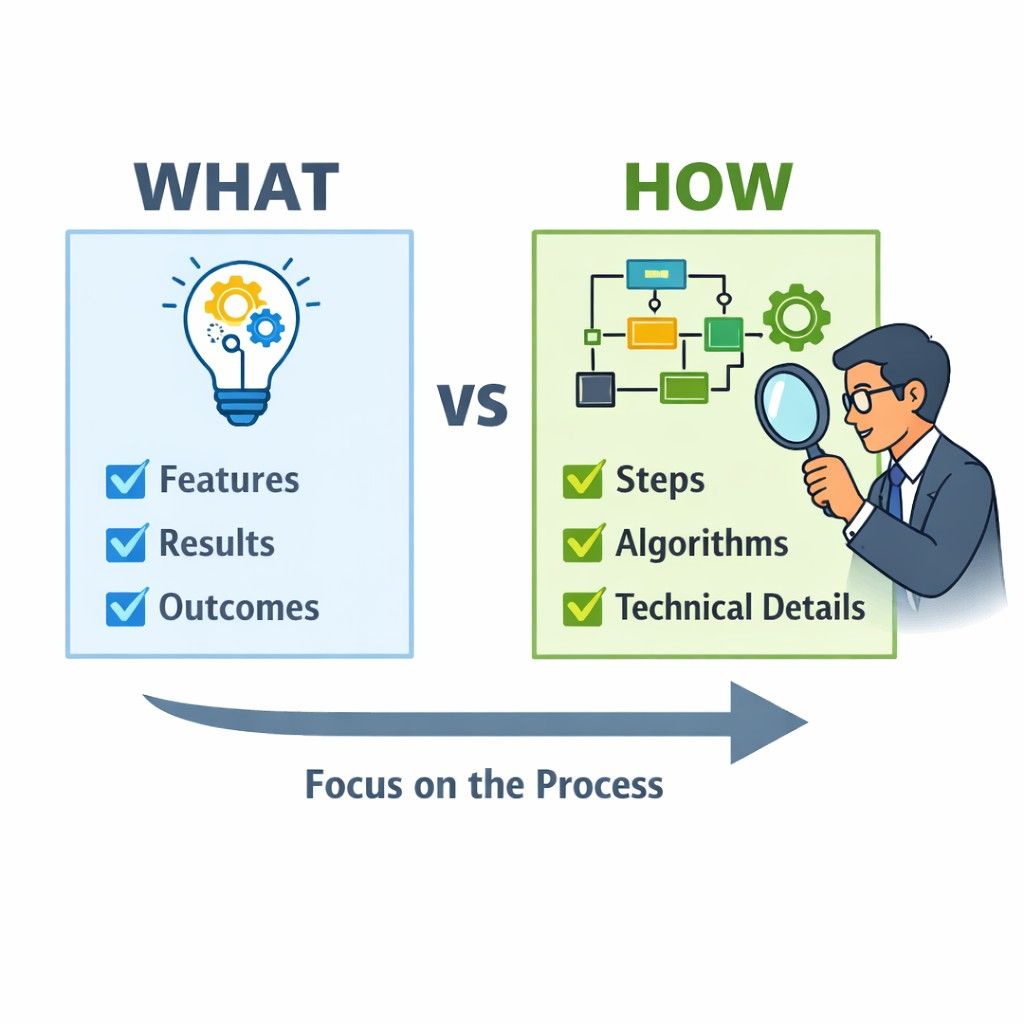
For companies, this is more than a legal detail. It directly affects whether the patent survives early review. Strong algorithm disclosure often resolves abstract idea concerns before they fully form.
Why Examiners Distrust Black Boxes
A black box system is one where data goes in and results come out, but nothing in between is explained. Examiners are trained to reject black boxes because they hide uncertainty.
If a patent says a model receives input data and produces a prediction, but never explains how the prediction is generated, the examiner cannot confirm that the inventor contributed anything new.
Businesses should treat black box descriptions as dangerous.
Even if your product relies on machine learning or complex models, the training process, feature handling, or decision flow must be explained at a meaningful level. Transparency builds trust with the examiner.
The Examiner’s Perspective on “Skilled Engineers”
Patent law assumes a skilled engineer is reading the application. This does not mean a genius. It means someone competent in the field. The examiner asks whether that person could build the invention using only what is written.
If key steps are missing, the examiner concludes that the disclosure is incomplete. It does not matter if your internal team could fill in the gaps. The patent must stand alone.
An actionable approach for businesses is to review drafts with this lens. Pretend the reader has no access to your product, no demos, and no internal context. If the logic still makes sense, you are on the right track.
Why Over-Broad Claims Fail Faster Than Narrow Ones
Many companies believe broader claims equal stronger protection. Examiners see it differently. Broad claims without detailed support are easier to reject.
When claims stretch beyond what the algorithm clearly supports, examiners push back. They look for alignment between the scope of the claim and the depth of explanation.
A smarter strategy is to anchor claims tightly to well-described logic. Once that foundation is accepted, broader protection can often be built through continuation filings.
Speed and strength both improve when the initial disclosure is solid.
How Business Pressure Leads to Weak Disclosure
Startups move fast. Deadlines loom. Investors want filings. Under pressure, teams often rush the patent description and focus on outcomes instead of mechanics.
Examiners do not see that pressure. They only see what is written. A rushed disclosure often creates years of delay later through rejections and rewrites.
Businesses that invest a little more time upfront explaining how their software works often save significant time and cost later. Clear disclosure reduces examiner questions and shortens prosecution.
Turning Engineering Reality Into Patent Language
Most companies already have detailed explanations of how their systems work. They exist in design reviews, architecture docs, and technical discussions. The challenge is translating that reality into patent language.
This translation should preserve logic, not complexity. The goal is not to impress. The goal is to explain. When businesses focus on clarity instead of polish, examiners respond better.
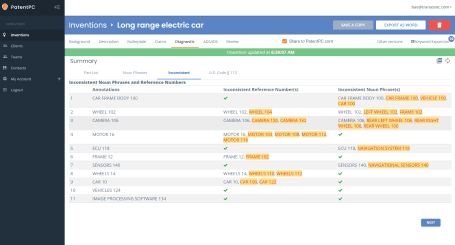
PowerPatent was designed around this idea. It captures real software logic directly from how teams build, then structures it in a way examiners expect, with attorney oversight to ensure nothing critical is missed.
You can see how that works at https://powerpatent.com/how-it-works.
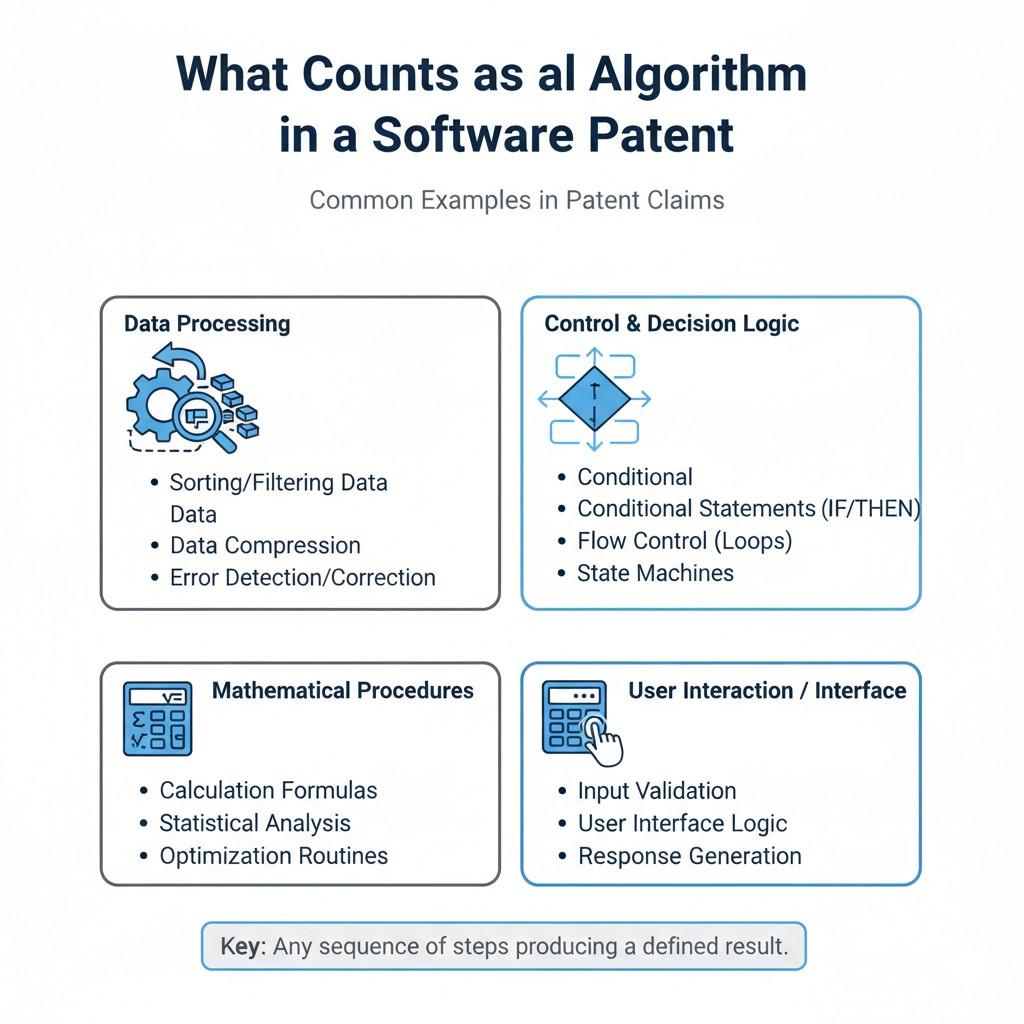
What Counts as an Algorithm in a Software Patent
This section is where most software patents quietly succeed or fail. Not because the invention is weak, but because the word algorithm is misunderstood.
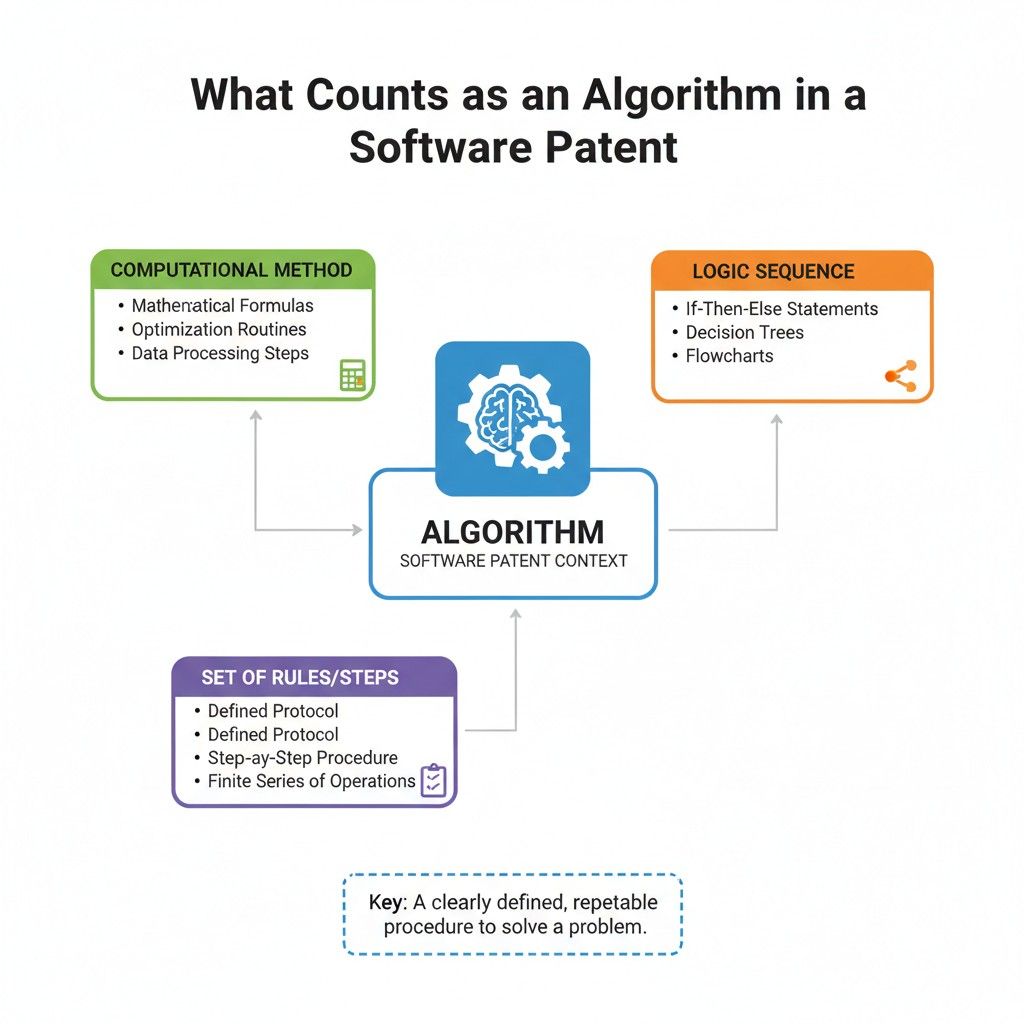
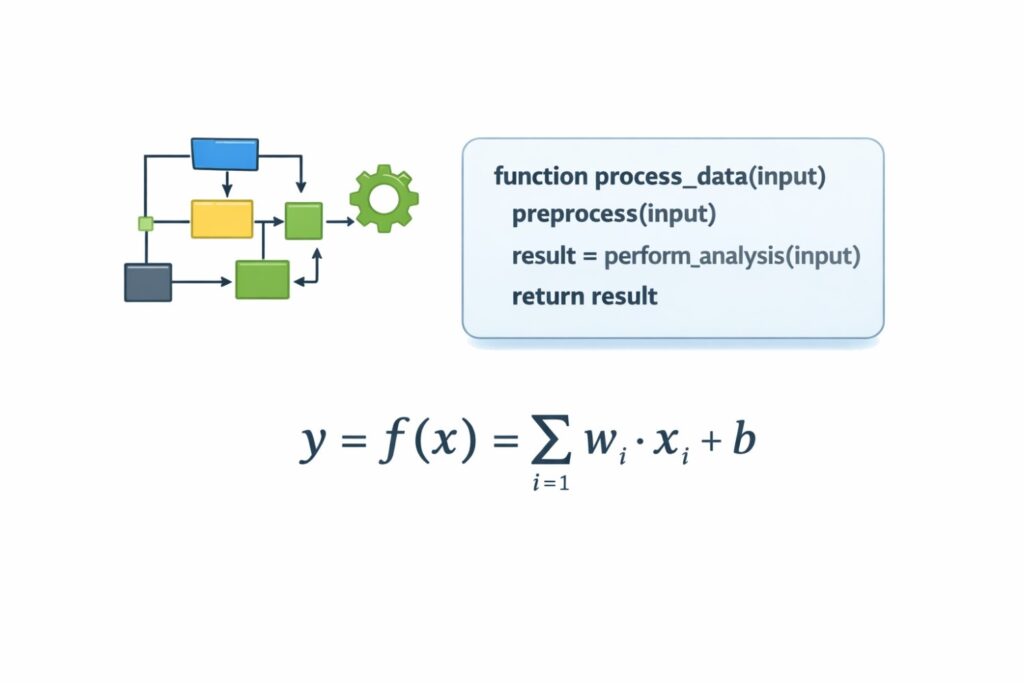
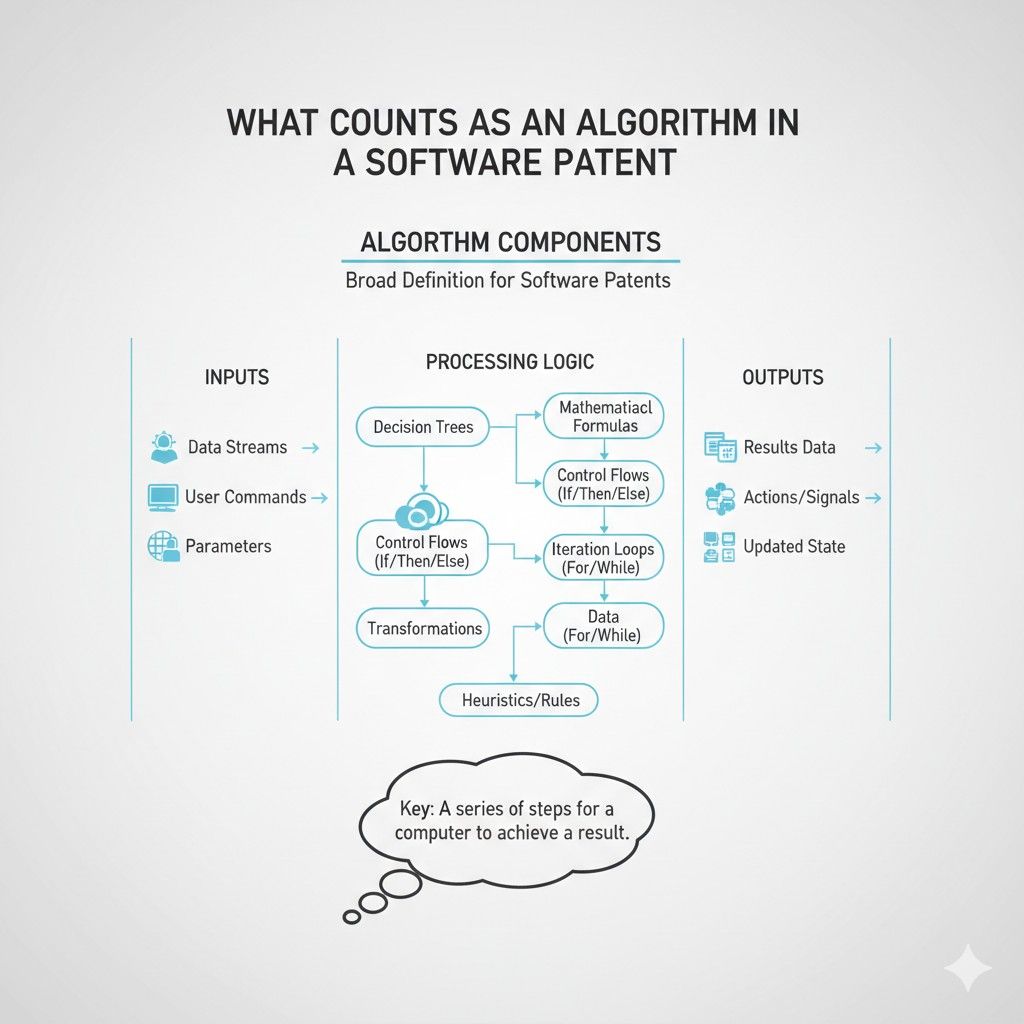
Many businesses assume an algorithm must look like advanced math or complex formulas. Examiners do not think that way. To them, an algorithm is simply the detailed explanation of how software behaves over time.
If your software performs actions in a sequence, reacts to data, makes choices, or changes state, it is running an algorithm.
The examiner’s only question is whether that behavior is explained clearly enough to be repeated by someone else.
An Algorithm Is the Operational Truth of Your Software
At its core, an algorithm is the operational truth of your system. It is what actually happens when the software runs. Marketing language describes what users see.
Architecture diagrams show where components live. Algorithms explain what the system does minute by minute.
Examiners care about this operational truth because it proves that the inventor understood the problem deeply enough to solve it. A patent that avoids operational details feels speculative. A patent that embraces them feels credible.
For businesses, this is a mindset shift. The goal is not to describe the product. The goal is to document the behavior of the system when it is working as intended.
Algorithms Are Sequences, Not Statements
One of the most common mistakes in software patents is describing behavior as a single statement instead of a sequence. For example, saying that a system analyzes data sounds complete, but it says nothing about order.
Examiners expect to see progression. What happens first. What happens next. What happens when a condition is met. What happens when it is not.
Sequence is critical because it shows intent. It shows design. It shows that the system is not just producing an outcome but following a path to get there.
Businesses can improve disclosure immediately by forcing every major system action into a sequence, even if the steps feel simple internally.
Rules-Based Logic Is Still an Algorithm
Not all algorithms are adaptive or predictive. Many powerful software systems run on rules. These rules might be static, configurable, or learned over time, but they still guide behavior.
If your system applies thresholds, compares values, checks permissions, routes requests, or enforces policies, those rules are algorithmic. Examiners do not discount them simply because they are simple.
In fact, clear rule-based logic often strengthens a patent because it is easy to understand and verify. Simplicity is not a weakness in patent disclosure. Vagueness is.
From a business perspective, documenting rule logic also helps define product boundaries. It clarifies what the system does and what it does not do.
Algorithms Include Error Handling and Edge Cases
Most patent drafts focus only on the ideal path. Examiners notice this. Real software deals with errors, missing data, conflicts, and edge cases. When a patent ignores these realities, it feels incomplete.
This does not mean every error must be described. But key fallback behavior matters. What happens when input is invalid. What happens when data is missing. What happens when conditions overlap.
Including this behavior strengthens the perception that the system is real and deployed, not hypothetical. Examiners respond well to this realism.
For businesses, this is an opportunity. Edge cases often contain the most unique logic. Protecting them can make the patent harder to design around.
Data Transformation Is Algorithmic Behavior
Many teams underestimate how important data transformation is. Converting formats, normalizing values, aggregating records, scoring items, or combining inputs all count as algorithm steps.
Examiners look closely at how raw data becomes useful output. That transformation is often where novelty lives.
If your system cleans data before processing, that matters. If it weights inputs differently, that matters. If it builds intermediate representations, that matters.
From a strategic standpoint, businesses should highlight these transformations. They show effort, intention, and technical contribution.
Timing and Triggers Are Part of the Algorithm
Algorithms are not only about logic. They are also about timing. When something happens can be just as important as what happens.
If your software runs on a schedule, responds to events, or changes behavior over time, that timing should be described. Examiners treat timing as part of the operational flow.
For example, a system that updates models periodically behaves differently from one that updates continuously. That difference can matter in patentability.
Businesses that describe triggers and timing show a deeper understanding of their systems and gain stronger protection.
Machine Learning Algorithms Still Require Explanation
Machine learning does not replace algorithm disclosure. It shifts it. Examiners do not need internal weights, but they do need structure.
They want to know how training data is collected, how features are formed, how the model is applied, and how outputs affect decisions.
A patent that says a model predicts something without explaining how that prediction is used feels hollow. A patent that explains how predictions drive actions feels concrete.
For businesses using machine learning, the key is to focus on system behavior, not math. What happens before training. What happens after inference. That is where examiners focus.
Algorithms Can Span Multiple Components
Modern software is distributed. Algorithms can span services, devices, or layers. Examiners understand this, but they still expect continuity.
If logic starts in one component and finishes in another, that flow must be clear. Gaps between components weaken disclosure.
For businesses, mapping cross-component logic is especially valuable. It highlights integration points that competitors may struggle to replicate.
Repetition Signals Lack of Depth
When examiners see the same generic language repeated across different sections, they assume the underlying logic is thin. Repetition without added detail raises doubts.
Strong algorithm disclosure evolves as it is described. Each section adds clarity or context. Each reference deepens understanding.
Businesses should avoid copying the same explanation across multiple claims or embodiments. Variation signals real substance.
Algorithms Are the Foundation of Claim Support
Every claim step must be supported by an algorithm somewhere in the description. If a step appears in a claim but not in the algorithm disclosure, examiners treat it as unsupported.
This is one of the fastest ways patents get stuck. Claims and disclosure drift apart.
The most effective strategy is to design claims around the algorithm, not the other way around. When the algorithm leads, claims follow naturally.
Why Strong Algorithm Disclosure Protects Business Value
Patents are not just legal documents. They are business assets. Investors, acquirers, and partners look at whether patents explain real systems or vague ideas.
A patent with strong algorithm disclosure signals maturity. It shows that the company understands its technology deeply and has taken steps to protect it properly.
PowerPatent was built around capturing this depth without slowing teams down.
It helps translate real software behavior into examiner-ready algorithm disclosure, backed by real attorneys, so businesses can move fast without cutting corners. You can see how that works at https://powerpatent.com/how-it-works.
The Hidden Reason Software Claims Get Rejected So Often
Most founders think software patents get rejected because the idea is not new enough. That is rarely the real reason. In practice, many rejections happen even when the invention is novel, useful, and clearly built.
The real issue lives deeper in the application. It comes from a mismatch between what the claims say and what the disclosure actually explains.
Examiners are not hunting for reasons to say no. They are following a checklist. When software claims fail that checklist, rejection becomes almost automatic.
Understanding this hidden pattern is one of the most powerful advantages a business can have.
Claims Promise More Than the Description Delivers
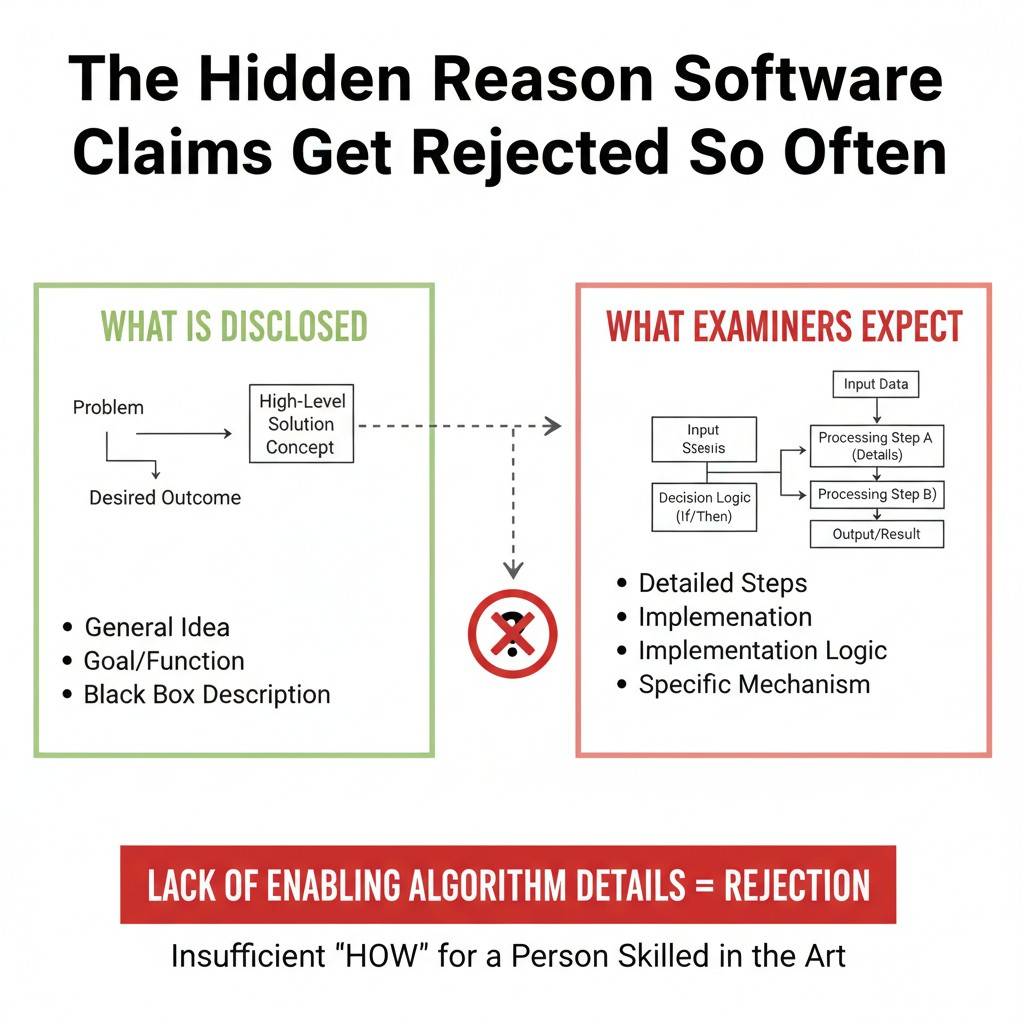
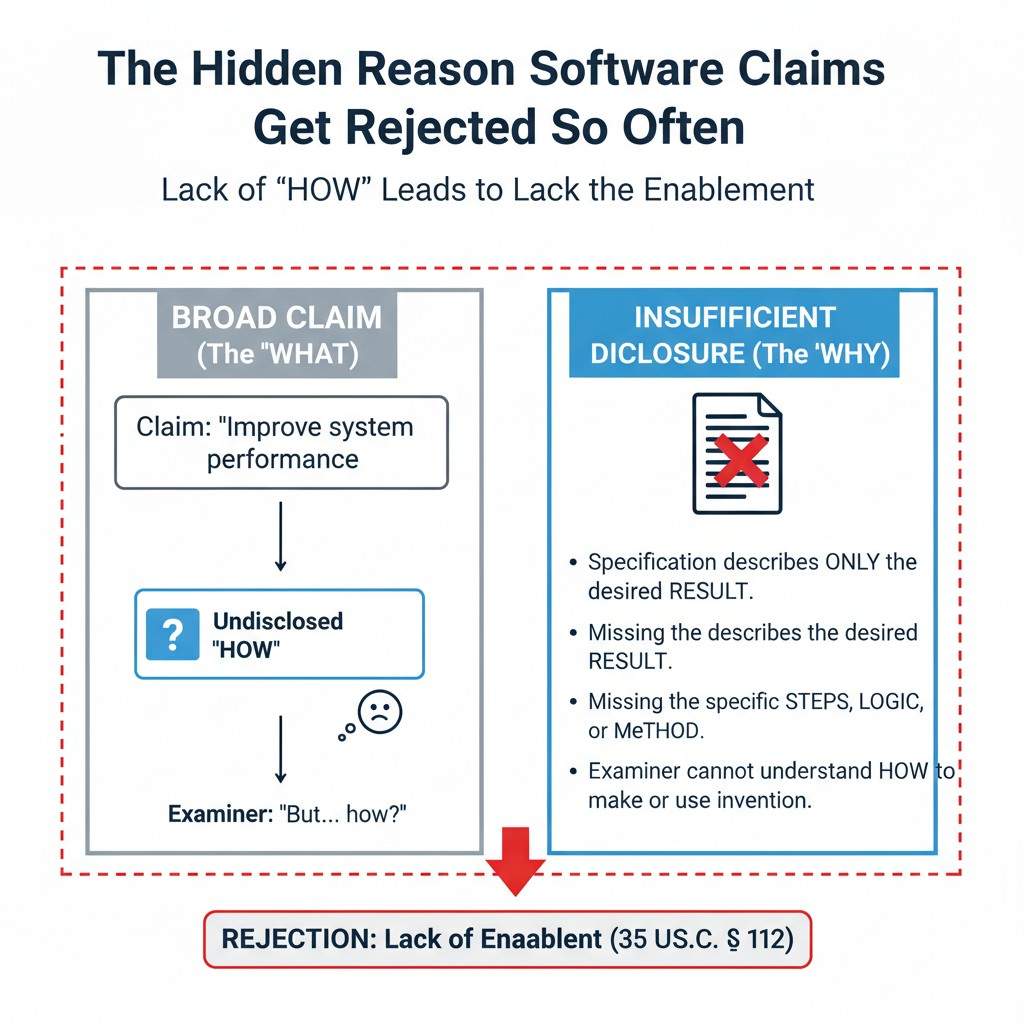
At the heart of many rejections is a simple imbalance. The claims describe powerful behavior, but the description does not fully explain how that behavior happens.
From an examiner’s point of view, this looks like overreach. The claims appear to cover more ground than the inventor has actually taught. Even if the invention is real, the paper trail does not prove it.
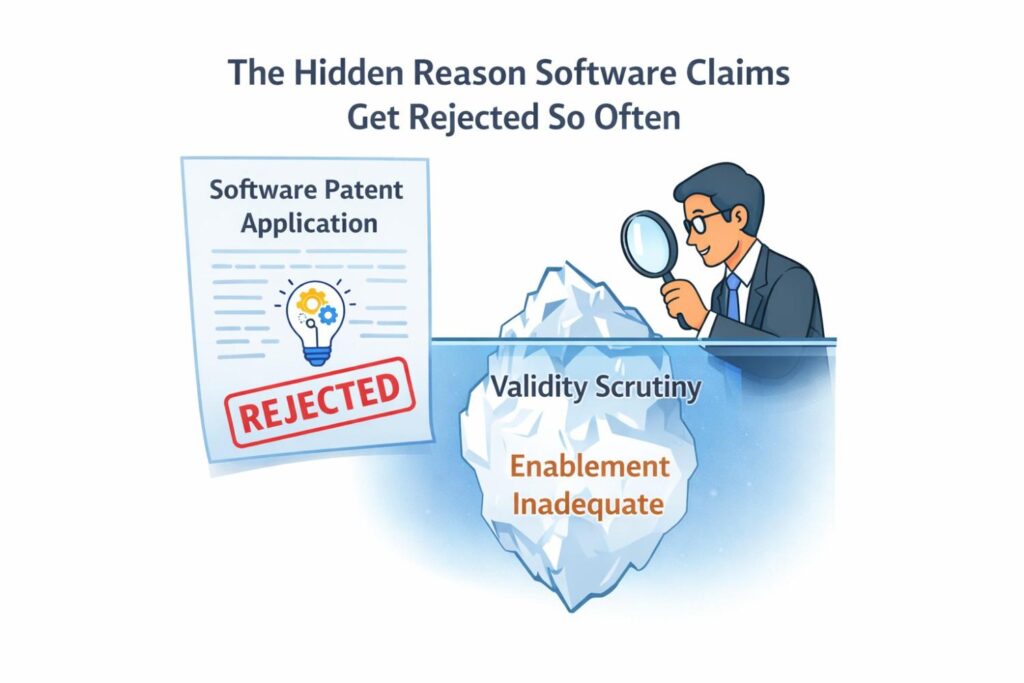
Businesses often fall into this trap when they draft claims first and fill in details later. The claims become aspirational, while the disclosure stays shallow. Examiners immediately notice the gap.
Examiners Read Claims With Suspicion
Patent examiners are trained to read claims skeptically. Their default assumption is not trust. It is verification. Every claim step triggers a search in the description for support.
If the examiner cannot find a clear explanation for how a step is performed, the claim is considered unsupported. This leads to rejections that are difficult to overcome without rewriting large parts of the application.
For companies, this means claims should never be treated as standalone language. They are contracts backed by explanations. Without those explanations, the contract collapses.
Functional Claim Language Is the Silent Killer
Functional language is one of the most common causes of rejection, yet many teams do not realize it. Claims that say a system is configured to perform a function sound clean and broad. Examiners hear alarm bells.
When a claim focuses on what a system does instead of how it does it, examiners worry that the claim is trying to cover any possible way of achieving that result. That concern leads directly to rejection.
The fix is not to narrow the idea. The fix is to anchor the function to a disclosed algorithm. When the function is clearly tied to specific steps, examiner resistance drops.
The Disclosure Looks Generic Across Many Applications
Examiners review thousands of applications. They develop a strong sense for generic language. When they see phrases that appear everywhere, they assume the disclosure is thin.
Generic descriptions suggest that the inventor did not contribute something specific. Even if the idea is clever, the presentation makes it look interchangeable with many others.
Businesses should treat originality in explanation as seriously as originality in invention. Unique systems deserve unique descriptions. That difference is visible to examiners almost immediately.
Abstract Idea Rejections Are Often a Symptom
Many founders fixate on abstract idea rejections. They feel vague and unfair. In reality, these rejections are often symptoms of a deeper problem.
When an algorithm is not clearly disclosed, the invention starts to look like an idea rather than a process. Examiners then reach for the abstract idea label as a formal way to reject it.
Strong algorithm disclosure often prevents these rejections entirely. When the system’s internal workings are clear, the invention looks concrete, not abstract.
The Description Does Not Match the Claims’ Scope
Another hidden reason for rejection is scope mismatch. The description may explain one specific implementation, while the claims cover a much broader range.
Examiners are trained to reject claims that go beyond what is taught. Even if the broader idea makes sense, it must be supported in writing.
For businesses, this means thinking carefully about how far claims stretch beyond examples. Breadth must be earned through explanation, not assumed.
Software Is Treated as Pure Logic Unless Grounded
Without algorithm detail, software inventions are treated as pure logic. Pure logic is hard to patent. Examiners look for grounding in steps, data handling, and system behavior.
When the disclosure lacks grounding, claims feel detached. They float above the implementation instead of being anchored to it.
Grounding comes from showing how the system operates in practice. That includes data flow, decision points, and interactions between components.
Over-Reliance on Diagrams Without Explanation
Diagrams help, but they do not replace explanation. Many applications include block diagrams that look impressive but are barely described in text.
Examiners do not infer behavior from boxes and arrows. They rely on words. If the diagram is not explained step by step, it carries little weight.
Businesses should treat diagrams as supplements, not substitutes. The real value comes from explaining what each part does and how it interacts with others.
Missing Context Around Key Innovations
Sometimes the most important part of the invention is mentioned only briefly. The team knows it is special, but the application does not slow down to explain why.
Examiners do not guess what matters. If something is critical, it must be explained as critical.
From a strategic perspective, businesses should identify the one or two pieces of logic that truly differentiate their system and give those parts extra attention in the disclosure.
Rushed Filings Create Long-Term Drag
Fast filings feel productive, but rushed disclosures often create years of friction. Each rejection leads to amendments, arguments, and delays.
The irony is that spending more time upfront often leads to faster overall outcomes. Clear disclosure reduces examiner questions and narrows disagreements.
PowerPatent was built around this reality. It helps teams move fast without rushing the explanation, capturing real system logic early and aligning claims with disclosure from the start.
You can see how that works at https://powerpatent.com/how-it-works.
Why Understanding This Pattern Changes Everything
Once businesses understand why claims are rejected, they stop treating patents as mysterious. The process becomes predictable.
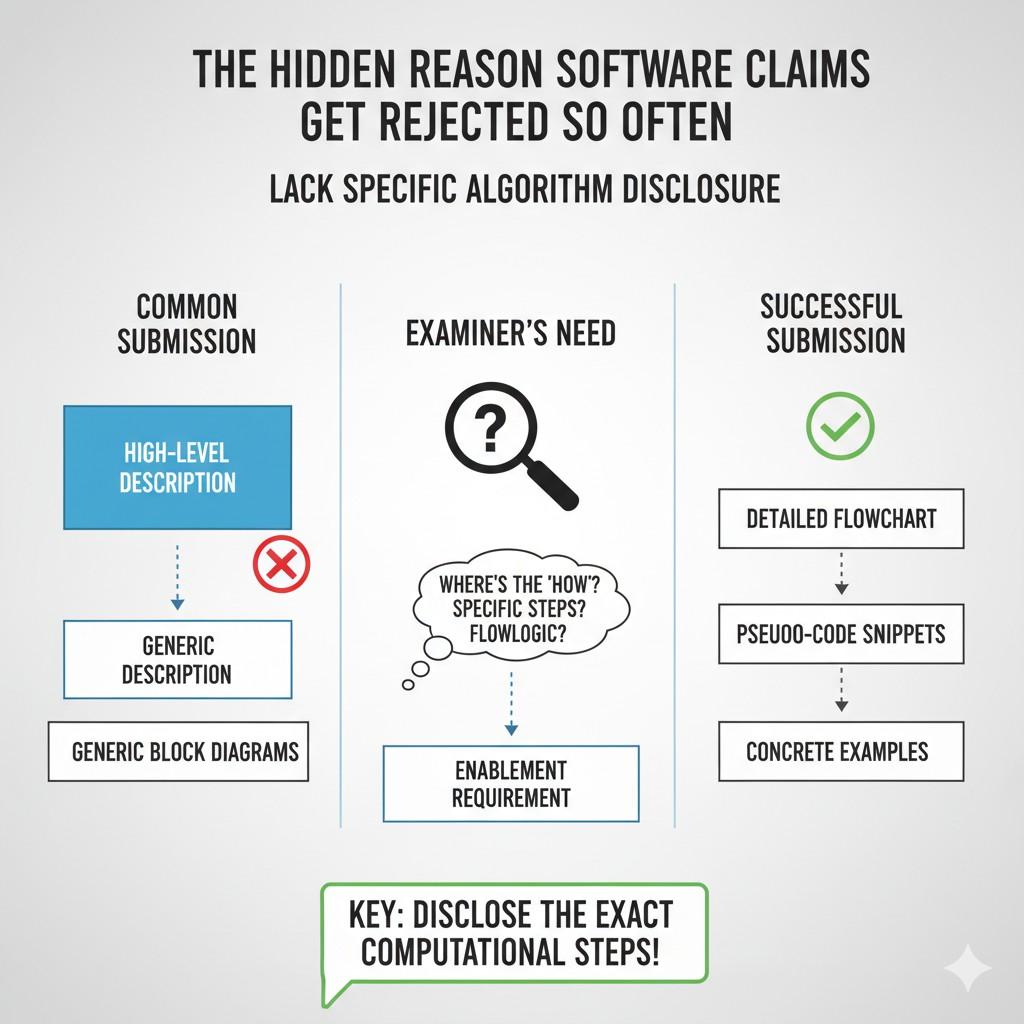
Strong patents are not about clever wording. They are about alignment. Alignment between claims and algorithms. Alignment between scope and explanation. Alignment between what is built and what is written.
That alignment is what examiners reward.
Wrapping It Up
Software patents do not fail because software is hard to patent. They fail because the story of how the software works is never fully told. Examiners are not judging your ambition, your roadmap, or your market size. They are judging whether the application explains real system behavior in a way that proves an invention exists. When a patent focuses on what the software achieves but skips how it achieves it, the examiner has no choice but to reject it. That rejection is not personal and it is not arbitrary. It is the natural outcome of missing algorithm disclosure.