Let’s be very direct. Most patent problems do not start at the end. They start at the beginning. They start with how you write your first application and how well it supports what you later want to claim. Priority and §112 are not abstract legal ideas. They decide whether your patent is strong or fragile, whether it protects your real product or falls apart when it matters most. If you get this wrong early, no amount of cleanup later will save you. If you get it right, you buy yourself speed, safety, and leverage from day one. That is what this article is about.
Why Priority Is the Backbone of Your Patent, Not Just a Date on Paper
Priority decides who wins when two people build similar things. It decides what counts as yours and what does not. Many teams think of priority as a filing date they can point to later. That thinking is risky.
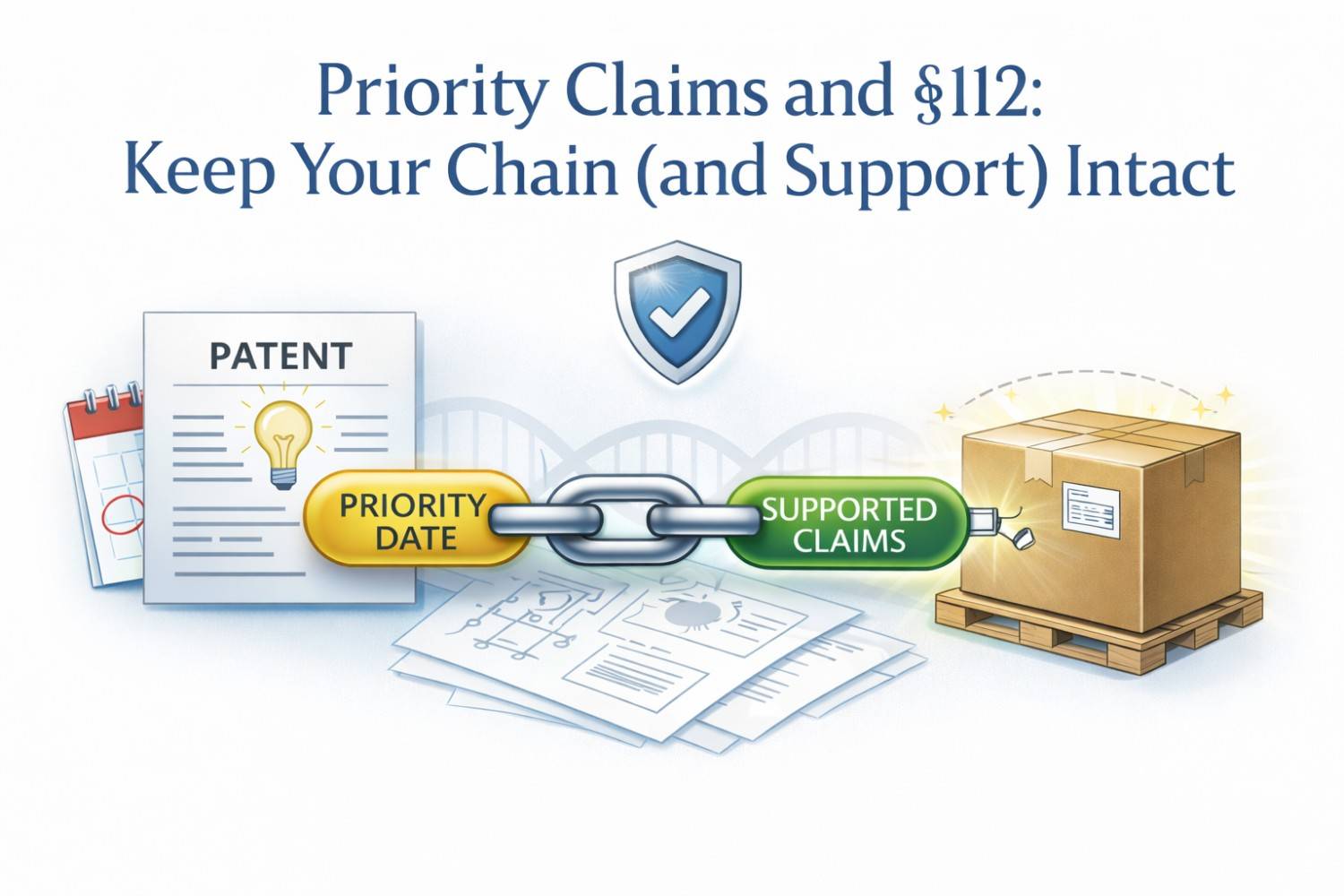
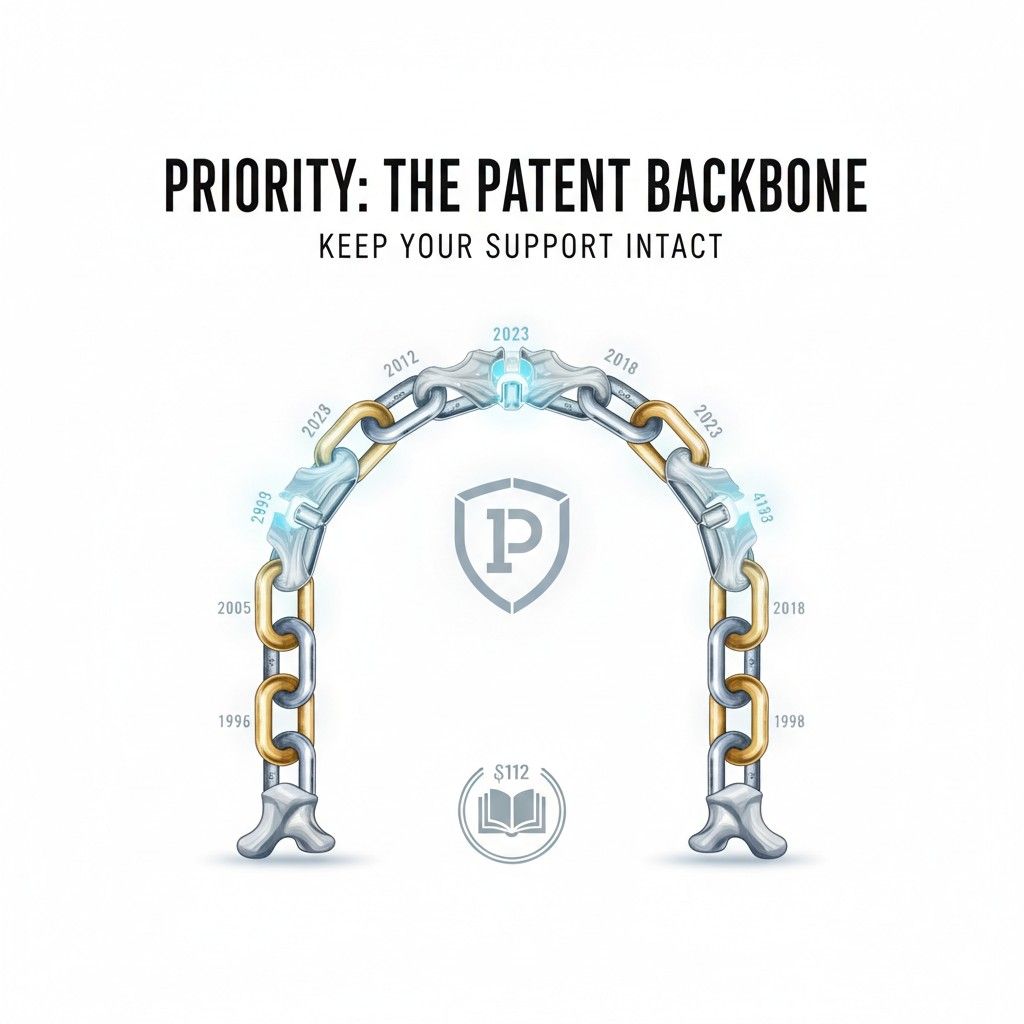
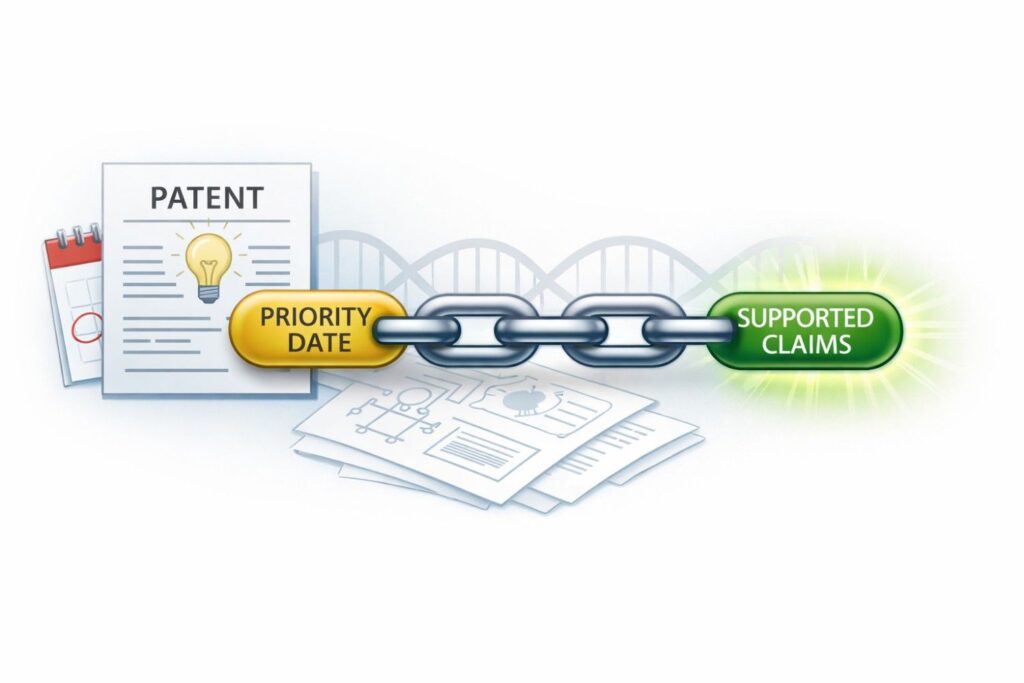
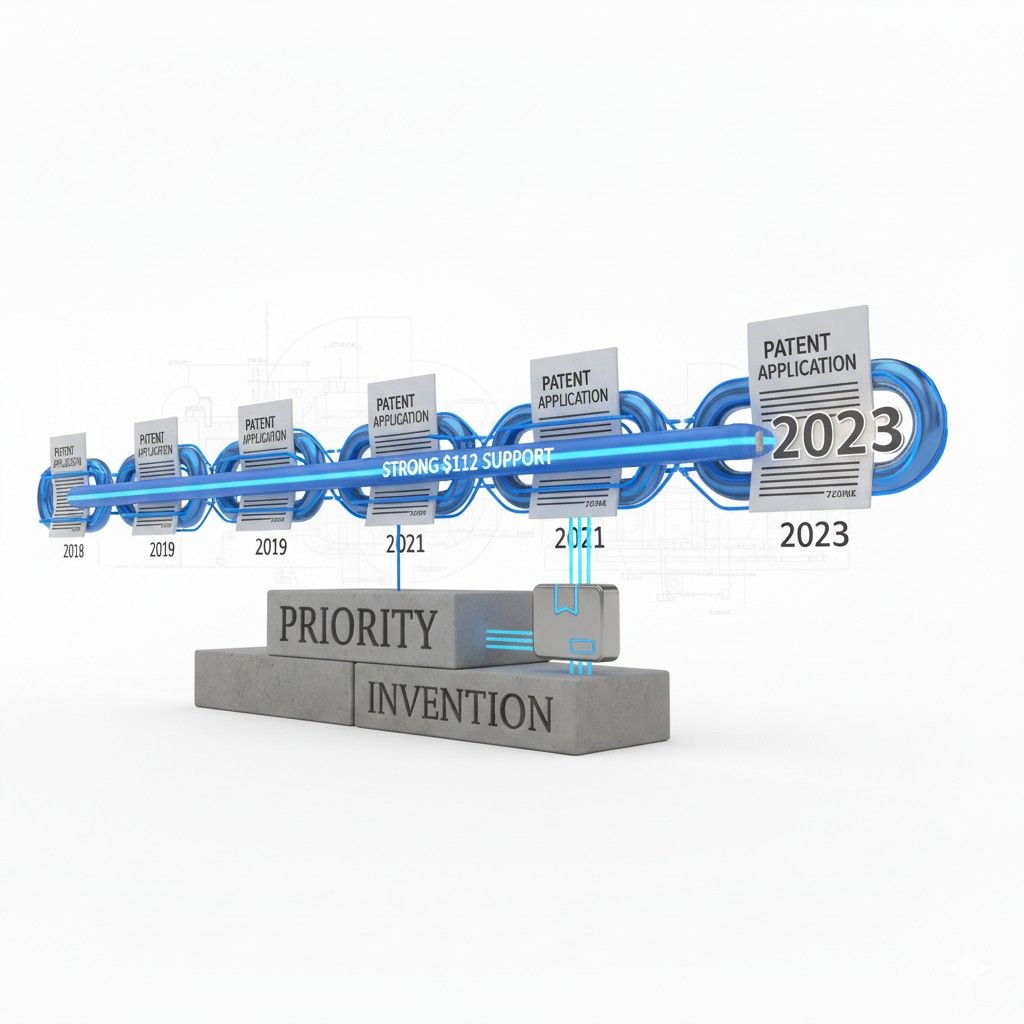
Priority is not a label. It is a chain that only works if every link holds real weight. If one link is weak, the whole thing can snap when you least expect it.
Priority only helps you if what you filed first truly supports what you are claiming later.
That support has to be real, clear, and complete. If it is not, your early date stops helping you, even if the paperwork says otherwise. This is where many strong companies get hurt without realizing it.
Priority Is About Proof, Not Timing
When people hear priority, they think about being early. Being early helps, but that is not the full story.
Priority is really about proof. You are proving that you had the full idea at a certain point in time. Not a hint of it. Not a goal. The actual working idea.
If your early filing only shows a rough concept, then that is all it protects. If you later claim something more detailed, more refined, or more powerful, your early date may not cover it.
In practice, that means your priority date moves forward without warning.
A smart move here is to treat every early filing as if it might be tested one day.
Write it like someone hostile will read it line by line. Ask yourself whether a stranger could rebuild your idea using only what you wrote. If the answer is no, your priority is weaker than it looks.
The Hidden Cost of Thin Early Filings
Many startups rush their first filing because they want to move fast. Speed is good, but thin filings create silent debt. You may not feel the pain until much later, often during fundraising, licensing talks, or enforcement.
A thin filing often leads to a false sense of safety. Founders believe they are covered, so they share more openly, build publicly, and delay follow-up filings. Meanwhile, competitors file cleaner applications with stronger detail. When it comes time to compare priority, the thinner filing loses ground.
The fix is not to slow down. The fix is to be intentional. Even early filings should explain how the system works, not just what it does. That small effort early on can preserve years of advantage later.
Priority Chains Break More Often Than People Think
Priority is rarely a single filing. It is usually a chain. Provisional leads to non-provisional. That leads to continuations. Each step must connect cleanly to the one before it.
If you add new ideas along the way, those ideas only get the later date unless they were already supported. Many teams assume the chain stays intact by default. It does not.
Every claim must be able to walk backward through the chain and find full support at each step.
A strong habit is to map claims back to earlier filings before you file anything new. If you cannot clearly point to where each part is supported, you should treat that claim as new.
That awareness helps you plan filings instead of guessing.
Priority Is a Business Asset, Not a Legal Detail
From a business view, priority affects valuation, leverage, and risk. Investors care about it even if they do not use the word. They want to know if your protection can survive pressure.
Partners want confidence that your rights are solid.
When priority is strong, it gives you room to move. You can ship faster without fear.
You can talk more freely. You can negotiate from strength. When it is weak, you may still have a patent, but it acts more like decoration than defense.
Founders should review priority the same way they review cap tables or runway. It is part of the foundation. Ignoring it early can limit options later, even if the product succeeds.
How Early Design Choices Affect Priority Later
Decisions you make while building often shape your priority without you noticing.
If your first filing only covers one version of your system, later changes may fall outside its scope. If your architecture evolves, your protection needs to evolve with it.
One practical approach is to file around patterns, not just implementations. Explain why things are built a certain way, not just how. That gives your priority more reach as your product grows.
Teams that do this well often find they need fewer emergency filings later. Their early work stretches further because it was grounded in real technical thinking, not just surface descriptions.
Priority Rewards Clarity, Not Length
Some people think longer filings mean stronger priority. That is not true. What matters is clarity. Clear explanations beat vague pages every time.
A short filing that clearly explains the core idea can outperform a long one filled with filler. The goal is to show possession of the invention, not to sound impressive.
Before filing, read your draft as if you had never seen the product. If it feels confusing or incomplete, priority will suffer. Simple language, clear flow, and concrete examples do more work than fancy terms ever will.
Using Priority to Move Faster, Not Slower
When priority is handled right, it speeds you up. You stop second-guessing. You stop delaying launches out of fear. You stop worrying that sharing will backfire.
The key is trust. You need to trust that your early filings truly support what you are building now. That trust only comes from doing the work upfront.
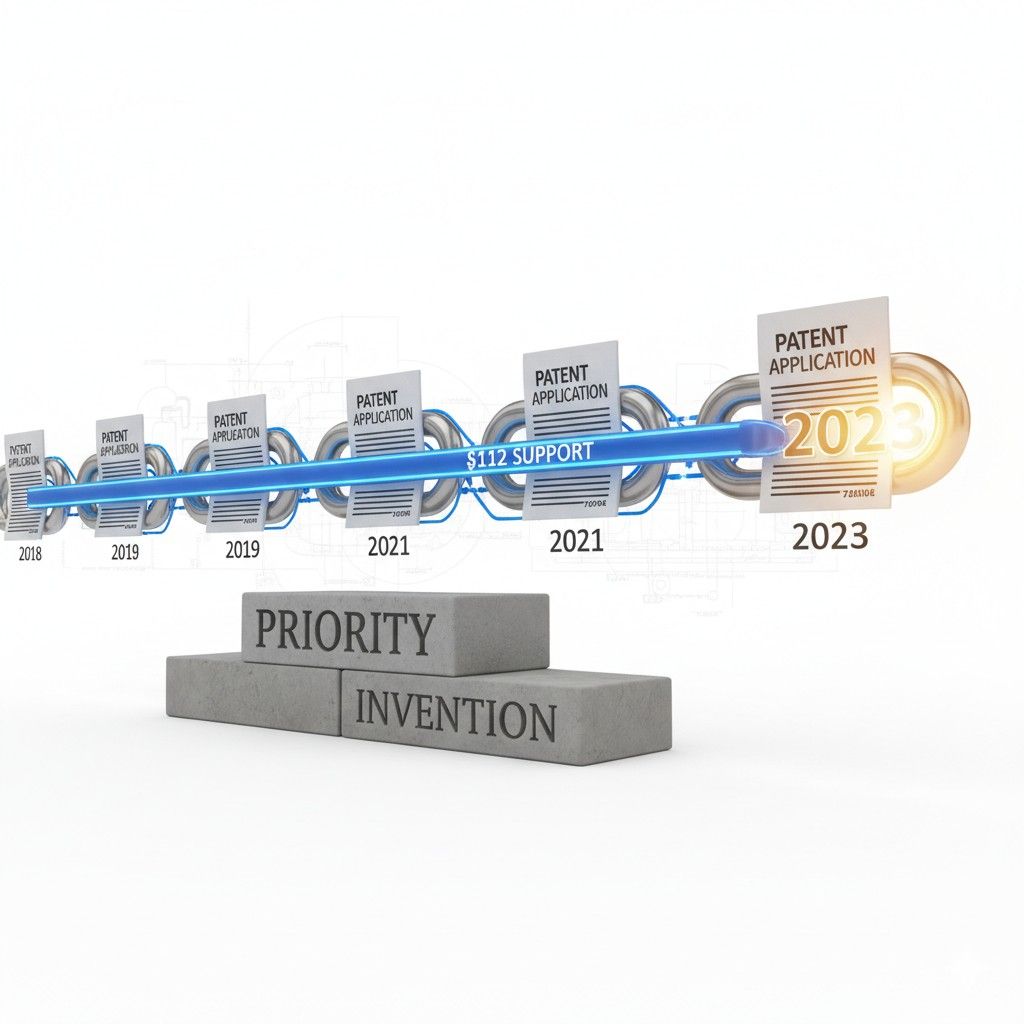
This is where modern tools and structured guidance help. When founders can turn real code and real systems into strong filings quickly, priority becomes a tool, not a burden. That is how teams keep building while staying protected.
What §112 Really Demands (and Why Most Applications Quietly Fail It)
§112 is not about style. It is not about sounding smart. It is not about legal tricks.
§112 is about one simple idea: did you actually explain your invention well enough that someone else could understand it and build it without guessing. Everything else flows from that.
Many businesses think they pass §112 because they described their product in general terms. That is usually not enough. §112 is the rule that decides whether your priority date sticks or slips.
It is also the rule that decides whether your claims stand firm or collapse under pressure.
§112 Is the Test of Ownership
At its core, §112 asks one question: did you really have this invention at the time you filed. Not in your head. Not on a roadmap. On paper.
You prove ownership by explanation. You explain what the invention is, how it works, and how to make and use it. If your explanation leaves gaps, those gaps get filled later by examiners, judges, or opponents. That is never in your favor.

Strong businesses treat §112 as a way to lock in reality. Whatever is written becomes the ground truth. If it is not written clearly, it is treated as if it did not exist.
Enablement Is Where Most Teams Fall Short
Enablement means someone skilled in your field could build your invention using your description. This does not mean copying your product pixel for pixel. It means the core technical idea must be fully usable.
Many applications fail here because they describe outcomes instead of mechanisms. They say what the system achieves, but not how it achieves it. That works for marketing. It fails for patents.
A useful mental check is this: if a competitor read your application the day it published, could they build a working version without contacting you. If the answer is no, enablement may be weak.
Written Description Is Not a Summary
Written description is often misunderstood. It is not a high-level overview. It is proof that you possessed the invention in detail.
If you later claim something more specific than what you described, §112 pushes back. It asks where that idea came from. If it cannot find it clearly in the earlier text, priority breaks.
Businesses get into trouble when they add features during development but forget to anchor them in earlier filings. The product grows, but the written description stays frozen in time. That mismatch creates risk that shows up years later.
Functional Language Can Be Dangerous
Describing things by what they do instead of what they are feels efficient. It is also risky. Functional language often hides missing structure.
For example, saying a system analyzes data and outputs a result tells the reader very little. §112 wants to know what analyzes the data, what kind of data, and how the result is produced.
Functional language can work when it is backed by real detail. On its own, it often fails to support claims when challenged. Businesses should use function to guide understanding, but always tie it back to concrete parts and flows.
§112 Is Closely Tied to Priority, Whether You Like It or Not
Priority and §112 are inseparable. Priority only applies to what is properly supported. §112 defines what proper support means.
If your earliest filing does not meet §112 for a later claim, that claim does not get the early date. It does not matter what you intended. It only matters what you wrote.
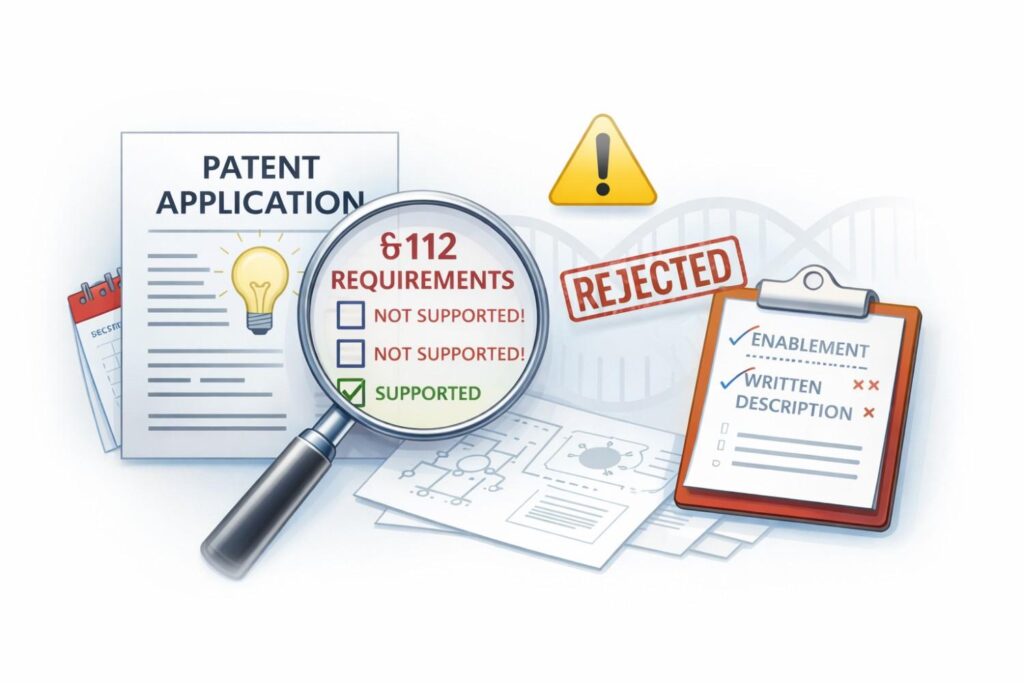
This is why priority disputes often turn into §112 fights. The date is not argued directly. The support is. Businesses that ignore this connection often lose ground without realizing why.
The Risk of Writing for Yourself Instead of Others
Founders often write patent drafts with their own understanding in mind. That is natural. It is also dangerous.
You already know how your system works. The reader does not. §112 demands that the explanation stand on its own. Assumptions that live only in your head do not count.
A good practice is to assume the reader is smart but unfamiliar. Explain things that feel obvious to you. Those details are often what save your priority later.
How Overconfidence Leads to Silent §112 Failures
Some teams believe their invention is so advanced that broad language is enough. They assume the value speaks for itself. In patent law, it does not.
Broad claims need broad support. That support must be visible in the text. Without it, claims shrink or fall away.
These failures are silent at first. The application files. The patent issues. Everything looks fine. The problem only appears when the patent is tested. By then, it is too late to fix.
Turning §112 Into a Strategic Advantage
When done right, §112 becomes a strength. Clear explanations create flexibility. They support broader claims. They preserve priority across changes.
Businesses that invest in clarity early often gain more than protection. They gain understanding. Writing forces teams to articulate what truly matters in their system. That clarity feeds back into better product decisions.
Modern teams can do this without slowing down. When the process fits how engineers already think and build, §112 stops being a hurdle and starts being a tool.
Why Real Oversight Matters More Than Templates
Templates can help, but they cannot think. §112 problems usually hide in the details. Catching them requires technical understanding and legal judgment working together.
This is where many companies go wrong. They either rely only on software or only on humans. Neither alone is enough.
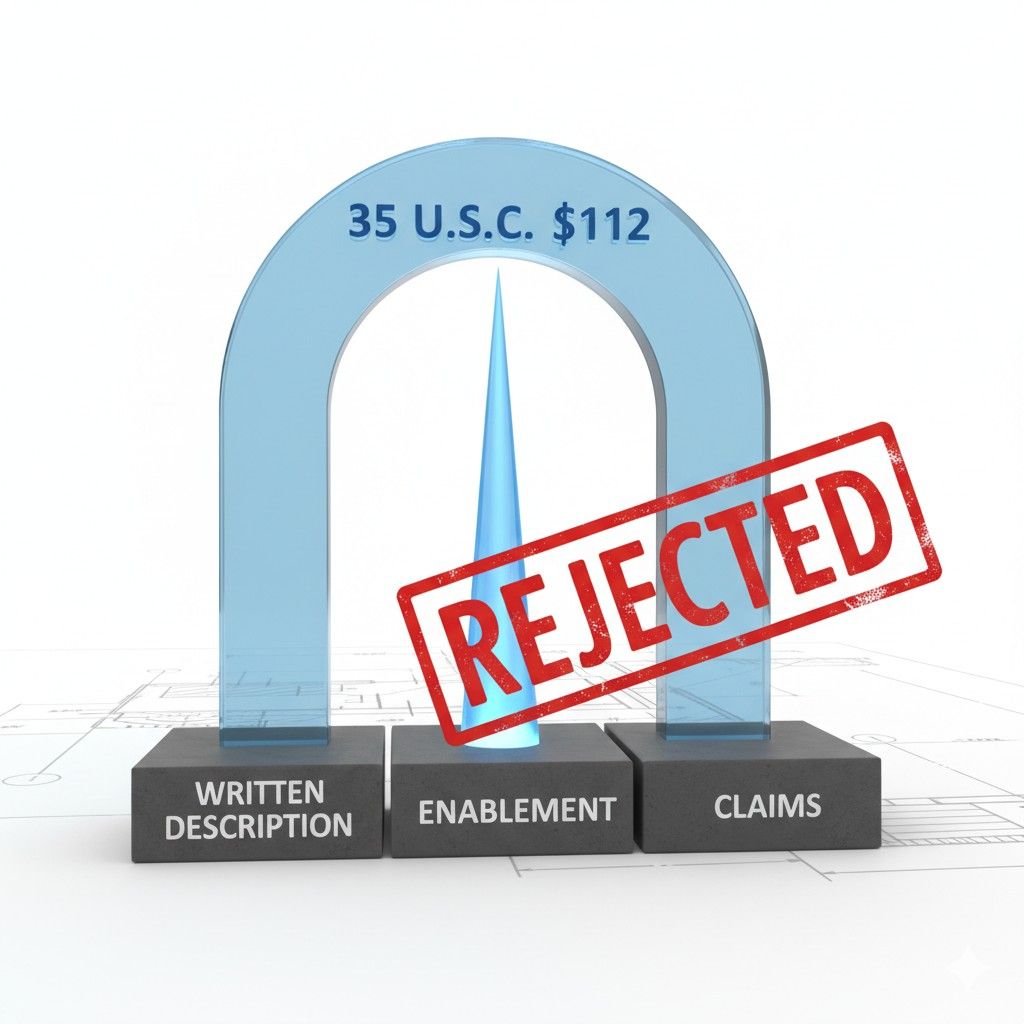
The strongest outcomes come from combining speed with review. That combination helps ensure that what you file today will still hold up when it matters most.
How Broken Support Destroys Your Priority Chain Without You Noticing
Broken support rarely announces itself. There is no alert. No warning email. No rejection that clearly says your priority chain is failing. On paper, everything often looks fine.
Filings are made on time. Claims are added. Patents move forward. The damage happens quietly, and by the time it shows up, the leverage you thought you had is already gone.
For businesses, this is one of the most dangerous patent risks because it hides behind progress.
The product improves. The company grows. The filings continue. Meanwhile, the support underneath starts to drift away from reality.
Support Does Not Automatically Carry Forward
Many teams assume that once something is described, it lives forever in the priority chain. That is not how it works. Support must exist for each claim at each step.
If you introduce new detail in a later filing, that detail only gets the later date unless it was already fully supported earlier. It does not matter if the idea feels like a natural extension. It only matters what the earlier text actually says.
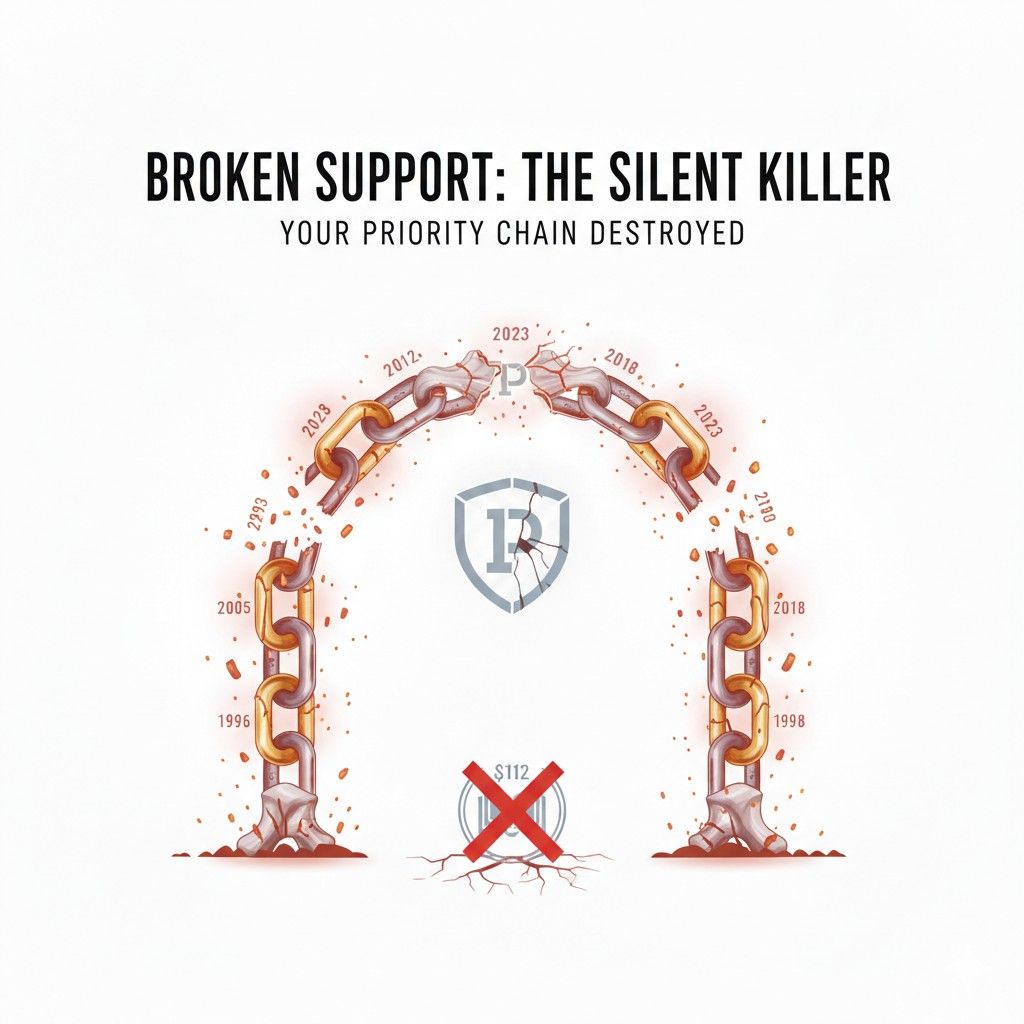
A practical habit is to treat each new filing as a fresh audit. Ask whether every important feature already appears clearly in the earlier application. If it does not, assume the priority date will move.
Small Gaps Create Big Legal Exposure
Support often breaks in small ways. A missing explanation. A vague reference. An assumed step that was never written down.
These gaps may seem minor during drafting. During enforcement or review, they become leverage for the other side. Opponents do not need to disprove your invention. They only need to show that your earliest filing did not fully support what you now claim.
Businesses are often shocked when a single paragraph, or lack of one, changes the outcome of a dispute. That is why support deserves attention at the same level as claims.
Product Evolution Is the Biggest Threat to Support
Products evolve faster than filings. That is normal. The risk appears when the filings stop reflecting the true system.
As teams refactor code, change architectures, or shift approaches, the original descriptions may no longer match. Later filings may capture the new version, but the early priority may not reach that far.
The smart move is to track invention changes alongside product changes. When something meaningful shifts, it should trigger a support check. Not every tweak needs a filing, but every core change needs awareness.
Claims Drift Faster Than Support
Claims are often adjusted during prosecution to get around prior art. This is expected. What is not always expected is how far claims can drift from the original description.
When claims move, they must still point back to solid support. If they drift into territory that was never described clearly, §112 steps in and priority falls away.
Businesses should not see claim changes as purely tactical. Each change should be measured against the original support. If that link is weak, the claim may be weaker than it looks.
The Illusion of Continuations
Continuations feel safe. They carry the same disclosure. They keep the family alive. This can create a false sense of security.
A continuation does not fix missing support. It only reuses what already exists. If the original disclosure was thin, every continuation inherits that weakness.
This is why early quality matters more than later volume. A strong first filing can support many future directions. A weak one limits every descendant that follows.
When Priority Chains Break During Due Diligence
One of the most common times broken support is discovered is during due diligence. Investors or acquirers look closely at whether key claims really tie back to early filings.
If they do not, value drops. Sometimes deals stall. Sometimes they proceed with reduced terms. Rarely does this risk stay hidden once serious money is involved.
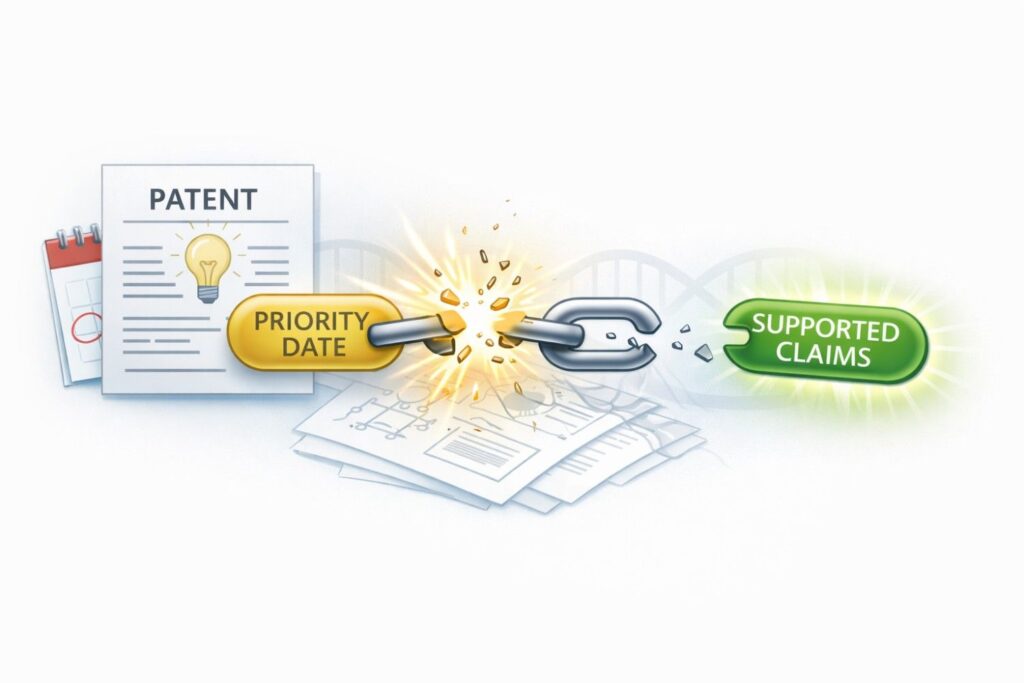
Businesses that proactively review their priority chains before these moments are in a much stronger position. Fixing gaps early is cheaper and more effective than explaining them later.
Why Engineers Often Spot Support Issues First
Engineers tend to notice support gaps before lawyers do. They know what the system actually does. They can see when a description no longer matches reality.
The problem is that engineers are not always brought into the patent review loop. Support issues stay buried because the people who could spot them are not asked.
Strong teams bridge this gap. They involve technical builders in reviewing filings at key points. This keeps support aligned with real-world implementation.
Broken Support Is Hard to Fix After the Fact
Once a filing date passes, you cannot go back and add support. You can only file again. That means a new date and new exposure.
This is why support problems are best treated as prevention, not repair. The earlier they are caught, the more options you have.
Businesses that build regular support checks into their process rarely face catastrophic breaks. Those that do not often discover the issue only when leverage is needed most.
Turning Support Into a Living System
Support should evolve with the business. Not by rewriting old filings, but by planning new ones with intention.
Each filing should clearly state what is new and how it connects to what came before. This keeps the chain clear and defensible.
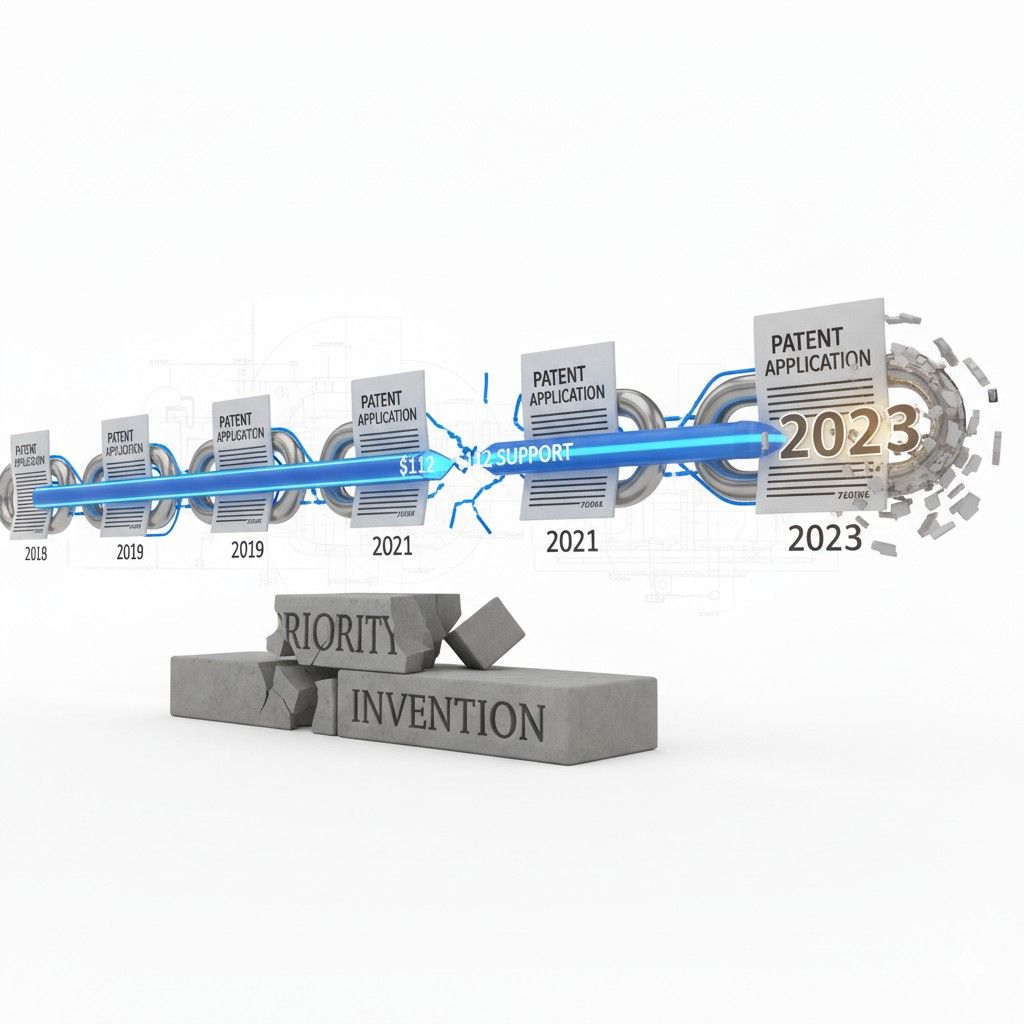
When support is treated as a living system, priority becomes reliable. It stops being a guessing game and starts being a strategic asset.
How to Build a Priority Chain That Actually Protects What You Ship
A strong priority chain does not happen by accident. It is built deliberately, one filing at a time, with a clear connection to what the business is actually creating. The goal is not to file more.
The goal is to file smarter, in a way that keeps protection aligned with reality as the product moves forward.
For businesses, this section is where theory turns into practice. This is about building a system that supports growth instead of slowing it down.
Start With the Core, Not the Edges
Every product has a core idea that makes it work. That core should be the heart of the first filing. Many teams make the mistake of chasing features instead of capturing the engine underneath them.
When the core is explained clearly, it gives later filings room to expand. Features can come and go. The core usually stays. Protecting that early creates a stable anchor for the entire priority chain.
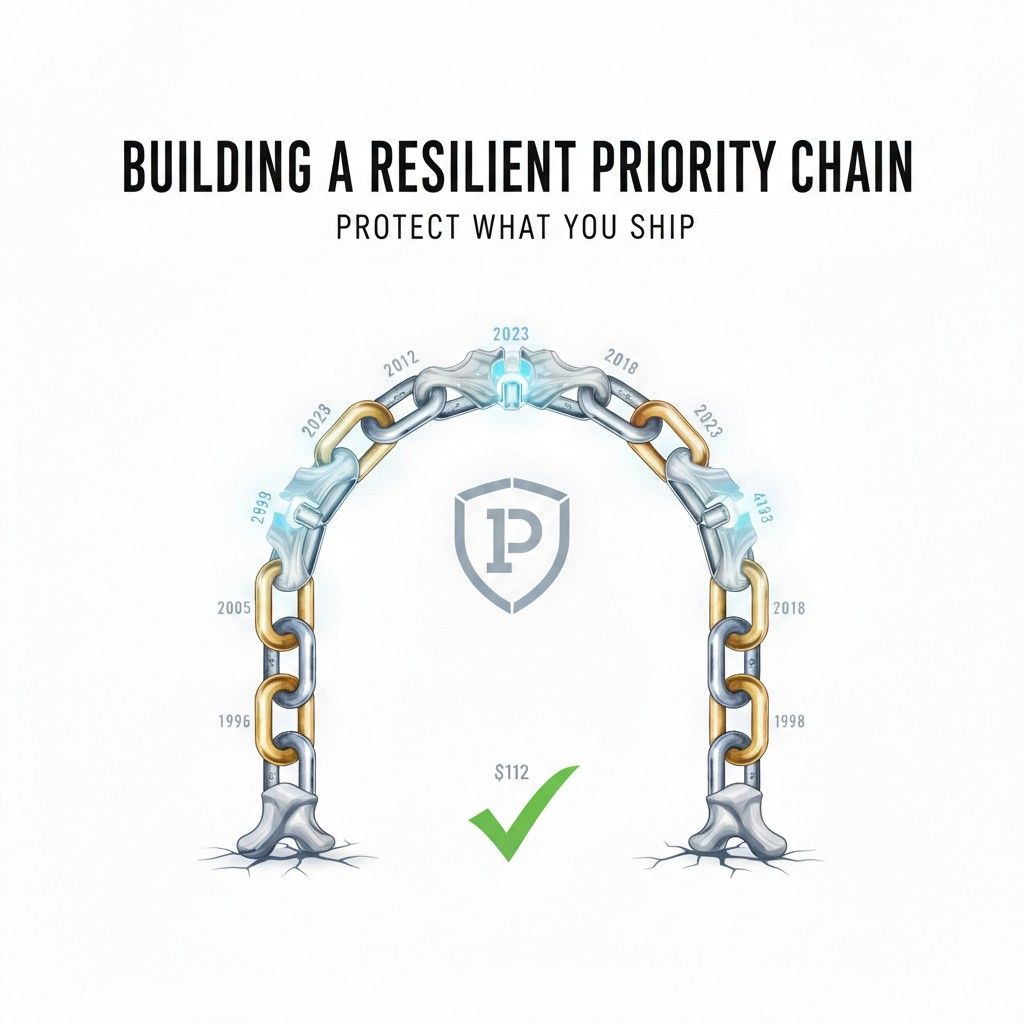
A useful test is to ask what would still exist if you stripped the product down to its simplest working form. That answer belongs in your earliest filing.
Write for the Future Version of Your Product
Early filings should not just describe what exists today. They should describe what the system is capable of becoming.
This does not mean guessing wildly. It means explaining why your system is designed the way it is and what that design allows. When the explanation captures intent and structure, later versions often fall naturally within its scope.
Businesses that do this well find that new releases fit comfortably inside old filings. Their priority stretches forward instead of snapping.
Keep Filings Close to Real Builds
The best time to file is when something real exists. Code. Models. Architecture. Diagrams. These artifacts carry detail that pure ideas do not.
When filings are grounded in real builds, §112 support becomes easier. Explanations are clearer because they are based on something tangible.
Teams should treat filing moments as snapshots of reality. Each snapshot captures where the product truly is, not where the pitch deck says it might be.
Treat Each New Filing as a Bridge
Every new filing should clearly bridge from the past to the present. It should explain what stayed the same and what changed.
This clarity helps preserve priority where possible and clearly marks where new dates apply. That honesty strengthens the chain instead of weakening it.
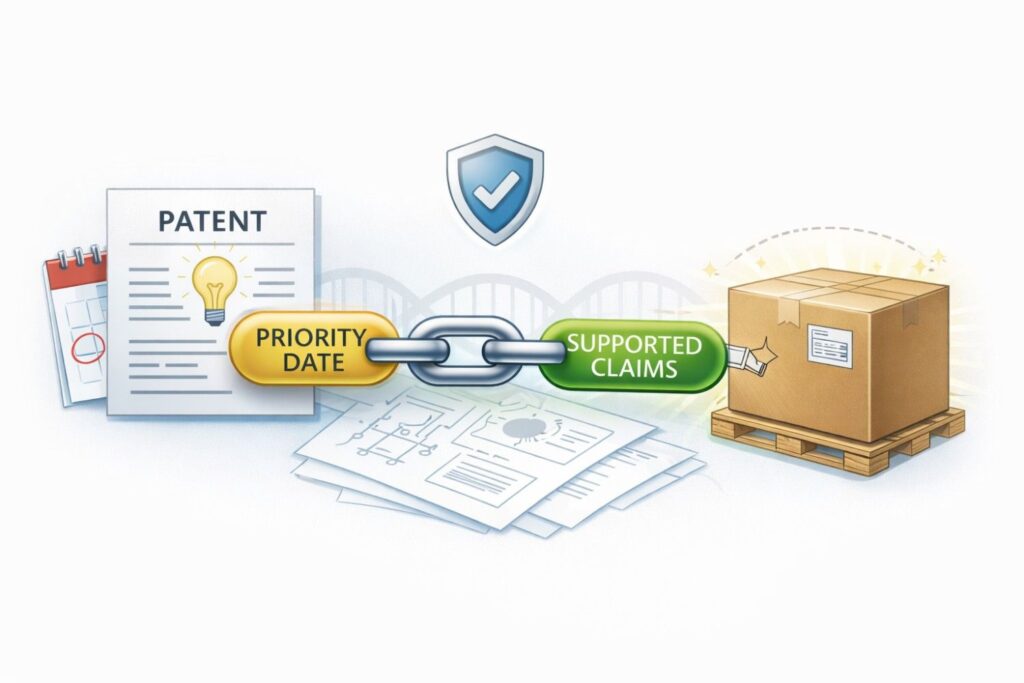
When bridges are built intentionally, there are fewer surprises later. Everyone understands what is protected early and what is protected later.
Align Claims With Actual Technical Control
Strong priority chains focus on what the business truly controls. Claims that track real technical leverage are easier to support and harder to attack.
When claims chase abstract results instead of concrete systems, support thins out quickly. Priority becomes fragile.
A good rule is to claim what you could explain and defend in a technical review. If you cannot walk someone through how it works, the claim may be ahead of its support.
Make Support Reviews a Regular Habit
Support should be reviewed regularly, not only when filing. As products change, teams should ask whether existing filings still reflect reality.
This does not need to be heavy or slow. Even brief check-ins can surface misalignment early.
Businesses that build this habit often discover opportunities as well. They see areas where filings could be extended or clarified before competitors move.
Use Speed Without Sacrificing Depth
Speed and depth are not opposites. With the right process, teams can move fast and still write strong support.
The key is structure. When engineers provide clear inputs and experienced reviewers shape them into filings, quality improves without delay.
This is where modern patent platforms shine. They remove friction while keeping real oversight in place. That balance is what allows startups to protect themselves without losing momentum.
Build Confidence Through Clarity
A strong priority chain creates confidence. Founders feel safer sharing. Teams feel safer shipping. Leaders feel safer planning long term.
That confidence is not emotional. It is structural. It comes from knowing that what is written truly supports what is built.
When clarity is present from the start, patents stop feeling like paperwork. They start feeling like infrastructure.
Priority Done Right Becomes Invisible
The best priority work is invisible. It does not interrupt development. It does not cause last-minute panic. It quietly does its job in the background.
When a challenge appears, the chain holds. When scrutiny comes, the support stands. When the business grows, protection grows with it.
That is the goal. Not just having patents, but having patents that work.
Wrapping It Up
Priority is not a checkbox. It is not a filing receipt. It is not something you fix later when the company is bigger. Priority is built through clear thinking, careful explanation, and honest alignment between what you write and what you ship.
§112 is the quiet force that keeps everything honest. It rewards teams that explain their work clearly and punishes those that rely on shortcuts. When priority and support work together, patents become durable. They hold up under pressure. They support growth instead of limiting it.